



 Click it and Unblock the Notifications



Latest Updates
-
 Diwali 2026: Chakli To Nimki, 7 Regional Savoury Snacks That Bring Traditional Indian Flavours To Your Table
-
 Filmmaker Sanjay Gupta Passes Away At 57: ‘Aatish’ To ‘Kaabil’, Look At His Three-Decade Bollywood Journey
-
 Halloween 2026: From Chudail To Yakshi, 5 Mysterious Supernatural Beings That Haunt Indian Folklore
-
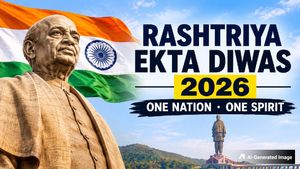 Rashtriya Ekta Diwas 2026: Significance, History And Sardar Vallabhbhai Patel's Role In Uniting India
-
 Survey Finds 68% Of Previously Married Singles Hesitate To Match With Never-Married Partners
-
 Diwali 2026: Complete Five-Day Festival Calendar, Dates, Significance And Celebrations
-
 Weight, Alcohol, Hormones: Pathologist Shares Insights On What Really Shapes A Woman’s Breast Cancer Risk
-
 Diwali 2026: 5 Healthy Homemade Indian Sweets That Go Beyond Traditional Mithai
-
 Stroke In Young Women: Neurologist Explains Warning Signs And Hormonal Risk Factors
-
 ‘Star Trek’ And ‘X-Men’ Actor Patrick Stewart Passes Away At 86 After Dementia Battle


COVID: NTAGI Discusses Administering 'Additional' Vaccine Dose, Inoculation Of Kids

The issues of administering 'additional' dose of Covid vaccine to immunocompromised individuals and inoculation of children were deliberated upon in a meeting of the National Technical Advisory Group on Immunization (NTAGI) on Monday, official sources said.

However, no consensus was learnt to have been reached by the members and no final recommendation has been made on these issues as of now, the source said.
Sources also said the issue of booster dose was not on the agenda of the meeting as studies need to be conducted to ascertain its need and value. An additional dose of a vaccine is different from a booster dose.
While a booster dose is given to an individual after a pre-defined period when the immune response due to primary vaccination is presumed to have declined, an additional shot is given to immunocompromised and immunosuppressed individuals when the primary schedule of inoculation does not provide adequate protection from the disease, officials explained.
"The issue of administering an additional dose of COVID-19 to immunocompromised and immunosuppressed individuals and vaccination of children against COVID-19 were deliberated upon in the meeting of NTAGI.
Cancer patients on therapy, transplants patients and AIDS patients are among those who come under the immunocompromised and immunosuppressed categories and need an additional dose of vaccine to improve their protection.
Even against the backdrop of the emergence of new variants of coronavirus, like Omircron, vaccination remains one of the strongest pillars of protection against disease and infection, experts said.
Recently, the Serum Institute of India (SII) sought from the Drug Regulator approval for Covishield as a booster dose against COVID-19. In its bulletin on November 29, the INSACOG recommended a booster dose of COVID-19 vaccines for those above 40 years with preference to high-risk and high-exposure populations. On Saturday, however, it said their recommendation was not for the national immunisation programme as many more scientific experiments are required to assess its impact.
About administering booster doses, Union Health Minister Mansukh Mandaviya has told the Lok Sabha that the NTAGI and the National Expert Group on Vaccine Administration for COVID-19 (NEGVAC) are deliberating and considering scientific evidence related to it.
Answering a list of frequently asked questions (FAQs) about the Omicron variant of coronavirus, the Health Ministry has said that while there is no evidence to suggest that existing vaccines do not work on the latest variant, some of the mutations reported may decrease the efficacy of the jabs.
It however underscored that definitive evidence for new variant's increased remission and immune evasion is awaited.
However, vaccine protection is also by antibodies as well as by cellular immunity, which is expected to be relatively better preserved. Hence, vaccines are expected to still offer protection against severe disease and vaccination is crucial. If eligible one should get vaccinated, it said.
Omicron has been declared a 'variant of concern' by the World Health Organisation based on the observed mutations, their predicted features of increased transmission and immune evasion, and preliminary evidence of detrimental change in COVID-19 epidemiology, such as increased reinfections.
Disclaimer: The information provided in this article is for general informational and educational purposes only and is not intended as a substitute for professional medical advice, diagnosis, or treatment. Always seek the advice of your physician or a qualified healthcare provider with any questions you may have regarding a medical condition.

 Continue with Google


