




 Click it and Unblock the Notifications


Latest Updates
-
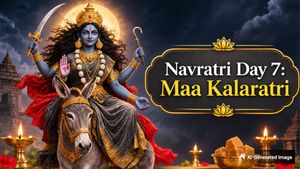 Navratri Day 7: Maa Kalaratri Puja, Colour, Rituals And Significance
 -
 Office To Dandiya Nights: One Quick-Change Outfit Formula For Navratri 2026
 -
 As ‘Ranabaali’ Hits Theatres, A Look At Rashmika Mandanna’s ₹1.31 Lakh Ivory Saree For Pre-Release Promotions
 -
 Durga Puja Pandals Mumbai 2026: 7 Stunning Celebrations To Explore From Matunga To Juhu
 -
 World Spine Day 2026: Is Your Phone Habit Causing Neck Pain? What To Know About Tech Neck
 -
 Breast Cancer Awareness Month 2026: Expert Explains Why Family History Isn't the Only Risk
 -
 Skanda Sashti 2026: Significance, Vrat Rituals And How Devotees Observe The Day
 -
 Saraswati Avahan 2026: Significance, Shubh Muhurat, Rituals And Puja Vidhi
 -
 Navratri Day 6: Maa Katyayani Puja, Colour, Rituals, And Significance
 -
 Garba Before The DJ Era: What Navratri Looked Like In Earlier Times


Surya Grahan 2026 Astrology: Date, Time, Sutak, Dos And Don’ts And India Visibility

Surya Grahan in 2026 is a powerful celestial event where the Sun and Moon align. In astrology, a solar eclipse is not treated as an ordinary new moon. It is believed to amplify karmic themes, emotional shifts, and collective changes. At the same time, many questions come up: Is it visible in India? Does Sutak apply? Should you follow any restrictions? Here's everything explained clearly.
Cultural And Traditional Significance Of Surya Grahan 2026 In India

Surya Grahan 2026 coincides with Phalguna Amavasya, an important New Moon day in the Hindu calendar associated with prayer, ancestor remembrance, and spiritual reflection. Traditionally, solar eclipses are linked with cleansing rituals such as holy dips, mantra chanting, meditation, and charity.
However, since this eclipse will not be visible in India, the usual Sutak restrictions are generally not observed. Even so, some devotees may still mark the day through simple spiritual practices because of the Amavasya significance.
Astrological Interpretations (General Beliefs)
Astrological interpretations are belief-based and not scientifically verified.
Sign And Planet Positions
Astrologers note a rare planetary cluster in Aquarius (Kumbh Rashi) involving the Sun, Moon, Rahu, Mercury, and Venus. The eclipse is also said to occur in Dhanishtha Nakshatra, which is associated with ambition and collective energy in Vedic astrology.
Common Astrological Themes
Solar eclipses are seen as symbolic turning points. With Aquarius influence, themes may include social change, innovation, identity shifts, and long-term planning.
Rahu's conjunction with the Sun is often interpreted as indicating sudden developments or unconventional opportunities. Signs connected to Aquarius and Leo are believed to feel these effects more strongly over the three months following the eclipse.
Remedies And Rituals In Astrological Traditions
Some traditional practices include chanting Surya mantras, reciting the Aditya Hridaya Stotra, offering charity (daan), performing meditation, and offering water to the Sun. These are cultural and faith-based practices rather than scientific prescriptions.
Surya Grahan 2026: Date And Time (IST)
The first solar eclipse of 2026 will take place on Tuesday, 17 February 2026. It coincides with Phalguna Amavasya, the new moon day in the Hindu calendar.
The eclipse falls on Phalguna Amavasya
- Timings (Indian Standard Time)
- Begins: 3:26 PM IST
- Maximum phase: 5:13 PM to 6:11 PM IST
- Ends: 7:57 PM IST
- Total duration: Around 4 hours 31 minutes
This will be an annular solar eclipse, also called a "Ring of Fire." In this type of eclipse, the Moon covers the centre of the Sun but leaves a bright ring visible around the edges.
Will Surya Grahan 2026 Be Visible In India?
No. The eclipse will not be visible in India because the Sun will have already set by the time the main phase occurs.
It will be visible in:
- Antarctica
- Parts of Southern Africa (Zimbabwe, Tanzania, Namibia, Botswana, Mozambique)
- Mauritius
- Parts of South America, including Argentina and Chile
People in India can only watch it through international live streams.
Sutak Kaal: Is It Applicable in India?
In Hindu tradition, Sutak Kaal is observed only if the eclipse is visible in that region.
Normally:
- Sutak begins about 12 hours before a solar eclipse.
- Auspicious activities are avoided.
- Many people avoid cooking or eating during that period.
However, since this eclipse is not visible in India, Sutak will not be observed here according to traditional rules. There are no mandatory religious restrictions in India for this eclipse.
Astrological Significance Of Surya Grahan 2026
Even though it won't be visible in India, astrologically the eclipse is still considered significant.
This Surya Grahan occurs in:
- Aquarius (Kumbh Rashi)
- Dhanishtha Nakshatra
In Vedic astrology, this combination is often linked with:
- Community matters
- Social structures
- Responsibility
- Long-term planning
- Shifts in identity
The eclipse also falls on Phalguna Amavasya, a day traditionally connected with ancestral rituals like tarpan and pind daan. Because of this overlap, many astrologers believe the date carries added spiritual importance. Interpretations may vary depending on individual birth charts.
Traditional Do's During Surya Grahan
People who follow eclipse traditions may:
- Chant Surya Mantras or the Gayatri Mantra
- Meditate or pray
- Take a bath after the eclipse ends
- Donate food, clothes, or money
These practices are based on belief and personal faith.
Traditional Don'ts During Surya Grahan
In regions where an eclipse is visible, some people traditionally:
- Avoid starting new or important work
- Avoid cooking or eating during the eclipse
- Advise pregnant women to remain indoors
However, since this eclipse is not visible in India, these restrictions are not required.
Scientific Safety Note
If you are in a country where the eclipse is visible:
- Never look directly at the Sun without certified eclipse glasses.
- Regular sunglasses are not safe.
- Telescopes and cameras must have proper solar filters.
Surya Grahan on 17 February 2026 holds astrological significance, especially because it falls on Phalguna Amavasya and occurs in Aquarius under Dhanishtha Nakshatra. But for India, the key point is simple: It will not be visible, and Sutak does not apply. Whether you choose to observe it spiritually or simply read about it as a celestial event is entirely up to you.

 Continue with Google

