




 Click it and Unblock the Notifications


Latest Updates
-
 India’s Young Workforce May Face Heart Risks Even With A Normal BMI, Heart Health Report 2026 Finds
 -
 Aishwarya Rai Bachchan Serves Dark Queen Glamour At L’Oréal Paris Le Défilé 2026
 -
 Pitru Paksha 2026: Does Ancestor Worship Bring Bad Luck If Rituals Aren’t Performed? Astrologer Explains
 -
 World Heart Day 2026: Think You Are Fit? Your Heart May Tell a Different Story
 -
 Dawn Phenomenon vs Somogyi Effect: What's The Difference?
 -
 Tritiya Shraddha 2026: Who Should Perform It, Rituals To Follow And Why The Day Holds Significance
 -
 World Heart Day 2026: The Heart Attack That Doesn't Look Like a Heart Attack
 -
 Vighnaraja Sankashti Chaturthi 2026: Know The Date, Significance, Vrat Katha And Moonrise Fasting Rituals
 -
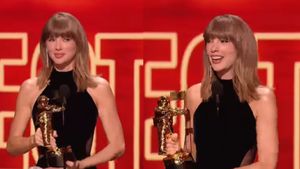 Taylor Swift Makes VMA History: All About Her Record-Breaking Night And Striking Red Carpet Look
 -
 Bank Holidays October 2026: Check State-Wise List Before Visiting Your Branch


Mundakopanishad (The what, how and who of me and Me) V


Is it not a contradiction to seek the eternal happiness by the ever changing mind? Can the ever flowing river understand the stillness of water anytime? It can at best imagine, when heard about it. The only aftermath of this contradiction within us is resorting to seek outside by way tasting etc., all the available objects. This illusion about seeking-happiness is aptly indicated by the bird eating fruits perching on the tree. This is nothing but the self seeking behavioral that is most commonly found in all of us.
In contrast, another bird perching on the same tree remains without doing anything but merely looks-on. This bird which witnesses whatever is happening is the knower in us who knows both - i.e. the( jiva who is represented by the first bird and itself as the witness. The ( witness is that which doesn't engage in doing anything and hence is not subjected to enjoyment or suffering implying that there is no change with the second bird, the witness.
In the changeless, there is neither joy nor sorrow which is changing. This is not of the changing mind but of something else which is unchanging. When nothing is lost or gained there is neither loss nor gain of any happiness. It is that something which is ever present all by itself even seeing the positive presence of nothingness. This objectiveness, awareness cannot fall in the realm of the mind because the mind needs an object for its existence. Such
object-less, action-less awareness is represented by the second bird witnessing the first bird (the mind / jiva) from above. The bird above represents the higher nature of Self whose nature is happiness that is in contrast to the lower nature whose nature is to suffer the joy.
Now, a few questions arise in us viz., why are two birds used in the analogy? What is the relationship between the two? What is the significance of the two birds placed on the same tree instead of two trees in the analogy? In order to answer these questions, we have to apply the analogy directly to our selves. In all of us; there is 'me' and the 'other' - the split within ourselves. The 'other' talks to the 'me' constantly.
The 'me' is a mute witness to the 'other' who continuously chatters ranging from facts, to all kinds of imaginations and fears. In short, we can call this as the noise within, which becomes externalized on suitable occasions. In the analogy, the bird that eats and enjoys the fruits is the 'other' in 'Me' and the bird which simply witnesses without eating is the 'me' in 'Me'. Since both of us are seen in 'Me', 'it is represented by the two birds perching on the same tree. Though the ' two birds are not really related to each other, the changing 'other' cannot be known without the changeless 'me'.

 Continue with Google

