




 Click it and Unblock the Notifications


Latest Updates
-
 Durga Puja Pandals Mumbai 2026: 7 Stunning Celebrations To Explore From Matunga To Juhu
 -
 World Spine Day 2026: Is Your Phone Habit Causing Neck Pain? What To Know About Tech Neck
 -
 Breast Cancer Awareness Month 2026: Expert Explains Why Family History Isn't the Only Risk
 -
 Skanda Sashti 2026: Significance, Vrat Rituals And How Devotees Observe The Day
 -
 Saraswati Avahan 2026: Significance, Shubh Muhurat, Rituals And Puja Vidhi
 -
 Navratri Day 6: Maa Katyayani Puja, Colour, Rituals, And Significance
 -
 Garba Before The DJ Era: What Navratri Looked Like In Earlier Times
 -
 What Does Indian Design Mean Today? A Creative Director Explains
 -
 Why Your Vision Can Feel Different In Bright And Dim Rooms, Expert Explains
 -
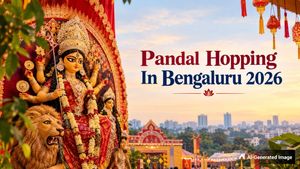 Pandal Hopping In Bengaluru 2026: 7 Durga Puja Venues Worth Your Time


The Story Of Maa Kushmanda: The Goddess Who Created The Universe With Her Smile

Among the nine forms of Goddess Durga celebrated during Navratri, Maa Kushmanda holds a unique place. Worshipped on the fourth day of the festival, she is revered as the source of light, energy, and vitality. Her very name connects her to the creation of the universe, and devotees believe that her smile alone gave birth to the cosmic order. The story of Maa Kushmanda is not just a tale of origins but also a symbol of inner strength, warmth, and divine benevolence.

The Meaning Behind The Name
The word Kushmanda is derived from three Sanskrit components: ku (little), ushma (warmth or energy), and anda (cosmic egg). Together, it represents "the creator of the little cosmic egg." This symbolic phrase highlights her role as the one who infused energy into the void, shaping the universe into existence.
The Smile That Created The Universe
According to devotional lore, before creation, the universe was dark and empty. It was Maa Kushmanda who, with a gentle and radiant smile, filled this void with light, warmth, and life. Her smile formed the Brahmanda-the cosmic egg which became the foundation of all creation. This imagery reflects her boundless energy and her effortless power to create, nurture, and sustain.
Iconography And Symbolism
Maa Kushmanda is depicted with eight or sometimes ten arms, holding weapons like the trident, discus, bow, and sword, alongside symbolic objects such as a rosary and a pot of nectar. She rides a lion or tiger, embodying courage and control over the universe. Symbolically, she is also linked to the Sun, representing her as the inner energy that sustains life and radiates light throughout creation.
Day Of Worship
On the fourth day of Navratri, devotees honour Maa Kushmanda with devotion and rituals. This day is believed to bring blessings of health, vitality, and prosperity. Traditional offerings include malpua and in some regions, the white pumpkin called kushmanda is offered as prasad, signifying nourishment and simplicity.
Temples And Pilgrimage
Several temples are dedicated to Maa Kushmanda, with notable shrines in Varanasi, Kanpur region (Ghatampur), and Nepal's Hetauda. During Navratri, these temples draw large gatherings of devotees, who come to seek her blessings and to celebrate her as the mother of creation.
Spiritual Significance
For devotees, Maa Kushmanda represents not only the beginning of the cosmos but also the spark of energy within each individual. She is worshipped as the source of vitality and courage, believed to cure diseases, remove obstacles, and bring clarity of mind. Her story inspires believers to find strength in warmth, positivity, and resilience.
The story of Maa Kushmanda reminds us that creation itself can be gentle, radiant, and born out of compassion. Her smile signifies a divine assurance-that light will always follow darkness, and life will always emerge from emptiness. As devotees honour her during Navratri, they not only celebrate her cosmic role but also invite her blessings into their lives, carrying forward the warmth and energy she symbolizes.

 Continue with Google

