




 Click it and Unblock the Notifications


Latest Updates
-
 When Two Epilepsy Medicines Fail, What Should Families Do Next?
 -
 Delhi-NCR Under GRAP 1: The Curbs, the Bans and the Rules to Know
 -
 Sepsis Can Look Like ‘Just a Bad Infection’: Expert Lists Warning Signs Families Need to Know
 -
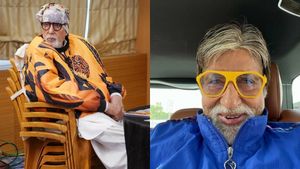 Amitabh Bachchan Social Media Break: Doctors Ask Big B To Rest
 -
 Throwback Thursday: Yash Chopra’s Heroines And The Fashion That Defined Bollywood Romance
 -
 Deepika Padukone Wears ₹90,000 Gold Kurta Set As Ranveer Singh, Daughter Dua Twin For Baby Devi’s Name Reveal
 -
 Women, Menopause And Bone Health: Doctor Explains Why Osteoporosis Risk Rises After 40
 -
 Can Breast Cancer Be Detected Before Symptoms Appear? A Doctor Explains The Role Of Screening
 -
 Papankusha Ekadashi 2026: October 21 Or 22? Know The Correct Date, Tithi And Significance
 -
 OTT Releases This Week (October 19–25): New Movies And Series On Netflix, Prime Video, JioHotstar And Zee5


Living Up To Our Ideals


There seems to be an endless conflict between our head and heart.
Though the blessings of the higher values of life are wholly convincing to the discriminating intellect, our hearts lack the courage and heroism to translate these ideas into our everyday thoughts and actions. We know truth, but we are not truthful.
We appreciate love, but we hardly live in love. A hardened criminal can give beautiful discourses on the divine qualities of the higher nature and yet in daily life acts like a preposterous, irredeemable animal.
All spiritual literature glorifies truthfulness as one of the most important aspects of a perfect life. In Shankara's commentaries, truth is defined as "a conformity of thoughts with actions". In its subjective application this definition implies that a truthful heart throbs to the dictates of the intellect. To summarize, the more we attune ourselves in our actions to our intellectual convictions, the more we are spiritually truthful.
In an era of materialism, the heart does not easily accommodate the dictates of the intellect. In such an era. therefore we find that the noble values and ideals taught in spirituality cannot come to bless the generation. This occurs due to our failure to live religion and it is not due to a lack of capacity and efficiency in religion.
A philosophy however great cannot of its own accord bless humanity. We know that aspirin can cure a headache, but that knowledge by itself is not a guarantee against a headache. If we are suffering we will have to buy the medicine, take it and wait patiently until the medicine becomes completely absorbed into our system. Similarly any philosophy whether political, economic, or spiritual can bless a generation only to the degree to which that generation in its behaviour and transactions in life attunes itself to those intellectually accepted philosophical truths.
Philosophy lived in day-to-day life is called religion. Religion is not just in temples; it is in our hearts to be faithfully followed at all times in our life.
About the author
Swami Chinmayananda the great master's lectures were an outpour of wisdom. He introduced the Geetha Gnana Yagna. He wrote a lot of books on spirituality, commentaries to Vedantic texts, children books etc. He then started spreading His teachings globally.....

 Continue with Google

