




 Click it and Unblock the Notifications


Latest Updates
-
 Dussehra 2026: The Difference Between Vijayadashami And Ravana Dahan
 -
 Veteran Musician Deva Dies At 75: Life And Legacy Of Thenisai Thendral
 -
 Navratri Fasting Diet: How To Stay Energised And Full Through The Day
 -
 Kavya Maran Wedding In Greece? Date, Venue, and What Is Confirmed
 -
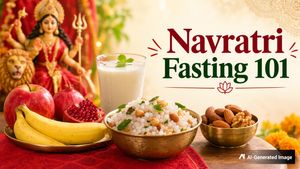 Navratri Fasting 101: What To Eat, What To Skip, And How To Avoid Acidity And Headaches
 -
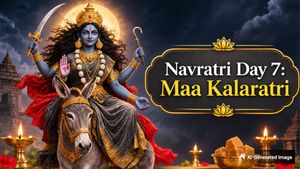 Navratri Day 7: Maa Kalaratri Puja, Colour, Rituals And Significance
 -
 Office To Dandiya Nights: One Quick-Change Outfit Formula For Navratri 2026
 -
 As ‘Ranabaali’ Hits Theatres, A Look At Rashmika Mandanna’s ₹1.31 Lakh Ivory Saree For Pre-Release Promotions
 -
 Durga Puja Pandals Mumbai 2026: 7 Stunning Celebrations To Explore From Matunga To Juhu
 -
 World Spine Day 2026: Is Your Phone Habit Causing Neck Pain? What To Know About Tech Neck


The Story of Prajapati And Its Meaning (What is True Tapasya?)


The Vedanta Kesary, p. 510-514, December 2007
We find in the Upanishads the idea of tapas acquired a variety of meanings such as knowledge, meditation or concentration of the mind and the control of the senses.
Sri Ramakrishna used to say that 'Truthfulness is the greatest austerity for this age', because Truthfulness leads to the realisation of Truth.
Once Swami Brahmananda was asked about austerity. He replied: 'It is to direct the mind towards God in order to taste divine bliss. Sri Ramakrishna's message in this age is renunciation of lust and gold. Real austerity consists in the control of the passions. It is very difficult to renounce lust and greed, to give up the desire for name and fame.
Real austerity is based upon these three principles: First, take refuge in the truth. Truth is the pillar to which you must always hold while performing any action. Second, conquer lust. Third, renounce all cravings. Observe these three principles. That is real austerity, and the greatest of these is to conquer lust.'
Clearly, the purpose of Tapasya or austerity is to purify the mind and direct it towards God. If after performing austerity one becomes a slave to passions that cannot be called austerity. Apparently Virochana did live a life of Brahmacharya but obviously it did not bring about the right result. Had he lived a right type of life, his mind would have become pure and he would have been able to reflect on the instruction of his teacher correctly. He would have come to the same conclusion as Indra that the body could not be the Atman, for the body is subject to the six-fold changes like growth, old age, disease, death and so on. Had he understood the teaching properly, like Indra, he too would not have stopped until he realised Brahman.
Vedanta, however, assures that no one is lost forever. Everyone will, in due course, turn towards higher life. Many spiritual aspirants fall into the same trap as Virochana. While we find them doing so much japa, pilgrimage, study of scriptures and charities, we do not find them much changed. In fact, sometimes, we find them even more self-centred, uncaring, and blissfully unaware of their behaviour.
About the author
Swami Dayatmananda
Swami Dayatmananda is the Minister-in-charge of Ramakrishna Vedanta Centre, Buckinghamshire, UK.

 Continue with Google

