




 Click it and Unblock the Notifications


Latest Updates
-
 Stop Blaming the Monsoon Entirely for Your Hair Fall, Says This Dermatologist
 -
 Shakira Debuts a New Gaurav Gupta Breastplate, and This Time It's Gold and Banarasi
 -
 Can Hair Oils Prevent Premature Graying or Improve New Hair Growth?
 -
 Can Any Blood Group Donate Organs to Any Patient? A Transplant Expert Explains
 -
 Everyone's Talking About Rahane's Igatpuri Home. Here's Why The Town Itself Is Worth The Trip
 -
 You Don't Need Surgery for Every Sinus Problem: When Is FESS Actually Necessary?
 -
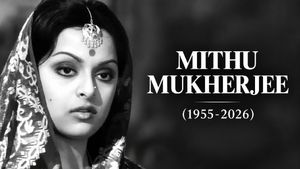 Who Was Mithu Mukherjee? Veteran Bengali Actress Passes Away At 71
 -
 Ahmedabad Police Flag Fraud Risk Behind Viral 'Rent A Garba Partner' Ads
 -
 Vidya Balan’s Jailer 2 Entry As Kantha: From Silk To Manjulika, A Look At Her Unconventional Roles
 -
 Samay Raina Has Now Denied Dating Rumours With Two Women In Three Months


The Grandest Of All Truths


Vedanta Kesary 1993 June p.202-207
'Comfort' is no test of truth; on the contrary, truth is often far from being 'comfortable'. If one intends to really find truth, one must not cling to comfort.
Swami Vivekananda
Every truth carries within it the essence or the reflection of the one absolute Truth. So every truth is grand. But all truths cannot be said to be equally grand. Some are grander than the rest, and there must be one truth which is the grandest of all.
How can we compare one truth with another and decide this one is more grand and that one less? One way of doing this is by determining the proximity of the truths to the absolute truth. The 'nearer a truth is to the absolute truth, the grander it is. By this yardstick, the grandest of all truths would obviously be one which is the nearest to the absolute truth; it would be the truth which is, so to say, a doorway to the absolute truth. Which means, if we just hold on to the grandest of all truths long enough, we shall eventually walk straight into the absolute truth.
Now, the absolute truth itself cannot be the grandest of all truths for the simple reason that it is the absolute. It transcends all relative truths and so it is incomparable. The grandest of all truths is a relative truth all right, but one which is almost on the borderline that separates the relative from the absolute. Having said this, we must now enter the heart of the matter.
Which truth is the grandest of all the truths in life? Every one of us may have a different answer to this question. Swami Vivekananda too answered this question once. He himself had put the question to a group of college boys who had gone to meet him. The boys were intelligent enough to keep their mouths shut, knowing that it was a rhetorical question and Swamiji's answer would soon follow, which it did.
According to Swami Vivekananda, the grandest of all truths is 'We shall all die!' Doesn't sound a very impressive answer, does it? Every one of us is going to die one day well, we all know that. We don't need a Vivekananda to tell us about it. The inevitability of our death is a truth all right. But 'the grandest of all truths'? Ridiculous! It is rather the most unpleasant of all truths. It's a truth we'd rather not think about. Instead of thinking about life and living it to the full, why should we fritter away our time and energy brooding over the gloomy, dark thought of death?
Death is going to come anyway, whether we think about it or not. Why should we idolize this hideous truth and call it, of all things, 'the grandest of all truths'? Swamiji's answer, therefore, seems at first sight to be either plainly absurd or meant as a joke.
In reality it is neither. When a Vivekananda speaks, thoughtful men and women do not dismiss his statements so easily. To hear the words of a prophet we need something more than merely a pair of good ears; to read a prophet's words in print we need something more than merely a pair of good eyes. That 'something more' is humility, reverence, and a sensitive, truth-seeking heart. When the words of a prophet reverberate in the heart of such a person, their inner meaning is revealed. Let us now try to open our hearts to Swamiji's luminous words:
Look here, we shall all die! Bear this in mind always, and then the spirit within will wake up. Then only meanness will vanish from you, practicality in work will come, you will get new vigour in body and mind, and those who come in contact with you will also feel that they have really got something uplifting from you.
To Be Continued
About the author
Swami Tyagananda
Swami Tyagananda is a monk of the Ramakrishna Order and presently head of the Ramakrishna Vedanta Society in Boston.

 Continue with Google

