




 Click it and Unblock the Notifications


Latest Updates
-
 World Alzheimer’s Day 2026: Why Early Diagnosis Matters And What This Year’s Theme Means
 -
 When Is Navratri In 2026? Full Dates, Rituals, Colours, Significance, and Fasting Guide
 -
 Vijay Sethupathi Confirms Maharaja 2, Hollywood Remake In The Works
 -
 Dashavatara Vrat 2026: Everything To Know About Tithi, Rituals, Fasting And The Ten Forms Of Lord Vishnu
 -
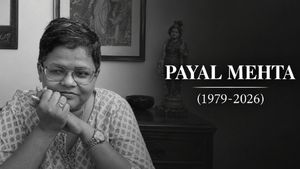 Senior Journalist Payal Mehta Passes Away At 46; PM Modi, Rahul Gandhi, Other Political Leaders Pay Tributes
 -
 Alia Bhatt’s Ganesh Chaturthi 2026 Looks Were All About Custom Kurtas, Colour And Modern Festive Style
 -
 How To Enjoy Sweets During Festivals Without Causing Big Blood Sugar Spikes
 -
 Weekend Read: Salman Khan Goes Shirtless on BB 20, Gives Trolls a Befitting 'Come Troll Me' Reply
 -
 World Cleanup Day 2026: Why ‘Clean Plates’ Could Be The Secret To Cleaner, Greener Cities
 -
 Deepika Padukone Welcomes Second Daughter With Ranveer Singh, A Day After Siddhivinayak Temple Visit


The Joy in Living for Others-Part II


Some ideas about 'gift', 'equity', 'reciprocity' and 'ethics' create confusion about this value. People construe a fractured view of the word 'gift' based on these ideas. Under this philosophy we are taught to understand 'gift' as a reciprocal act. If I make a gift to you, you are bound to reciprocate at one time or the other. What is the logic behind this? The logic is very simple: if you gift me something and I am not able to reciprocate, it remains an obligation on me forever.
It means a gift not returned is not ethical! Such an ethical question poses two complicated aspects of such a gift: (i) those who do not believe in 'rebirth' should not make or take a gift, because the givers/receivers cannot know whether they would not die before the gift is reciprocated; and (ii) those who believe in rebirth also should not because they are not sure whether this is their last birth! So it will be safer not to make a gift. Also, it creates problem for the law in respect of gifting properties to beneficiaries after the demise of the will-maker; the beneficiary won't get a chance to reciprocate. A gift should be unconditional; otherwise it becomes a 'settlement' or contract.
Again there are certain doubts nurtured by more meticulous observers. To live for others, they think, is to neglect duties towards one's own self. Stretched to the extreme it is called death or self-sacrifice. The ethical question still lingers in this respect. If I die for others, can't it be termed as misusing my life? This problem arises if we feel that it can be stretched to death. It is not a joy in 'dying for others', but in 'living for others' that we have proposed to examine.
It covers the span of living and it is meant for deriving the joy that is unalloyed. You take some strain to help your child to overcome her/his strain. You do not mind; rather you feel a satisfaction, joy. Similarly if you could help someone else's child to overcome his/her strain, you will derive joy—undoubtedly a little more joy.
The father of Alexander Fleming (of Penicillin fame) saved the life of a wealthy noble's young son. The Flemings were poor. The noble offered a gift to the senior Fleming for his kind act. The poor man refused the gift. With much effort the noble secured his consent to sponsor Alexander's education.
One gentleman expressed his happiness over such an act of his in which he helped his neighbour's child. He said, 'I was astonished to find a different kind of joy in it. You can tell it to others with a sense of pride and satisfaction. ' Yes, such has been everybody's pleasant experience throughout. Broaden this practice a little more and you get more joy. Now stretch this to cover your whole life, what do you get? You get joy in living for others! It is not like jumping into the fire and courting death for the cause of others. On the contrary, it is living for your own joy by extending help to others, not by dying for others.
The ' Ramayana' brings out this value in glaring examples. Rama went to the forest, because he had to bear the burden of his father's promise, as he was to inherit the legacy. It may be equitable that the inheritors should inherit not only the assets, but also the liabilities. But why did those two innocent persons, Lakshmana and Sita, go to the forest with Rama? We don't know. Yet what we know is that Rama did not ask them to go; rather he tried his best to dissuade them. Sita and Lakshmana derived joy in living for Rama, and we also derive reticent joy from reading this episode. Swamiji has said, 'If you want to have life you have to die every moment for it.' Life is so valuable.
About the author
Swami Baneshananda
Swami Baneshananda is a monk of the Ramakrishna order.
Chat With The Devotees Of Ramakrishna Paramahamsa

 Continue with Google

