




 Click it and Unblock the Notifications


Latest Updates
-
 Eat, Celebrate, Repeat: 6 Ayurvedic Tips To Keep Your Digestion Happy This Navratri 2026
 -
 Breast Cancer Awareness Month 2026: Expert Explains The Emotional Toll Of Breast Cancer
 -
 Navratri 2026 Food Hopping In Delhi NCR: 7 Places To Explore For A Taste Of Festive Flavours
 -
 Why Casual Games Are Perfect for Quick Online Play
 -
 World Menopause Day 2026: Theme, Significance And What Research Reveals About Menopause In India
 -
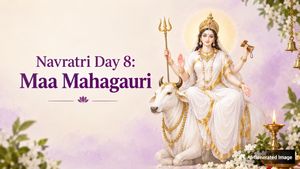 Navratri Day 8: Maa Mahagauri Puja, Colour, Rituals And Significance
 -
 Dussehra 2026: The Difference Between Vijayadashami And Ravana Dahan
 -
 Veteran Musician Deva Dies At 75: Life And Legacy Of Thenisai Thendral
 -
 Navratri Fasting Diet: How To Stay Energised And Full Through The Day
 -
 Kavya Maran Wedding In Greece? Date, Venue, and What Is Confirmed


Shri Sai Satcharitra - Chapter 8 - VI

Sai Ram. Shri Hemadpant describes the signs of a true Jnani, a Sthitha prajna (One with a steady understanding). Since the Jnani is free from the shackles of the ego, He is not affected by external events such as pleasures or misfortunes. He looks at every thing as God's Leela or Prasad and accepts all events as transient images on a screen. He remains in Sakshi bhava, witness mode. Sai Ram.
He, whose glance would turn a beggar into a king, used to beg His food from door to door in Shirdi, and let us now see how He did it.
He had a very special purpose in begging His food in that small village. He used that simple act of begging to teach many devotees, valuable spiritual lessons. Sai Ram.
Baba Begging Food
Blessed are the people of Shirdi, in front of whose houses, Baba stood as a beggar and called out, "Oh Lassie (or Oh Maayee), give me a piece of bread" and spread out His hand to receive the same.
Sai Ram. Baba was showing the signs of a true Brahmachari, which is one who moves in and with Brahma. What is done now-a-days as a small ritual at the time of the Upanayana Samskara, that is the Ceremony which gives the Yagnopavita, sacred thread to the brahmachari, and which is considered as a necessary 'ritual' preceding marriage, has a very deep spiritual meaning. A true Brahma Jnani has no sense of thine or mine, so has no ego problem in begging food for preserving the body so that it can do its duty. Sai Ram. Looking upon and addressing all women as Mothers, Sisters or daughters establishes Sai's true Brahmacharya, celibacy. Sai Ram.
In one hand He carried a Tumrel (tinpot) and in the other a zoli or choupadari, i.e., a rectangular piece of cloth. He daily visited certain houses and went from door to door. Liquid or semi-liquid things such as soup, vegetables, milk or butter-milk were received in the tin pot, while cooked rice, bread, and such solid things were taken in the zoli. Baba's tongue knew no taste, as He had acquired control over it. So how could He care for the taste of the different things collected together? Whatever things He got in His zoli and in the tin pot were mixed together and partaken by Baba to His heart's content. Whether particular things were tasty or otherwise was never noticed by Baba as if His tongue was devoid of the sense of taste altogether.
Sai Ram. Baba's tongue knew no taste, as He had acquired control over it. Taste, external beauty, and similar sensations, that is signals received by the five sensory organs have no doubt a place in the ordinary day-to-day affairs. But for a Brahma Jnani, who has transcended the mind, taste has no significance. So, all food was mixed up and eaten. Sai was also indicating that all individual dharmas, attributes merging into Brahman, Who is free of all attributes. Sai Ram.
Baba begged till noon, but His begging was very irregular. Some days He went a few rounds, on other days up to twelve noon. The food thus collected was thrown in a kundi, i.e. earthen pot. Dog, cats and crows freely ate from it and Baba never drove them away. The woman who swept the floor of the Masjid took some 10 or 12 pieces of bread to her house, and nobody prevented her from doing so. How could, He, who even in dreams never warded off cats and dogs by harsh words and signs, refuse food to poor helpless people? Blessed indeed is the life of such a noble person!

 Continue with Google

