




 Click it and Unblock the Notifications


Latest Updates
-
 Drishyam: The Conclusion — Everything You Need To Remember Before Watching The New Film
 -
 Jantar Mantar Protest On Gandhi Jayanti 2026: Why This Delhi Landmark Is A Hub For Public Demonstrations
 -
 World Smile Day 2026: 5 Ways Smiling May Benefit Your Health And Support Everyday Wellbeing
 -
 Lal Bahadur Shastri Jayanti 2026: 10 Quotes That Reflect His Ideas On Leadership, Peace And Nation-Building
 -
 Gandhi Jayanti 2026: 10 Places In India Where You Can Experience Mahatma Gandhi’s Legacy
 -
 International Day Of Non-Violence 2026: Why Was Gandhiji's Birthday Chosen For A Global Message Of Peace?
 -
 Saptami Shraddha 2026: Who Should Perform It And What Does This Pitru Paksha Ritual Mean?
 -
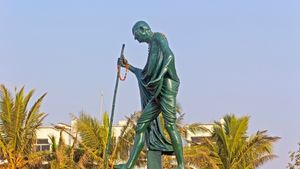 Gandhi Jayanti 2026: 7 Sustainable Lifestyle Lessons We Can Still Learn From Gandhi
 -
 Who Is Captain Smit Machchhar? The Pilot Who Fought Back Mid-Air on Flydubai FZ1073
 -
 Toys For Kidults And ToyTrends: Inside The Spielwarenmesse 2027 Preview


Raksha Bandhan 2026: The Forgotten Legend Of A Wife Who Tied Rakhi To Save Her Husband

Long before rakhi meant a sister's thread on her brother's wrist, it meant something else entirely: a wife's thread on her husband's, tied on the eve of a battle he might not survive.

That is where the story of Raksha Bandhan begins, according to the Bhavishya Purana, not with siblings at all, but with Indra, king of the gods, and his wife Indrani. This year, Raksha Bandhan falls on Friday, 28 August, and the muhurat window runs from roughly 5.57 am to 9.48 am, since Bhadra clears before sunrise. But the date is the easy part. The legends behind it are what make the festival interesting.
The War Indra Nearly Lost And The Thread That Turned It
The gods were losing. Demon forces, led by King Bali in some tellings and Vritra in others, had pushed Indra to the edge of defeat. Anxious and out of options, Indra turned to his guru, Brihaspati, for counsel. Brihaspati's advice was unusual: have his wife, Indrani (also called Sachi), prepare a sacred thread, bless it with mantras on the full moon of Shravana, and tie it on his wrist.
She did. Indra returned to the battlefield and won.
That thread came to be called the Raksha Sutra - the "thread of protection" - and the ritual of tying it, Raksha Bandhan. It is worth sitting with what this means: the very first rakhi, by most classical accounts, was tied by a wife to her husband, not by a sister to her brother. The sibling association came later, layered on through other legends over centuries.
Yama And Yamuna: The Story That Made It About Siblings
The shift towards brothers and sisters is usually traced to Yama, the god of death, and his sister Yamuna. As the story goes, Yamuna tied a rakhi on Yama and asked for nothing in return except that he visit her often. Touched, Yama declared that any brother who receives a rakhi and vows to protect his sister would be blessed with a long life. That promise is why, to this day, longevity and protection sit at the heart of the festival.
Krishna, Draupadi, And A Debt Repaid In The Kaurava Court
The most retold legend involves Krishna and Draupadi. When Krishna cut his finger, Draupadi tore a strip from her sari and bound the wound. Krishna, moved by the gesture, promised to protect her for life - a vow he kept years later when he came to her aid in the Kaurava court. It is one of the clearest reminders that in Indian mythology, the rakhi bond was never limited to those born into the same family.
When History Joined The Myth: Karnavati And Alexander's Wife
Two often-cited historical accounts widen the story further. Rani Karnavati of Mewar is said to have sent a rakhi to Mughal emperor Humayun when her kingdom faced invasion, appealing to him as a brother for protection. And centuries earlier, around 300 BCE, an account holds that Alexander's wife sent a rakhi to King Porus, asking him to spare her husband in battle - a story historians treat with more scepticism than the mythological ones, but one that has stayed part of Rakhi folklore regardless.
Bottomline
Strip away the sweets and the shopping, and Raksha Bandhan's origin story is far less tidy than the festival looks today - it moves from a wife protecting her husband, to a sister protecting her brother, to bonds chosen rather than born into. That messiness is the point. The thread was never really about who you're related to. It was always about who you choose to protect.

 Continue with Google

