




 Click it and Unblock the Notifications


Latest Updates
-
 Arijit Singh India Tour 2027: First Concerts After Playback Exit
 -
 Healthy Navratri Recipes: 8 Low-Oil Vrat Dishes To Try This Year
 -
 Harmanpreet Kaur Steps Down As Captain: Career In Numbers And Mandhana Likely Next
 -
 Why Stress Can Make Psoriasis Flare And Why Scratching Makes It Worse
 -
 Jeffrey Archer Dies At 86, One Day Before Adam & Eve Goes On Sale
 -
 Amitabh Bachchan, 83, Struggles To Sleep After Knee Injury On KBC 18
 -
 World Cerebral Palsy Day 2026: Theme, Significance And Why Inclusion Matters For People With CP In India
 -
 Navratri 2026: 5 Vrat Recipes To Add A Fresh Twist To Your Traditional Fasting Food Menu
 -
 Navratri Recipes 2026: Quick Navratri Recipes You Can Make In Under 30 Minutes
 -
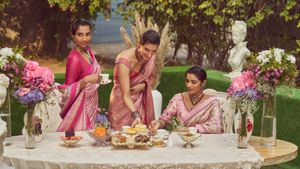 Handwoven Craft Meets Contemporary Elegance In Kasturi Kundal’s Festive Edit


Navratri Colours 2026: Day-Wise List From 11 To 19 October

Navratri 2026 begins on Sunday, 11 October, which makes the colour for Day 1 orange. The nine shades then follow in a fixed order and end with peacock green on Monday, 19 October, a day before Dussehra. In Gujarat and Maharashtra, wearing the colour of the day is a popular custom, and in many households the festival wardrobe is planned around it. Here is the complete list of Navratri 2026 colours, with dates, the goddess honoured each day and what each shade is said to stand for.

Navratri 2026 Day-Wise Colours: The Complete List
The sequence for 2026, with each day's goddess, is as follows.
| 1 | Sunday, 11 October | Orange | Shailaputri |
| 2 | Monday, 12 October | White | Brahmacharini |
| 3 | Tuesday, 13 October | Red | Chandraghanta |
| 4 | Wednesday, 14 October | Royal Blue | Kushmanda |
| 5 | Thursday, 15 October | Yellow | Skandamata |
| 6 | Friday, 16 October | Green | Katyayani |
| 7 | Saturday, 17 October | Grey | Kalaratri |
| 8 | Sunday, 18 October | Purple | Mahagauri |
| 9 | Monday, 19 October | Peacock Green | Siddhidatri |
Durga Ashtami falls on Sunday, 18 October, and Maha Navami on Monday, 19 October. Dussehra follows on Tuesday, 20 October.
How Navratri Colours Are Decided
The first colour depends on the weekday Navratri begins, and the remaining eight days follow a fixed cycle. In 2020, for example, the sequence began with grey. This year it opens on a Sunday, so it begins with orange.
That is also why Day 8, another Sunday, is purple and not orange: only the first day is tied to the weekday. Seven of the nine shades correspond to the days of the week and their ruling planets, from the Sun for Sunday to Saturn for Saturday, and purple and peacock green complete the set. Interpretations vary. Some link each shade to a quality of the goddess worshipped that day, while others connect it to the planet that rules the weekday. Older and regional lists sometimes differ, so families may follow a slightly different sequence.
What Each Navratri Colour Stands For
Each shade is paired with a mood and with one form of Durga, together known as the Navadurga. The meanings below are traditional associations from festival guides, and they differ a little between sources.

Day 1, Orange: Warmth For A Fresh Start
Orange carries the glow of the rising sun, which is why it is linked to warmth, energy and brightness. It is paired with Shailaputri, the daughter of the mountains and a form of Parvati, worshipped for steadiness and devotion. Together they set a cheerful, grounded tone for nine nights.
Day 2, White: Calm And Discipline
White stands for purity, peace and simplicity. Its goddess, Brahmacharini, is Parvati in her ascetic form, associated with penance, discipline and resolve. The shade also matches Monday, the day of the Moon, which suits the quiet mood.
Day 3, Red: Strength And Devotion
Red is the colour of passion, love and raw strength, and of the chunri offered to the goddess, which makes it one of the festival's most auspicious shades. Chandraghanta, who wears a bell-shaped crescent moon on her forehead, is worshipped as a warrior who brings courage and calm together.
Day 4, Royal Blue: Depth And Composure
Royal blue suggests depth, richness and a regal calm. Kushmanda, honoured on this day, is regarded as the creator of the cosmos, whose smile is said to have brought light to the universe. Wednesday belongs to Mercury.
Day 5, Yellow: Cheer And Learning
Yellow is the colour of joy, optimism and brightness, and it is often tied to learning and wisdom. Skandamata, the mother of Kartikeya, is worshipped for a mother's protective love. It is also the shade of Thursday, the day of Jupiter.
Day 6, Green: Growth And Renewal
Green represents growth, nature and new beginnings, making it a shade of renewal and hope. Katyayani, the fierce slayer of evil, stands for strength and fearlessness. Friday, the weekday colour, is ruled by Venus.
Day 7, Grey: Steadiness Through Change
Grey signifies balanced, grounded thinking and quiet strength, the ability to stay steady when things shift. Kalaratri, the dark and fearsome form who destroys fear and negativity, is worshipped on this night. Saturday is ruled by Saturn.
Day 8, Purple: Dignity And Ambition
Purple stands for ambition, dignity and spiritual fulfilment, a rich shade linked to abundance and a sense of higher purpose. Mahagauri, serene and fair, is honoured on Durga Ashtami as a giver of purity and forgiveness.
Day 9, Peacock Green: Individuality And Fulfilment
Peacock green blends blue and green and represents individuality, freshness and an open, compassionate heart. Siddhidatri, the giver of spiritual powers and accomplishments, is worshipped on Maha Navami, the closing day.

 Continue with Google

