




 Click it and Unblock the Notifications


Latest Updates
-
 World Spine Day 2026: Is Your Phone Habit Causing Neck Pain? What To Know About Tech Neck
 -
 Breast Cancer Awareness Month 2026: Expert Explains Why Family History Isn't the Only Risk
 -
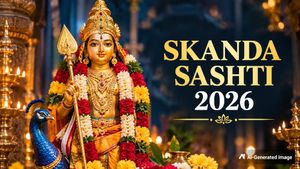 Skanda Sashti 2026: Significance, Vrat Rituals And How Devotees Observe The Day
 -
 Saraswati Avahan 2026: Significance, Shubh Muhurat, Rituals And Puja Vidhi
 -
 Navratri Day 6: Maa Katyayani Puja, Colour, Rituals, And Significance
 -
 Garba Before The DJ Era: What Navratri Looked Like In Earlier Times
 -
 What Does Indian Design Mean Today? A Creative Director Explains
 -
 Why Your Vision Can Feel Different In Bright And Dim Rooms, Expert Explains
 -
 Pandal Hopping In Bengaluru 2026: 7 Durga Puja Venues Worth Your Time
 -
 Navratri 2026 Fasting Food: Is Daily Sabudana Really the Best Choice?


Mahashivratri 2026: Iconic Shiva Temples and Their Timeless Legends

Mahashivratri, the great night of Shiva, is one of the most sacred and celebrated festivals of the Hindus, observed with great reverence, fasting, and meditation. Across India and beyond, devotees visit sacred temples with centuries-old histories and fascinating legends tied to Shiva's cosmic role as destroyer, transformer and protector of the universe.
Iconic Shiva Temples and Their Timeless Legends
Aundha Nagnath Temple - Maharashtra

Located in Hingoli district, Aundha Nagnath Temple is considered a Jyotirlinga, or the eighth of twelve sacred incarnations of Lord Shiva. This ancient temple blends Hemadpanthi and later Maratha architecture and is deeply associated with Sant Namdev. It's believed the temple actually rotated to face Namdev at his insistence, giving it a unique devotional significance. Devotees gather in large numbers during Mahashivratri for the chariot festival known as Rathotsav.
Koteshwar Mahadev Temple - Uttarakhand
Close to the banks of the Alaknanda River near Rudraprayag, the Koteshwar Mahadev Temple holds ancient lore. Local tradition says this was a resting place where Lord Shiva paused his meditation on his way to Kedarnath. Mythology links the site with Bhasmasura, a demon who could turn anyone to ashes, and Shiva's divine encounter before defeating him. Pilgrims visit here especially on Mahashivratri to honour Shiva's timeless presence.
Mahabaleshwar Temple - Gokarna, Karnataka

At the coastal pilgrimage town of Gokarna, the Mahabaleshwar Temple is steeped in a popular legend involving Ravana, the demon king of Lanka. It's said Ravana tried to bring the powerful Atmalinga from Mount Kailash to Lanka to please his mother. However, the linga was placed on the ground at Gokarna through divine intervention and could not be moved again. The name "Gokarna" - meaning cow's ear - comes from the story of how the linga was discovered as Ravana chased the sacred cow's ear into the earth.
Gupteswar Cave Temple - Odisha
In the Koraput district of Odisha, Gupteswar Cave houses a massive Shiva Linga said to be continuously increasing in size, according to local lore. The cave shrine, embraced by limestone formations, is believed to have been discovered in ancient times and draws devotees during Mahashivratri and the month of Shravan. Pilgrimages here are marked by devotees barefoot and in deep reverence, seeing the expanding linga as a symbol of Shiva's growing power and grace.
Stambheshwar Mahadev Temple - Gujarat (Vanishing Temple)

One of India's most unusual Shiva shrines is located in Bharuch district, Gujarat; a temple that vanishes into the sea twice a day. At high tide, the temple submerges, and at low tide it reappears. The periodic disappearance and reemergence of the temple has captured the imagination of the people as a wonder of nature associated with the mysticism of Lord Shiva.
Eklingeshwar Mahadev Temple - Rajasthan's Mystery Shrine
In the historic setting of Shankargarh Fort, the Eklingeshwar Mahadev Temple opens only on Mahashivratri. Local belief holds that the idols, including Lord Shiva, Ganesha, and Lakshmi-Narayan, remain invisible to devotees outside this auspicious day. The temple's year-round closure and mystical tradition make its Mahashivratri opening an extraordinary event for pilgrims.
Why These Legends Matter
Temples dedicated to Shiva are often more than places of worship, they are living stories woven into regional culture, history and belief. Many Shiva temples reflect mythological events, cosmic symbolism, and mysticism, which bring devotees closer to universal themes of spirituality, creation, and destruction. The mythology of Shiva temples also provides a glimpse of how Shiva's presence has impacted religious practices.

 Continue with Google

