




 Click it and Unblock the Notifications


Latest Updates
-
 Alia Bhatt And Vicky Kaushal Set The Ramp Ablaze In Manish Malhotra’s Stunning Chikankari Couture Looks
 -
 Bank Strike From September 28 To 30: Why Are Bank Employees Striking And Which Services Will Be Affected?
 -
 Kerala Faces Power Cut Crisis: What Happened And How People Are Coping With Night-Time Outages
 -
 Google Turns 28: 10 Surprising Things You Probably Never Knew About The Search Giant
 -
 World Tourism Day 2026: Significance, Theme And How India Is Redesigning Tourism With Artificial Intelligence
 -
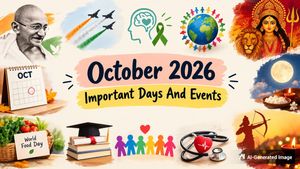 October 2026 Important Days And Events: Complete List Of National And International Observances
 -
 "I Look For Green Flags Now": Inside Dating's Biggest Shift In 2026
 -
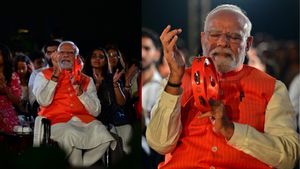 What Is Bhajan Clubbing? The Trend PM Modi Called Spectacular
 -
 Love & War First Looks: Alia Bhatt, Ranbir Kapoor and the Making of Bhansali's Next Epic
 -
 Bhadrapada Purnima 2026: What Makes This Full Moon Important Before Pitru Paksha


Hajj And Umrah 2022: Hajj Pilgrimage Date, History And Significance


Hajj and Umrah are pilgrimages to Mecca, Saudi Arabia, taken up by the Muslims. Hajj forms the fifth pillar of Islam, which a Muslim is supposed to undertake at least once in his lifetime, while Umrah is considered a minor pilgrimage that can be taken up at any point in time.
Hajj unlike Umrah occurs in the Islamic month of Dhu al-Hijjah, and this year it will be observed between 7 July to 12 July 2022. The exact date of the Hajj pilgrimage is unpredictable as the Islamic calendar happens to be eleven days shorter that the Georgian calendar. Arrival in Mecca for worship is termed as Hajj.
Hajj And Umrah 2022: History And Significance
Hajj pilgrimage stretches into antiquity, even before the times of Prophet Muhammad in the 7th Century. It is believed that performing the Hajj pilgrimage dates back to the times of Ibrahim, somewhere around 2000 BCE.
The legend associated with the Hajj states, that Ibrahim, left his wife and son in a desert on account of God's order, his child Ishmael crying of thirst and his wife running desperately back and forth to fetch water.
It is believed that the baby cried and hit its foot on the ground, due to which water emerged miraculously. Another version of the history has it that angel Gabriel scrapped his feather on the ground, due to which water sprang up to quench the child's thirst. This source of water is called today as Zamzam.
It is also believed that in earlier days, tribes around the Arabian Peninsula and Christian Arabs also undertook a pilgrimage to Mecca. It is said that owing to the beliefs of the numerous tribes who converged in Mecca, there were hundreds of idols on the Kaaba (the cube-shaped building which is supposed to be the Muslim direction of prayer) which was cleared by the Prophet Muhammad.
In 631 CE, Prophet Muhammad performed his first Hajj pilgrimage with his followers, where he cleared the place off the idols and reinstated the Muslim belief. It was since then that the Hajj pilgrimage came to be the fifth pillar of Islam. It was the first and last Hajj pilgrimage that Muhammad undertook. However, it is said that he had undertaken a lot of Umrah.
There are numerous Hajj rituals associated with the Hajj pilgrimage, the performance of which makes the mission complete or valid. All the rituals are associated with the story of Ibrahim and his family who won the Lord's mercy owing to their complete trust in Him.

 Continue with Google

