




 Click it and Unblock the Notifications


Latest Updates
-
 Deepika Padukone And Ranveer Singh Announce Second Daughter’s Name On Dussehra, Share Family Photo
 -
 Who Was Karthik Sabesh? Tamil Actor Passes Away At 37, Days After Uncle And Composer Deva’s Death
 -
 Who Is Ravleen Varghese? Meet The First Malayali Model To Walk The Victoria’s Secret Runway
 -
 World Osteoporosis Day 2026: A Minor Fall, A Major Fracture — Doctor On Why Older Adults Should Be Careful
 -
 Durga Visarjan 2026: October 20 or 21? Know Shubh Muhurat, Rituals And Significance
 -
 Happy Dussehra 2026: 50+ Wishes, Messages And Greetings To Share With Family And Friends
 -
 Dussehra 2026: Astrologer Ashutosh Clairvoyant On Colours, Offerings And Puja Rituals For Each Zodiac Sign
 -
 Hustle Culture Has a Bedroom Problem No One Talks About, Expert Explains
 -
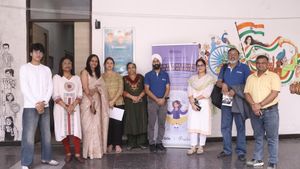 Iris Young Minds Initiative: How A Noida CSR Programme Is Opening Up Talk On Student Stress
 -
 Lal Hit Janta Party Explained: Who Is Behind The Rival to the Cockroach Janta Party


Why Is Vasant Navratri Celebrated?

Vasant Navratri is also known as the Spring or Chaitra Navratri. It is a grand nine days festival celebrated with great enthusiasm in Northern India. Navratri is celebrated twice a year. The Vasant Navratri is celebrated in the season of Spring and the Sharad Navratri is celebrated during the onset of autumn.
Goddess Durga or Shakti is worshipped during the nine days of the festival. It is believed that the Goddess was invoked by all the Gods and Goddesses to fight the evil demon, Mahishasura. All the Gods and Goddesses combined all their powers to give shape to the Supreme Goddess and named Her Durga. Some people also believe that Lord Ram started the tradition of Vasant Navratri.

The nine days festival is observed by fasting throughout the day and praying to the Goddess. Let us take a look as to why Vasant Navratri is celebrated.
MAKHANA KHEER: NAVRATRI FASTING RECIPE
Story Of Vasant Navratri
Once there was a king named Dhruvasindhu in the kingdom of Kosala. He got killed while he went hunting. So, preparations were made to crown his son prince Sudarshan as the king. However two other kings, Yudhajit and Virasena of the adjacent regions attacked the kingdom and Yudhajit was successful in defeating Virasena. Prince Sudarshan had to flee from the kingdom along with his mother and an eunuch. They took refuge in the ashram of a sage named Bharadwaja.
Yudhajit came after prince Sudarshan to kill him. However the sage would not let him touch the refugees. Thus, Yudhajit had to return back. After many years, one day the sage's son addressed the eunuch by his original name 'Kleeba'. The young prince caught only the first syllable 'Klee' and pronounced it as 'Kleem'. Kleem happens to be the bija akshara (root syllable) of invoking the Divine Mother. The prince obtained the grace of the Divine Mother as he kept repeating the syllable. The Goddess appeared before him and blessed him with all the power and weapons.
Later the prince gets married to the daughter of a powerful king. Together with his father-in-law, the prince defeated Yudhajit and gained his kingdom back. Thus, after regaining his kingdom, Prince Sudrashan performed the Vasant Navratri puja to please the Goddess.
Observation Of Vasant Navratri
People keep a nine days long fast during this time. The Durga Suktam is chanted every evening during the Vasant Navratri puja. On the eighth day of the festival (ashtami), a group of small girls (pre-pubescent) known as the 'Kanjak' are invited to every house. The head of the household washes their feet and then they are fed a sumptuous meal. Small gifts like chunri, bangles and money are also offered to the girls. These kanjaks are believed to be the representation of the Supreme Goddess. Hence they are treated like Goddess Durga and welcomed in every household.
Vasant Navratri is a time of great celebration, fasting and feasting. This festival makes the colourful Spring season all the more interesting and divine.

 Continue with Google

