




 Click it and Unblock the Notifications


Latest Updates
-
 As ‘Ranabaali’ Hits Theatres, A Look At Rashmika Mandanna’s ₹1.31 Lakh Ivory Saree For Pre-Release Promotions
 -
 Durga Puja Pandals Mumbai 2026: 7 Stunning Celebrations To Explore From Matunga To Juhu
 -
 World Spine Day 2026: Is Your Phone Habit Causing Neck Pain? What To Know About Tech Neck
 -
 Breast Cancer Awareness Month 2026: Expert Explains Why Family History Isn't the Only Risk
 -
 Skanda Sashti 2026: Significance, Vrat Rituals And How Devotees Observe The Day
 -
 Saraswati Avahan 2026: Significance, Shubh Muhurat, Rituals And Puja Vidhi
 -
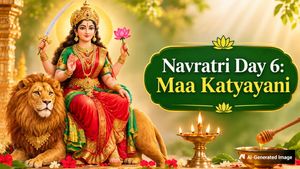 Navratri Day 6: Maa Katyayani Puja, Colour, Rituals, And Significance
 -
 Garba Before The DJ Era: What Navratri Looked Like In Earlier Times
 -
 What Does Indian Design Mean Today? A Creative Director Explains
 -
 Why Your Vision Can Feel Different In Bright And Dim Rooms, Expert Explains


Bhadali Navami 2026: Date, Muhurat, Rituals, and Everything You Should Know

Somewhere in North India this week, a family that couldn't find a single "good date" on the calendar for their daughter's wedding will finally exhale. Bhadali Navami has that effect. Every year, without fail, this one Navami tithi rescues couples, homebuyers and shopkeepers who've spent months hunting for a shubh din - because on this day, no astrologer needs to be consulted at all.

In 2026, Bhadali Navami falls on Wednesday, 22 July. It arrives on the Shukla Paksha Navami of the Ashadha month, and it carries a reputation few other dates in the Hindu calendar can match.
Why This One Navami Doesn't Need a Muhurat
Bhadali Navami - also called Bhadli Navami, Bhadariya Navami or Kandarp Navami depending on the region - belongs to a small, select group of dates known as Abhijit or Abhuj Muhurat. In practice, that means any auspicious activity, from marriage to griha pravesh, tonsure ceremonies, or buying property and vehicles, can go ahead on this day without a priest first checking planetary alignments.
That single detail is why the day matters so much in North India, Bihar, Jharkhand, Uttar Pradesh, Madhya Pradesh and parts of Gujarat. For couples who couldn't find a wedding date that satisfied every family astrologer, Bhadali Navami is treated as a fallback that's inherently blessed.
The Timings for 2026
According to Panchang calculations, the Navami tithi begins around 5:16 AM IST on 22 July and runs until roughly 7:03 AM IST on 23 July, which is why the festival is observed on 22 July itself, in line with the sunrise-based tithi that Panchang tradition follows.
Because it's an Abhuj Muhurat, there's no need to check Choghadiya or Hora timings separately - the entire day is considered fit for auspicious work.
What Makes the Day So Significant

Bhadali Navami also marks the closing day of the Ashadha Gupt Navratri, the quieter, lesser-known version of Navratri observed by devotees of the ten Mahavidyas. Worship on this day is believed to bring the blessings of Goddess Parvati, honoured here in her most auspicious form, alongside Lord Vishnu.
There's a second, more practical reason the day carries weight: it's the last major auspicious date before Chaturmas begins. Chaturmas is the four-month stretch, starting around Devshayani Ekadashi, during which Lord Vishnu is believed to go into cosmic sleep - and during which weddings and other ceremonial functions are traditionally paused until Devuthani Ekadashi. Anyone who wants to complete a wedding, housewarming or similar ritual before that pause has, effectively, one last window. This is it.
Rituals Observed on Bhadali Navami
Households mark the day with a mix of worship, fasting and charity. Common rituals include:
- Waking early, bathing, and offering prayers to Lord Vishnu and Goddess Parvati
- Observing a day-long fast, broken only after the evening puja
- Performing havan (fire offerings) at home or at a temple
- Reciting Vishnu Sahasranama or Lakshmi-Narayan mantras
- Donating food, clothes or money to those in need
- Solemnising weddings, griha pravesh, or naming ceremonies without a separate muhurat check

 Continue with Google

