




 Click it and Unblock the Notifications


Latest Updates
-
 Throwback Thursday: Kareena Kapoor’s ‘Poo’ To Priyanka Chopra’s ‘Desi Girl’, Bollywood Looks That Ruled 2000s
 -
 PM Narendra Modi Birthday Special: Make His Favourite Khichdi At Home And Know Its Health Benefits
 -
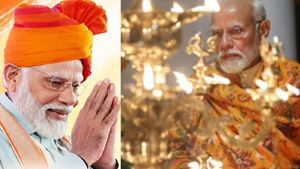 PM Modi Turns 76: ‘Ashirwad Ka Diya’ To Be Lit At 500+ Locations Across India
 -
 World Patient Safety Day 2026: Taking Multiple Medicines? Expert Explains How To Prevent Medication Errors
 -
 Kanya Sankranti 2026: Surya’s Virgo Transition, Rituals And Why The Day Is Spiritually Significant
 -
 Vishwakarma Puja 2026: Why Do We Worship Tools, Machines And Vehicles On This Day?
 -
 Grammy-Nominated Singer-Songwriter Alex Warren To Perform At Abu Dhabi Grand Prix 2026
 -
 How Does Insulin Work? Understanding The Hormone That Controls Blood Sugar
 -
 Newborn Care Myths Vs Facts: What A Neonatologist Wants Parents To Know
 -
 Ganesh Chaturthi 2026 At Antilia: 7 Bollywood Celebrities Who Stood Out In Traditional Festive Ensembles


7 Unique Rituals Practised By Women Across India Without Permission Or Apology

India's rituals often go viral for how "shocking" or "bizarre" they look on screen. But take a moment to scroll for a moment and look closer. Many of these practices-especially those involving women are about faith, community, history, and sometimes, rebellion against social roles. Here's a closer look at some lesser-known rituals where women take centre stage, stripped of exaggeration and rooted in what they truly mean.

Dhinga Gavar: When Women Rewrite The Rules
Jodhpur, Rajasthan
Once a year during Gangaur, the streets of Jodhpur women dress as gods, policemen, dacoits, and even as men. They carry sticks. Men step aside sometimes literally and accept playful blows as part of the ritual.
This isn't violence or chaos. Dhinga Gavar is about role reversal. It allows women a rare public space to express authority, satire, and freedom without consequence. The popular claim that an unmarried man hit by a stick will soon get married? That's folklore, not belief but it adds to the festival's humour.
At its core, this ritual is about women reclaiming space, if only for a night.
Made Snana: Faith, Controversy, and Changing Times
Kukke Subrahmanya, Karnataka
Made Snana involves devotees rolling over banana leaves after a temple meal, believing it brings spiritual cleansing. While often associated with women, it has historically included men as well.
What matters today is context. The ritual has faced strong criticism due to hygiene and caste concerns, leading to court interventions and strict regulation. There's no medical proof that it cures illnesses, despite popular claims.
Made Snana sits at a crossroads between faith and reform showing how traditions evolve when questioned.
Garudan Thookam: Devotion In Its Most Extreme Form
Kerala
Garudan Thookam is not for spectacle. Devotees are suspended using hooks to symbolise Garuda, the mythical eagle. It is a vow-driven act of endurance tied to Bhagavathi or Kali worship.
Blood is not the offering here. Devotion is.
While traditionally male-dominated, women have participated in recent years, reflecting shifts in access and agency within ritual spaces. This practice is regulated today, acknowledging both belief and bodily safety.
Apatani Nose Plugs: Identity, Not Shock Value
Arunachal Pradesh
Older Apatani women wearing large nose plugs often become viral talking points. The commonly shared explanation-that it prevented kidnappings is one of several oral theories, not historical fact.
What is verified is this: nose plugs and facial tattoos once marked tribal identity, beauty norms, and cultural belonging. The practice has faded with newer generations, but its meaning remains rooted in self-definition, not fear.
Tug-of-War Between Married Couples: Play, Not Punishment
Bihar
In some rural fairs, married couples participate in tug-of-war games. The losing side may carry their spouse or perform a light-hearted task in public.
There's no religious mandate here. No rulebook. Just community entertainment meant to dissolve hierarchy and invite laughter. These moments remind us that tradition isn't always solemn-sometimes, it's just joy.
Piercing, Fire-Walking, And Vows of Faith
Tamil Nadu
Temple festivals across Tamil Nadu often include tongue piercing, cheek piercing, fire-walking, and kavadi-bearing. While social media often frames these acts as sacrifices for husbands, the reality is broader.
Women perform these rituals for many reasons-personal vows, gratitude, healing, or spiritual discipline. These are deeply personal acts of belief, not gendered suffering.
Husband-Carrying Races: Folk Fun, Not Ritual
Ranchi, Jharkhand
Occasionally seen during tribal fairs, husband-carrying races are exactly what they sound like-amusing, informal competitions. They are not codified rituals or religious practices. Think of them as folk games born from community gatherings, not ancient mandates.
Why These Rituals Matter More Than They Look
It's easy to label unfamiliar practices as "strange." It's harder and more honest to understand them.
Many of these rituals show women negotiating faith, power, humour, and identity within their cultural worlds. Some traditions are changing. Some are fading. Some are being questioned and that's not disrespect. That's evolution.
Before we sensationalise, it's worth asking: What does this ritual mean to the people who live it?
Because tradition, like society, is never static and women have always played a far more active role in shaping it than viral headlines suggest.

 Continue with Google

