




 Click it and Unblock the Notifications


Latest Updates
-
 Navratri Day 8: Maa Mahagauri Puja, Colour, Rituals And Significance
 -
 Dussehra 2026: The Difference Between Vijayadashami And Ravana Dahan
 -
 Veteran Musician Deva Dies At 75: Life And Legacy Of Thenisai Thendral
 -
 Navratri Fasting Diet: How To Stay Energised And Full Through The Day
 -
 Kavya Maran Wedding In Greece? Date, Venue, and What Is Confirmed
 -
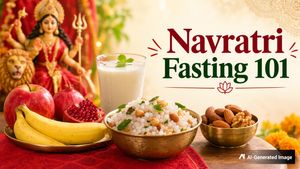 Navratri Fasting 101: What To Eat, What To Skip, And How To Avoid Acidity And Headaches
 -
 Navratri Day 7: Maa Kalaratri Puja, Colour, Rituals And Significance
 -
 Office To Dandiya Nights: One Quick-Change Outfit Formula For Navratri 2026
 -
 As ‘Ranabaali’ Hits Theatres, A Look At Rashmika Mandanna’s ₹1.31 Lakh Ivory Saree For Pre-Release Promotions
 -
 Durga Puja Pandals Mumbai 2026: 7 Stunning Celebrations To Explore From Matunga To Juhu


Don't Feed Fruit Juice In Child's First Year, Say Pediatricians
Breast milk or infant formula is sufficient for infants. Children should not be offered fruit juice as it may contribute to excessive weight gain in the first year!

Parents should take note that breast milk or infant formula is sufficient for infants and children should not be offered fruit juice, which lacks dietary fiber and may contribute to excessive weight gain, at all in the first year, according to experts.
Fruit juice offers no nutritional benefit to children under age 1 and should not be included in their diet, according to a new policy statement issued by the American Academy of Pediatrics.

"Parents may perceive fruit juice as healthy, but it is not a good substitute for fresh fruit and just packs in more sugar and calories," said co-author of the statement Melvin Heyman, Fellow of the American Academy of Pediatrics (FAAP).
"Small amounts in moderation are fine for older kids, but are absolutely unnecessary for children under 1," Heyman said.
Over past years, the Academy advised against offering fruit juice to children under the age of 6 months, but has expanded that time frame to include the entire first year of life.

The recommendations, published online on Monday in the journal Pediatrics, marks the Academy's first change in recommendations on fruit juice since 2001.
"We know that excessive fruit juice can lead to excessive weight gain and tooth decay," co-author of the statement Steven Abrams, FAAP, said.
Human milk or infant formula is sufficient for infants, and low-fat/nonfat milk and water are sufficient for older children, the pediatricians said.
The new recommendations state that 100 per cent fresh or reconstituted fruit juice can be a healthy part of the diet of children older than 1 year when consumed as part of a well-balanced diet.
Consumption, however, should be limited depending on a child's age.
Intake of juice should be limited to, at most, four ounces (113.3 gram) daily for toddlers age 1-3, according to the recommendations.

The experts recommended that toddlers should not be given juice from bottles or easily transportable "sippy cups" that allow them to consume juice easily throughout the day.
The excessive exposure of the teeth to carbohydrates can lead to tooth decay, as well. Toddlers should not be given juice at bedtime, the statement said.
Children should be encouraged to eat whole fruits and be educated about the benefits of the fruit as compared with juice, which lacks dietary fiber and may contribute to excessive weight gain, it added.
Inputs From IANS

 Continue with Google

