




 Click it and Unblock the Notifications


Latest Updates
-
 India’s Young Workforce May Face Heart Risks Even With A Normal BMI, Heart Health Report 2026 Finds
 -
 Aishwarya Rai Bachchan Serves Dark Queen Glamour At L’Oréal Paris Le Défilé 2026
 -
 Pitru Paksha 2026: Does Ancestor Worship Bring Bad Luck If Rituals Aren’t Performed? Astrologer Explains
 -
 World Heart Day 2026: Think You Are Fit? Your Heart May Tell a Different Story
 -
 Dawn Phenomenon vs Somogyi Effect: What's The Difference?
 -
 Tritiya Shraddha 2026: Who Should Perform It, Rituals To Follow And Why The Day Holds Significance
 -
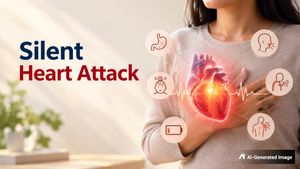 World Heart Day 2026: The Heart Attack That Doesn't Look Like a Heart Attack
 -
 Vighnaraja Sankashti Chaturthi 2026: Know The Date, Significance, Vrat Katha And Moonrise Fasting Rituals
 -
 Taylor Swift Makes VMA History: All About Her Record-Breaking Night And Striking Red Carpet Look
 -
 Bank Holidays October 2026: Check State-Wise List Before Visiting Your Branch


Natural Childbirth Strengthens Mother Baby Bonding


In a new study, researchers at Yale University have found that mothers who delivered vaginally compared to cesarean section delivery (CSD) were significantly more responsive to the cry of their own baby.
The findings of the study suggest that vaginal delivery (VD) mothers are more sensitive to own baby-cry in the regions of the brain that are believed to regulate emotions, motivation and habitual behaviors. CSD is a surgical procedure, in which delivery occurs via incisions in the abdominal and uterine wall.
It is considered necessary under some conditions to protect the health or survival of infant or mother, but it is controversially associated with postpartum depression. The critical capacity of adults to develop the thoughts and behaviors needed for parents to care successfully for their newborn infants is supported by specific brain circuits and a range of hormones.
The experience of childbirth by VD compared with CSD uniquely involves the pulsatile release of oxytocin from the posterior pituitary, uterine contractions and vagino-cervical stimulation. Oxytocin is a key mediator of maternal behavior in animals. "We wondered which brain areas would be less active in parents who delivered by cesarean section, given that this mode of delivery has been associated with decreased maternal behaviors in animal models, and a trend for increased postpartum depression in humans," said lead author Dr. James Swain, Child Study Center, Yale University.
"Our results support the theory that variations in delivery conditions such as with cesarean section, which alters the neurohormonal experiences of childbirth, might decrease the responsiveness of the human maternal brain in the early postpartum," he added. The researchers also examined the brain areas affected by delivery conditions and found relationships between brain activity and measures of mood suggesting that some of the same brain regions may help regulate postpartum mood.
"As more women opt to wait until they are older to have children, and by association be more likely to have a cesarean section delivery, these results are important because they could provide better understanding of the basic neurophysiology and psychology of parent-infant attachment," said Swain. "This work could lead to early detection of families at risk for postpartum depression and attachment problems and form a model for testing interventions," he added. The study is published in The Journal of Child Psychology and Psychiatry.
This places the childbirth in a new light and provides a clearer view to the psychological factors related to it.

 Continue with Google

