




 Click it and Unblock the Notifications


Latest Updates
-
 Mahalaya 2026: How Kolkata Is Celebrating The Start Of Durga Puja
 -
 Bigg Boss 20 Eviction Alert: No Elimination, Two Wild Cards Enter
 -
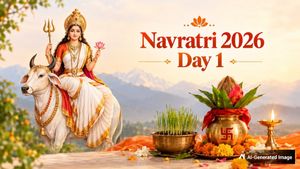 Navratri 2026 Day 1: Maa Shailputri Puja, Ghatasthapana Muhurat, Colour, And Significance
 -
 World Mental Health Day 2026: Why ‘Just Talk To Someone’ Isn’t A Student Mental Health Strategy
 -
 World Mental Health Day Special: People Share The Hurtful Words They Still Remember, And Experts Explain Why
 -
 World Mental Health Day 2026: How Indian Families Can Replace ‘Log Kya Kahenge?’ With ‘How Can We Help?’
 -
 Sarva Pitru Amavasya 2026: Date, Significance, Rituals And How To Observe The Day
 -
 Navratri 2026: Vastu Consultant Gauri Jain Shares 9 Vastu Tips To Prepare Your Home Before Ghatasthapana
 -
 World Mental Health Day 2026: Is Saying No At Work Good For You?
 -
 World Mental Health Day 2026: Is It Time To Switch Off After Work?


Who Was Bashir Badr? Legendary Urdu Poet Passes Away At 91, Ending An Era Of Timeless Ghazals

Urdu poet Bashir Badr, one of India's most widely read modern ghazal writers, passed away at his residence in Bhopal on Thursday morning. He was 91.
Family members confirmed that he had been suffering from prolonged illness and age-related health complications, including dementia, for some time.

His final rites are scheduled to take place in Bhopal on Thursday evening. Relatives, admirers, and members of the literary community gathered at his residence soon after news of his passing broke. He died at home surrounded by family.
VIDEO | Bhopal, MP: Renowned Urdu poet Bashir Badr passes away at 91. His son, Syed Badr, says, “Bashir Badr sahib passed away today at around 12.15–12.30 pm. For me, it is very difficult to express the extent of Bashir sahib’s impact on others. I can only speak about the impact… pic.twitter.com/xZb0z3teVN
— Press Trust of India (@PTI_News) May 28, 2026
His son Syed Badr told PTI that Bashir Badr passed away between 12.15 and 12.30 pm. He said the family requests prayers for the poet and shared that the Namaz-E-Janaza will be held after Maghrib prayers at Kadim Masjid, followed by burial at Bada Bagh graveyard.
Who Was Bashir Badr?
Bashir Badr was one of the most celebrated modern Urdu poets of India, known for his simple yet emotionally layered ghazals that became part of everyday conversation, cinema, and public memory.
He was widely regarded as a poet who brought Urdu poetry closer to the masses without diluting its emotional depth.
Bashir Badr's Early Life And Background
- He was born on 15 February 1935 in Faizabad (now Ayodhya), Uttar Pradesh.
- His full name was Syed Muhammad Bashir.
- He grew up in a culturally rich environment in North India and began writing poetry at a young age, reportedly during his childhood and teenage years.
Bashir Badr's Education
Badr studied at Aligarh Muslim University (AMU), where he completed his B.A., M.A., and PhD in Urdu literature.
He later served as a lecturer at AMU and also taught at Meerut College, spending several years in academics alongside his literary work.
Bashir Badr's Career In Poetry
- Bashir Badr built his reputation through the ghazal form, becoming one of the most recognisable voices in modern Urdu poetry.
- His work after Independence placed him among leading contemporary Urdu poets in India.
- His poetry explored themes of love, loss, human relationships, and reflections on life.
- He was especially known for his simple diction and emotional clarity, which helped his couplets reach a wide audience beyond literary circles.
Bashir Badr's Major Life Events
A defining moment in his life came in 1987, during the Meerut communal riots, when he lost his home, books, and a large body of unpublished work. Following this tragedy, he eventually settled in Bhopal, Madhya Pradesh. This period had a lasting influence on both his life and writing.
Bashir Badr's Famous Couplets
Some of his most widely shared lines include:
- "Ujale apni yaadon ke hamare saath rehne do, na jaane kis gali mein zindagi ki shaam ho jaaye."
- "Log toot jaate hain ek ghar banane mein, tum taras nahi khaate bastiyan jalane mein."
These couplets continue to be quoted across films, speeches, and everyday conversations.
Bashir Badr's Awards And Recognition
- He was honoured with the Padma Shri in 1999 by the Government of India.
- In the same year, he received the Sahitya Akademi Award for his poetry collection Aas.
- Over the years, he also received recognition from several Urdu literary institutions.
Bashir Badr's Family
Bashir Badr was married to Dr. Rahat Badr, a medical professional who remained closely associated with him during his later years in Bhopal.
After the loss of his home in 1987, she is widely reported to have supported him through a difficult phase and encouraged his return to writing.
His son, Nusrat Badr, was a Bollywood lyricist known for his work in films including Devdas.
Bashir Badr's Later Life
- In his later years, Bashir Badr lived in Bhopal.
- He faced age-related health issues, including dementia, and gradually withdrew from public life.
- Despite declining health, his poetry continued to remain widely read and quoted.
Bashir Badr's passing brings an end to a significant chapter in modern Urdu poetry. His words carried a rare simplicity that made complex emotions feel familiar and immediate. Even in absence, his couplets continue to circulate in conversations, films, and memories, keeping his voice alive in everyday life.

 Continue with Google

