




 Click it and Unblock the Notifications


Latest Updates
-
 As ‘Ranabaali’ Hits Theatres, A Look At Rashmika Mandanna’s ₹1.31 Lakh Ivory Saree For Pre-Release Promotions
 -
 Durga Puja Pandals Mumbai 2026: 7 Stunning Celebrations To Explore From Matunga To Juhu
 -
 World Spine Day 2026: Is Your Phone Habit Causing Neck Pain? What To Know About Tech Neck
 -
 Breast Cancer Awareness Month 2026: Expert Explains Why Family History Isn't the Only Risk
 -
 Skanda Sashti 2026: Significance, Vrat Rituals And How Devotees Observe The Day
 -
 Saraswati Avahan 2026: Significance, Shubh Muhurat, Rituals And Puja Vidhi
 -
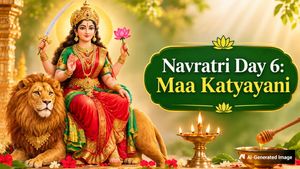 Navratri Day 6: Maa Katyayani Puja, Colour, Rituals, And Significance
 -
 Garba Before The DJ Era: What Navratri Looked Like In Earlier Times
 -
 What Does Indian Design Mean Today? A Creative Director Explains
 -
 Why Your Vision Can Feel Different In Bright And Dim Rooms, Expert Explains


Who Is Carlo Acutis? The First Millennial Catholic Saint Who Turned Faith Into A Digital Inspiration Worldwide

On September 7, 2025, the Catholic Church canonized Carlo Acutis, a 15-year-old Italian teenager, making him the first millennial to be officially recognized as a saint. Known for his deep faith, charisma, and pioneering use of technology, Carlo's life bridged the gap between tradition and modernity. His story inspires not only Catholics but anyone seeking to use modern tools for meaningful purposes.

Early Life and Spiritual Awakening
Carlo Acutis was born on May 3, 1991, in London to Italian parents, Andrea Acutis and Antonia Salzano. Shortly after, his family moved to Milan, Italy, where he grew up surrounded by the vibrancy of city life. Despite his parents' limited religious background, Carlo displayed a profound devotion to the Eucharist from a young age.
He attended daily Mass, practiced Eucharistic adoration, and encouraged his family to join him. His enthusiasm and gentle encouragement eventually led to a spiritual renewal within his household, shaping the faith environment in which he thrived.
A Modern Approach to Faith
Carlo was not only deeply spiritual but also technologically gifted. He enjoyed soccer, video games, and playing the saxophone, yet he found a unique way to combine his skills with his faith.

Using his computer programming talents, Carlo created a website cataloging Eucharistic miracles from around the world. This project, completed before his death, aimed to make the wonders of the faith accessible to a global audience, showcasing how modern tools could be used to serve spiritual purposes.
Illness and Offering of Suffering
In 2006, at the age of 15, Carlo was diagnosed with acute promyelocytic leukemia. Even in the face of severe illness, he maintained his cheerful demeanor and unwavering faith. Carlo offered his suffering for the Pope and the Church, viewing his illness as a way to participate in a larger spiritual mission.
Beatification and Canonization
The journey to sainthood began with Carlo's beatification in 2020, approved after a verified miracle in Brazil: the healing of a boy suffering from an annular pancreas after prayers to Carlo. A second miracle-a Costa Rican girl recovering from a traumatic brain injury-led to his canonization in 2025.
Pope Leo XIV celebrated Carlo's canonization in St. Peter's Square, attended by thousands. Today, Carlo's body rests in Assisi, Italy, where it is venerated by pilgrims from across the globe.
Legacy and Patronage
Carlo Acutis has been widely hailed as the "Patron Saint of the Internet" because of his innovative use of technology to spread the teachings of the Church. His life demonstrates that faith and modernity can coexist, and that digital tools can serve spiritual purposes when used with intention.
Beyond his technological gifts, Carlo's story resonates as a tale of devotion, hope, and inspiration for young people navigating the complexities of the modern world.

Carlo Acutis' canonization marks a historic moment for the Catholic Church and for millennials seeking spiritual guidance. Through his faith, creativity, and courage, he showed that holiness is not confined to age or tradition. His life encourages us to embrace our passions, use our talents for good, and cultivate faith in ways that resonate with our own time. Carlo's legacy is a reminder that the sacred can exist alongside the modern, inspiring generations to come.

 Continue with Google

