



 Click it and Unblock the Notifications



Latest Updates
-
 Women, Menopause And Bone Health: Doctor Explains Why Osteoporosis Risk Rises After 40
-
 Can Breast Cancer Be Detected Before Symptoms Appear? A Doctor Explains The Role Of Screening
-
 Papankusha Ekadashi 2026: October 21 Or 22? Know The Correct Date, Tithi And Significance
-
 OTT Releases This Week (October 19–25): New Movies And Series On Netflix, Prime Video, JioHotstar And Zee5
-
 Police Commemoration Day 2026: Know The History, Significance And Programmes Planned Across India This Year
-
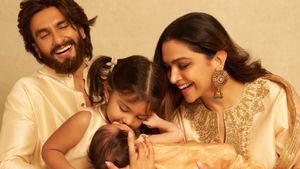 Deepika Padukone And Ranveer Singh Announce Second Daughter’s Name On Dussehra, Share Family Photo
-
 Who Was Karthik Sabesh? Tamil Actor Passes Away At 37, Days After Uncle And Composer Deva’s Death
-
 Who Is Ravleen Varghese? Meet The First Malayali Model To Walk The Victoria’s Secret Runway
-
 World Osteoporosis Day 2026: A Minor Fall, A Major Fracture — Doctor On Why Older Adults Should Be Careful
-
 Durga Visarjan 2026: October 20 or 21? Know Shubh Muhurat, Rituals And Significance


Temple Jewellery-Part II

Traditional Temple Jewellery flaunts the ancient ethnic beauty in different jewellery forms to adorn different parts of the body. This Indian jewellery form is hand made with intricate workmanship flaunting the unsurpassed creativity of the ancient Tamils.
Ornaments for the nose
Ornaments for the nose include 'Mookuthi' and 'Bullaakku'
Mookuthi –This is a nose ring studded with precious stones.
Bullakku – This is small dangling ornament for the centre part of the nose, often in diamonds.
Neck Ornaments
Neck ornaments of Temple Jewellery are divided into 'attigai, 'aaram' and 'Maalai'
Attigai- These are the chokers usually studded with rubies, emeralds, diamonds and sapphires. 'Getchetti' is also another form of a choker with small stiff round gold balls in the end.
Aaaram- These are longer versions. 'Kaarai' is a popular aaram which is usually gold balls strung together with or without pendants. The pendents are usually ethnic representations of Hindu Gods and Goddess' carved in the 'Nagaas' craftsmanship.
Maalai -The term 'Maalai' in Tamil would mean 'Garland'. Though not as long as garlands these are also lengthy versions of ornaments, the most preferred ones being
Maangai Maalai (Mango Garland)- The neck wear is fashioned with gold mangoes closely held making a 'Maalai'
Kaasu Maalai (Coin garland)- This 'maalai' has gold coins closely held making a 'Maalai'
'Varaaga Maalai'- This has the inscriptions of Rama and Sita on the coins which is a variation of 'Kaasu Maalai'
Muthu Maalai (Pearl garland ) As the name goes the garland is made out of pearls with or without a pendant either studded with rubies or emeralds.
Ornaments for the hand
'Vangi' is worn on the upper arm. 'Nagamuri' also adorns the upper arm. There are also a huge variety of bangles studded with precious stones as well as in gold.
Ornament for the waist
'Oddiyaanam' is a waist band designed with engravings or again studded. Odiyaanam enhances the beauty of the waist by revealing the 'Kodi Idai' or the slender waist of a woman.
Ornaments for the feet
'Kolusu' (Anklets) which tinklers adorn the feet. Anklets that boast heavy workmanship are called 'Ganja Kolusu'. Thandai' is a stiffer variety which is usually plain.
Temple Jewellery is thus a representation of the glorious gold past which continues to enchant with its ethnicity and elegance.

 Continue with Google


