




 Click it and Unblock the Notifications


Latest Updates
-
 As ‘Ranabaali’ Hits Theatres, A Look At Rashmika Mandanna’s ₹1.31 Lakh Ivory Saree For Pre-Release Promotions
 -
 Durga Puja Pandals Mumbai 2026: 7 Stunning Celebrations To Explore From Matunga To Juhu
 -
 World Spine Day 2026: Is Your Phone Habit Causing Neck Pain? What To Know About Tech Neck
 -
 Breast Cancer Awareness Month 2026: Expert Explains Why Family History Isn't the Only Risk
 -
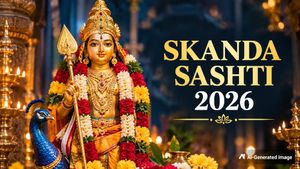 Skanda Sashti 2026: Significance, Vrat Rituals And How Devotees Observe The Day
 -
 Saraswati Avahan 2026: Significance, Shubh Muhurat, Rituals And Puja Vidhi
 -
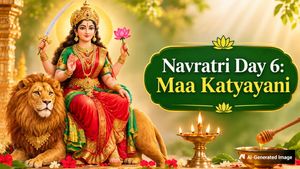 Navratri Day 6: Maa Katyayani Puja, Colour, Rituals, And Significance
 -
 Garba Before The DJ Era: What Navratri Looked Like In Earlier Times
 -
 What Does Indian Design Mean Today? A Creative Director Explains
 -
 Why Your Vision Can Feel Different In Bright And Dim Rooms, Expert Explains


Teachers’ Day 2025: Learn The Significance, Celebrations, History And Legacy Of Dr. Sarvepalli Radhakrishnan

Every year on 5 September, schools and colleges across India come alive with celebrations dedicated to teachers. This day carries deep historical and moral significance. Teacher's Day marks the birth anniversary of Dr. Sarvepalli Radhakrishnan, one of India's greatest philosophers, educators, and statesmen. His vision of education, respect for teachers, and contribution to the nation established the foundation for this annual tradition.

Why Teacher's Day Is Celebrated On 5 September
In 1962, when Dr. Radhakrishnan became the President of India, his students and friends expressed a desire to celebrate his birthday. In response, he made a humble suggestion:
"Instead of celebrating my birthday, it would be my proud privilege if September 5 is observed as Teachers' Day."
From that moment, his birthday became a day dedicated to honouring teachers across India, symbolising the nation's gratitude to those who nurture minds and shape society.
The Significance Of Teacher's Day In India
Teacher's Day recognises the invaluable contribution of teachers in:
- Nation-building, by guiding young minds with knowledge and values.
- Preserving the guru-shishya parampara (teacher-disciple tradition), deeply rooted in Indian culture.
- Encouraging students to express gratitude and respect for their mentors.
In schools and colleges, the day is marked with cultural programmes, speeches, role reversals where students take on teaching duties, and heartfelt gestures of appreciation for teachers. At the national level, the President of India presents the National Teachers' Awards to outstanding educators on this day.
Dr. Sarvepalli Radhakrishnan: The Man Behind The Day

Early Life And Education
Born on 5 September 1888 in Tiruttani, Tamil Nadu, Radhakrishnan came from a modest Telugu Brahmin family. Brilliant in academics, he completed his B.A. (1904) and M.A. (1906) in Philosophy from Madras Christian College, excelling in his studies and setting the stage for a remarkable academic journey.
Dr. Sarvepalli Radhakrishnan As An Outstanding Scholar And Teacher
- Began his teaching career as a Professor of Philosophy at the University of Mysore and later the University of Calcutta.
- Served as Vice-Chancellor of Andhra University (1931-36) and Banaras Hindu University (1939-48).
- Held the prestigious role of Spalding Professor of Eastern Religions and Ethics at Oxford University (1936-52).
- Served as Chancellor of Delhi University (1953-62).
- Through his teaching and writings, he became a bridge between Eastern and Western philosophy, interpreting Indian thought in a way that resonated with global scholars.
Dr. Sarvepalli Radhakrishnan As A Distinguished Statesman
- Represented India as Ambassador to the Soviet Union (1949-52).
- Served as Vice President of India (1952-62) and later as the second President of India (1962-67).
- Led India's delegation to UNESCO and even chaired its Executive Board.
Awards And Global Recognition
Dr. Radhakrishnan's contributions were recognised worldwide:
- Bharat Ratna (1954) - India's highest civilian honour.
- Knighthood (1931) and later membership of the Order of Merit (UK, 1963).
- Templeton Prize (1975) for promoting universal love and nonviolence.
- Nominated 16 times for the Nobel Prize in Literature and 11 times for the Nobel Peace Prize.
His Educational Philosophy
Radhakrishnan believed that education must go beyond bookish knowledge. It should cultivate morality, spirituality, and intellectual depth. He often said,
"Teachers should be the best minds in the country."
For him, teaching was not just a profession but a noble responsibility central to nation-building.
The Spirit Of Teacher's Day
The celebration of Teacher's Day is not merely about festive activities in schools; it reflects Dr. Radhakrishnan's enduring legacy. It reminds India that the true wealth of a nation lies not in its resources but in the wisdom and values passed down by teachers. The awards, ceremonies, and tributes on this day highlight the respect India continues to hold for its educators.
Teacher's Day in India is a tribute not only to the nation's educators but also to the extraordinary life of Dr. Sarvepalli Radhakrishnan, whose thoughts and leadership continue to inspire. His vision elevated the role of teachers as architects of society, making 5 September a day of respect, reflection, and gratitude. As students and citizens honour teachers each year, they uphold the values of knowledge, service, and moral growth that Dr. Radhakrishnan so passionately championed.

 Continue with Google

