




 Click it and Unblock the Notifications


Latest Updates
-
 Why Casual Games Are Perfect for Quick Online Play
 -
 World Menopause Day 2026: Theme, Significance And What Research Reveals About Menopause In India
 -
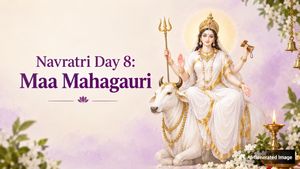 Navratri Day 8: Maa Mahagauri Puja, Colour, Rituals And Significance
 -
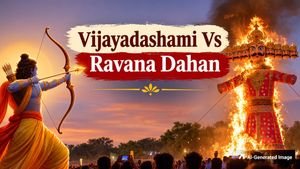 Dussehra 2026: The Difference Between Vijayadashami And Ravana Dahan
 -
 Veteran Musician Deva Dies At 75: Life And Legacy Of Thenisai Thendral
 -
 Navratri Fasting Diet: How To Stay Energised And Full Through The Day
 -
 Kavya Maran Wedding In Greece? Date, Venue, and What Is Confirmed
 -
 Navratri Fasting 101: What To Eat, What To Skip, And How To Avoid Acidity And Headaches
 -
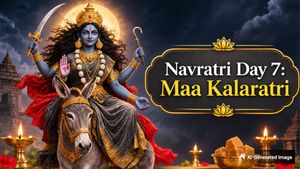 Navratri Day 7: Maa Kalaratri Puja, Colour, Rituals And Significance
 -
 Office To Dandiya Nights: One Quick-Change Outfit Formula For Navratri 2026


Indian Classical Dance: Kathak

Kathak is one of the major classical dance forms and one of the most dynamic theater arts in the world. The word 'Kathak' means the art of storytelling. The Kathak dancers bring to life the great scriptures of ancient India through dance and music. Kathak is very much influenced by the bhakti movement (both Vaishnavism and Shaivite), and is characterized by fast footwork (tatkar), spins (chakkar) and innovative use of bhav in abhinaya. Let us explore the intrinsic details of Kathak performance.
The origin of kathak begins with the performances of professional story teller called kathakas, who recited or sang stories from epics with some elements of dance. The style of Kathak was transmitted from generations to generations. By the 13th century a definite style had emerged and soon like mnemonic syllables and bol developed. During the bhakti movement the dance made its way to the Kathavachakas who performed in temples.
Rasalilas had a tremendous impact on Kathak during the bhakti movement. Popular performances during this period included Sri Krishna's exploits in the holy land of Vrindavan, and tales of Krishna's childhood.
Kathak started to get associated with tawaif, a much misunderstood institution of female entertainers, very much like the geisha tradition of Japan.
Kathak started to acquire distinctive feature and shape under the Mughal influence. Here it transformed from s from a purely religious art form to entertainment. Kathak encountered other different forms of dance and music, most especially dancers from Persia during this period. During this period the dancers started to combine the beautiful (but copious) jewellery and costume with poetic narration to tell fabulous tales of drama, triumph, and tragedy.
Many specific emperors contributed to the growth and development of Kathak into different gharanas. The Nawab of Oudh, Wajid Ali Shah choreographed a dance, Rahas and formed the basis of Luknow gharana, emphasizing sensuous, expressive emotion.
Kathak performance witnessed a deep downfall with the advent of British rule. Kathak started to get associated with tawaif, a much misunderstood institution of female entertainers, very much like the geisha tradition of Japan. The Victorian administrators publicly pronounced kathak as a base and unlovely form of entertainment, despite often privately enjoying the pleasures of the tawaifs. However famous tawaifs such as Gauhar Jan were instrumental in the maintenance and continuation of Kathak.
Kathak is distinguished by different styles, called gharana in the present day. Some well known gharanas are:
Luknow Gharana: As we discussed earlier
Jaipur Gharana: It was developed in the courts of the Kachchwaha kings of Jaipur. Jaipur Gharana is characterized by strong rhythmic elements, which explores different talas, and provides a vigorous and forceful form.
Banaras Gharana: Janakiprasad developed this style of Kathak.This style uses the twelve natwari bol based compositions exclusively.
;The structure of a conventional Kathak performance tends to follow a progression in tempo from slow to fast, ending with a dramatic climax. The modern Kathak performance include presentation of the three phases of life, creation (symbolized by Lord Brahma) preservation (symbolized by Lord Vishnu), and destruction (symbolized by Lord Shiva). The Kathak Yoga developed by gives a unique prominence to Kathak among the present art forms. Within the tradition Kathak, brings harmony of mind, body and soul where the dancer recites the chosen Taal, singing the melody of the chosen Taal, and dances precise mathematical footwork all at the same time.

 Continue with Google

