




 Click it and Unblock the Notifications


Latest Updates
-
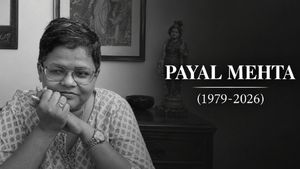 Senior Journalist Payal Mehta Passes Away At 46; PM Modi, Rahul Gandhi, Other Political Leaders Pay Tributes
 -
 Alia Bhatt’s Ganesh Chaturthi 2026 Looks Were All About Custom Kurtas, Colour And Modern Festive Style
 -
 Weekend Read: Salman Khan Goes Shirtless on BB 20, Gives Trolls a Befitting 'Come Troll Me' Reply
 -
 World Cleanup Day 2026: Why ‘Clean Plates’ Could Be The Secret To Cleaner, Greener Cities
 -
 Deepika Padukone Welcomes Second Daughter With Ranveer Singh, A Day After Siddhivinayak Temple Visit
 -
 Penelope Cruz Steps Onto The TIFF Red Carpet In A Statement High Jewellery Look
 -
 Raaka Teaser: Allu Arjun And Atlee’s ₹1,000 Crore Sci-Fi Epic Gets A Cryptic Global Triumph Tease
 -
 Nita Ambani’s Amrapali Bharatam Necklace For Ganesh Chaturthi Has An Interesting Connection To Sonam Kapoor
 -
 Oscars 2027: ‘Gondhal’ Selected As India’s Entry, ‘Dhurandhar’ Among Major Films That Missed The Cut
 -
 Ruokamill Protein For Women: Honest Review, Health Benefits And Best Time to Take It


Maharashtra Day 2026: Why The State Of Bombay Split Into Two And How The Day Is Marked With Celebrations

Maharashtra Day, also known as Maharashtra Diwas, is observed every year on 1 May. In 2026, it continues to mark the formation of Maharashtra as a separate state in 1960.
This was the day when the bilingual Bombay State was officially split into Maharashtra and Gujarat under the Bombay Reorganisation Act, 1960. What emerged was not just a new administrative boundary, but a state built around a shared linguistic and cultural identity.
Why Is Maharashtra Day Celebrated?

The idea behind Maharashtra Day reflects three key things:
- The recognition of Marathi as a unifying language
- A sustained political push for a separate state
- The formal beginning of modern Maharashtra
At its core, this day is about people asking to be governed in a way that reflected their language, culture, and everyday reality-and eventually being heard.
Maharashtra Day 2026: When Language Became Central To Statehood
After independence in 1947, India began reorganising states largely based on language through the States Reorganisation Act, 1956. But Bombay State stood out.
It included a mix of Marathi, Gujarati, Kutchi, and Konkani-speaking populations. While diverse, this setup made governance complicated and, over time, created friction. Language wasn't just about communication-it was tied to identity, access, and representation.
The Movement That Changed Everything
This is where the Samyukta Maharashtra Movement comes in.
What started as a demand gradually turned into a widespread public movement. It drew in political leaders, writers, workers, and ordinary citizens. Protests, rallies, and strikes became common-and the stakes were real. Over 100 people lost their lives during the agitation.
The central demand was clear: A unified Maharashtra with Mumbai as its capital This was about ensuring that the region's cultural and economic centre stayed within the state it identified with.
1 May 1960: The Turning Point
The breakthrough came when the Bombay Reorganisation Act was passed. From 1 May 1960:
- Maharashtra was formed for Marathi-speaking regions
- Gujarat was created for Gujarati-speaking regions
That's the moment Maharashtra Day looks back on every year, a political decision shaped by years of public pressure and negotiation.
Why Maharashtra Day Is Significant
Even today, the significance of this day holds up in multiple ways.
It's about identity.
The recognition of Marathi language and culture remains central to the state's self-image.
It honours sacrifice.
The people who took to the streets-and in many cases lost their lives-are part of this story.
It reflects how India evolved.
Maharashtra's formation is one of the key examples of how linguistic reorganisation shaped the country's federal structure.
It highlights unity within diversity.
Despite regional differences, the state functions with a shared cultural thread.
It overlaps with Labour Day.
Since 1 May is also International Labour Day, there's an added layer connecting the state's formation with worker participation and labour movements.
How Maharashtra Day Is Observed
Across Maharashtra, the day is marked with a mix of official and cultural events.
Official ceremonies
Flag hoisting, parades, and addresses by state leaders take place, especially in cities like Mumbai at venues such as Shivaji Park.
Cultural programmes
Lavani performances, folk music, and regional art forms are showcased, keeping the cultural side of the state front and centre.
Public participation
It's a state holiday, so schools and offices remain closed. Awards and recognitions are often announced, and new government initiatives may be launched.
Maharashtra Day 2026: What's Changing
This year, there's a noticeable shift in how celebrations are being planned.
With intense heatwave conditions already affecting parts of the state, cities like Nagpur are scaling down large outdoor events. Some parades are being modified or cancelled altogether for safety. It's a practical adjustment but also a reminder that even long-standing traditions have to respond to present-day realities.
Why Maharashtra Day 2026 Feels Relevant
Maharashtra Day isn't just about looking back at 1960. It's about understanding how language, identity, and public demand can reshape something as large as a state.
It also raises an important question-what does representation actually mean today, and how do regions continue to define themselves within a larger country?
Because at its core, this day isn't just history. It's about how people chose to be seen, heard, and organised-and what that continues to look like now.

 Continue with Google

