




 Click it and Unblock the Notifications


Latest Updates
-
 As ‘Ranabaali’ Hits Theatres, A Look At Rashmika Mandanna’s ₹1.31 Lakh Ivory Saree For Pre-Release Promotions
 -
 Durga Puja Pandals Mumbai 2026: 7 Stunning Celebrations To Explore From Matunga To Juhu
 -
 World Spine Day 2026: Is Your Phone Habit Causing Neck Pain? What To Know About Tech Neck
 -
 Breast Cancer Awareness Month 2026: Expert Explains Why Family History Isn't the Only Risk
 -
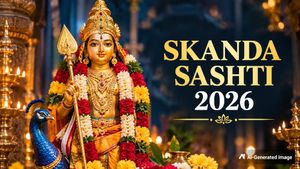 Skanda Sashti 2026: Significance, Vrat Rituals And How Devotees Observe The Day
 -
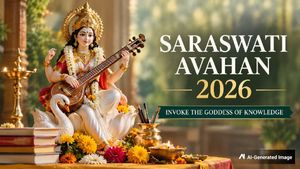 Saraswati Avahan 2026: Significance, Shubh Muhurat, Rituals And Puja Vidhi
 -
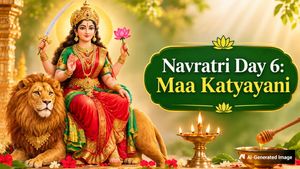 Navratri Day 6: Maa Katyayani Puja, Colour, Rituals, And Significance
 -
 Garba Before The DJ Era: What Navratri Looked Like In Earlier Times
 -
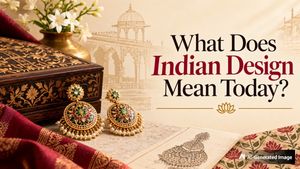 What Does Indian Design Mean Today? A Creative Director Explains
 -
 Why Your Vision Can Feel Different In Bright And Dim Rooms, Expert Explains


Kokborok Day 2026: How Tripura’s Indigenous Language Earned Official Status And Cultural Spotlight

On 19 January 2026, Tripura observes Kokborok Day to mark a specific decision taken in 1979 when Kokborok was formally recognised as a state language. That single administrative move changed how the language was taught, documented, and publicly acknowledged.

But Kokborok existed long before state recognition, long before it was spoken, recorded, sidelined, and preserved across different periods of Tripura's history. Kokborok Day is tied to one date, but the language itself carries a much longer and more complex past.
Where Kokborok Comes From
Kokborok belongs to the Tibeto-Burman branch of the Sino-Tibetan language family. It has been spoken for centuries by the Borok (Tripuri) people and several other indigenous communities across present-day Tripura and parts of Bangladesh.
The name itself is straightforward and telling:
- "Kok" means language
- "Borok" means people
Quite literally, Kokborok means the language of the people highlighting that it evolved through everyday life, not elite institutions.
The Forgotten Script And The Early Kingdoms
Long before modern debates around scripts began, Kokborok had its own writing system called Koloma. Historical accounts suggest that royal chronicles of the Tripuri kings, including texts like the Rajratnakar, were originally composed in Kokborok using this script.
Over time, political shifts and growing Bengali influence in administration led to Koloma falling out of use, and many original texts were either translated or rewritten in Bengali. What survived most strongly was the spoken language passed down through families, songs, rituals, and oral tradition.
What Changed During Colonial And Post-Independence Years
Under both princely rule and later British administration, Bengali became the dominant language of governance and education in Tripura. After Independence, this dominance only strengthened.
Kokborok remained alive but largely outside formal systems. It was spoken at home, in villages, and in community spaces, while schools, offices, and official communication operated in Bengali and English.
This imbalance wasn't just linguistic. It shaped access, representation, and cultural visibility.
The Push For Recognition
By the 1960s and 1970s, tribal organisations and community leaders began pushing back. Language became a central part of a larger demand for cultural and political recognition.
These movements argued a simple point: a language spoken by a large indigenous population deserved space in education, governance, and public life. Their efforts paid off.
Why 19 January Is Significant
On 19 January 1979, the Tripura government officially recognised Kokborok as a state language, alongside Bengali and English.
This decision marked a change from marginal use to institutional presence. It opened doors for:
- Kokborok to be taught in schools
- Academic courses and research
- Literary and cultural platforms
- State-supported promotion of the language
Kokborok Day exists because of this moment. It marks recognition won through persistence, not granted casually.
After Recognition: Growth, Debate, And Identity
Post-1979, Kokborok gradually entered classrooms and universities. Dedicated institutions were set up to promote indigenous and minority languages.
At the same time, debates emerged - particularly around which script should represent Kokborok. Bengali script, Roman script, and the idea of reviving Koloma have all found supporters. These discussions reflect deeper questions of history, identity, and representation rather than mere technical preference.
Today, there is also a growing call to include Kokborok in the Eighth Schedule of the Indian Constitution, which would offer wider constitutional support and visibility.
What Kokborok Day 2026 Really Stands For
Kokborok Day acknowledges:
- A language that survived without institutional backing
- Communities that kept it alive through everyday use
- The idea that recognition matters - but survival comes first
Cultural programmes, literary discussions, processions, and educational events held on this day are active efforts to ensure Kokborok remains spoken, taught, and heard.
Languages don't disappear overnight. They fade when they're ignored. Kokborok didn't fade because people refused to let it. Kokborok Day reminds us that official recognition may come late, but cultural memory runs deeper. And as long as a language continues to be spoken, questioned, debated, and passed on, its story is far from over.

 Continue with Google

