




 Click it and Unblock the Notifications


Latest Updates
-
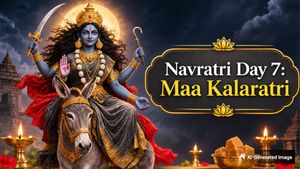 Navratri Day 7: Maa Kalaratri Puja, Colour, Rituals And Significance
 -
 Office To Dandiya Nights: One Quick-Change Outfit Formula For Navratri 2026
 -
 As ‘Ranabaali’ Hits Theatres, A Look At Rashmika Mandanna’s ₹1.31 Lakh Ivory Saree For Pre-Release Promotions
 -
 Durga Puja Pandals Mumbai 2026: 7 Stunning Celebrations To Explore From Matunga To Juhu
 -
 World Spine Day 2026: Is Your Phone Habit Causing Neck Pain? What To Know About Tech Neck
 -
 Breast Cancer Awareness Month 2026: Expert Explains Why Family History Isn't the Only Risk
 -
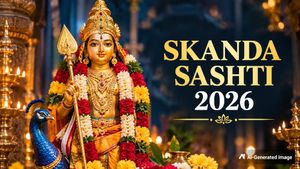 Skanda Sashti 2026: Significance, Vrat Rituals And How Devotees Observe The Day
 -
 Saraswati Avahan 2026: Significance, Shubh Muhurat, Rituals And Puja Vidhi
 -
 Navratri Day 6: Maa Katyayani Puja, Colour, Rituals, And Significance
 -
 Garba Before The DJ Era: What Navratri Looked Like In Earlier Times


The 2025 Calendar Is A Chilling Twin Of 1941 And It’s Not the First Time, Should We Be Concerned?

The year 2025 hasn't even begun, but it's already sparking unease. Why? Because it's a perfect calendar copy paste of 1941-same weekdays, same dates, same eerie pacing. For trivia fans, it's a fun fact. But for others, it feels like a whisper from the past. The last time the world lived through this exact calendar, it was on the brink of global war.

And this isn't the first time we've seen history echo. Just a few years ago, the COVID-19 pandemic in 2020 drew chilling comparisons to the Spanish Flu of 1918. The patterns are hard to ignore and even harder to explain away.
2025 Mirrors 1941 And Not Just On Paper
1941 was no ordinary year. It marked the U.S. entry into World War II, reshaped alliances, and kicked off a cascade of global consequences. When people noticed that 2025 mirrors it date for date, it wasn't long before Reddit threads and TikTok theories took over. Could history repeat itself? Or is it just a freak alignment of numbers?
Technically, the repetition is easy to explain both are non-leap years starting on a Wednesday. It's happened before (like in 1969) and will happen again. But context changes everything. In a world already grappling with climate threats, AI escalation, and geopolitical unrest, the timing feels..loaded.
And Then There's 1918 And 2020
Rewind to 1918, and the world was battling the Spanish Flu-one of the deadliest pandemics ever recorded. A century later, 2020 unleashed COVID-19, sparking comparisons that felt less like history lessons and more like flashbacks.
Both pandemics overwhelmed hospitals, disrupted economies, and arrived in deadly waves. The century gap-102 years fed the theory that history follows a grim, cyclical script. True or not, it felt like a loop we were doomed to replay.
The Pattern Isn't The Problem, We Are
Here's the thing: calendars don't create chaos. People do. The alignment of years may be mathematically predictable, but the decisions made in those years are anything but. The danger isn't in the dates, it's in the choices that follow.
Psychologists say our brains are wired to seek patterns during chaos. It gives us the illusion of control. But illusions can distract. The lesson isn't that 2025 will be like 1941. It's that we should be paying attention to the signs that matter: rising tensions, political complacency, collective inaction.
The Internet Reaction: Fear, Fascination, And Folklore
Welcome To Digital Decadeology
On Reddit's r/decadeology, users trade theories, timelines, and chills. Some believe 2025 is a shadow of 1941; others mock the comparison. TikTok creators splice news footage with ominous music. Twitter users throw in phrases like "brace yourself" or "watch the signs." It's a digital séance with the past-part entertainment, part anxiety release.
What unites them all? The feeling that history is whispering, and no one's quite sure what it's saying.
Our Brains, Wired For Patterns
Psychologists explain it clearly as to why we see meaning where there may be none. Humans are pattern-seeking machines. Faced with uncertainty, we hunt for signals. Sometimes that's useful. Other times, it leads to the Mayan apocalypse of 2012 or the Y2K bug. The 2025-1941 calendar match hits that same nerve-it's easy to understand, emotionally loaded, and impossible to ignore.
But calendars don't cause wars. People do. Patterns don't spark history. Decisions do.
Déjà Vu Or Warning Sign?
Maybe we're not trapped in a time loop but in a behavioural one. We ignore lessons, delay hard choices, and wait until it's too late. 2025 might look like 1941 on paper. But what happens next? That's still entirely up to us. The eerie similarity of the 2025 and 1941 calendars is, at its core, a numerical curiosity. But our reaction to it reveals something deeper, a desire to find clarity in chaos, to spot a pattern that might give us control. It won't. What we can control is what we do with the time we're given.
History doesn't repeat itself because dates align. It repeats when lessons go unlearned.

 Continue with Google

