




 Click it and Unblock the Notifications


Latest Updates
-
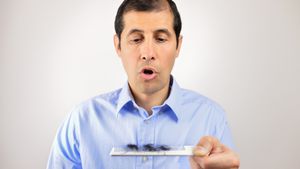 Stop Blaming the Monsoon Entirely for Your Hair Fall, Says This Dermatologist
 -
 Shakira Debuts a New Gaurav Gupta Breastplate, and This Time It's Gold and Banarasi
 -
 Can Hair Oils Prevent Premature Graying or Improve New Hair Growth?
 -
 Can Any Blood Group Donate Organs to Any Patient? A Transplant Expert Explains
 -
 Everyone's Talking About Rahane's Igatpuri Home. Here's Why The Town Itself Is Worth The Trip
 -
 You Don't Need Surgery for Every Sinus Problem: When Is FESS Actually Necessary?
 -
 Who Was Mithu Mukherjee? Veteran Bengali Actress Passes Away At 71
 -
 Ahmedabad Police Flag Fraud Risk Behind Viral 'Rent A Garba Partner' Ads
 -
 Vidya Balan’s Jailer 2 Entry As Kantha: From Silk To Manjulika, A Look At Her Unconventional Roles
 -
 Samay Raina Has Now Denied Dating Rumours With Two Women In Three Months


Is The Festival Of Lights Dying ?


Newspapers were able to gauge in advance that Diwali would be tame affair and they have been proved right, enhancing their credibility to make predictions.
Markets wore a deserted look on Tuesday--the day of Diwali--more so in the posh areas of South Delhi and less in areas inhabited by the man on the street. Perhaps, rich care more for their lives as the poor man is always at a risk.
Not only were the newspapers right this time, but the chambers representing the voice of industry too predicted a gloomy Diwali.
For instance, an ASSOCHAM study pointed to this reality days ahead and stated that the gain will be that of e-shopping.
Whether, e-shopping did spiral is not yet known, but what is true is that Diwali lost its glitter.
Not too long ago, Diwali was a festival to which Indians would look forward to, when they will vent their feelings and anxieties by bursting crackers.
Many homes had just put up a few candles and in fact, some had no lighting--a phenomenon which would have been regarded as inauspicious by traditional and conservative Hindus.
Children had a problem buying crackers because only few were licensed to sell these.
Till yesteryear, there would be many shops, which would sell crackers. There were huge queues outside the licensed shops.
These restrictive measures were mandated by the police in view of the security threat from terrorist groups.
Diwali is part of the buying season, the festive mood leading to high purchases. The people buy goods in large quantities, which include clothes, ornaments including jewellery, utensils, consumer durables and gift items, to name but a few.
The general mood of the shopkeepers was that of despair, who bemoaned that the economic mess, the sliding of stock markets and the fear of terror had cast their shadows dark, even on them.
It is also an occasion when 'Laxmi', the Goddess of wealth in Hindu mythology, is worshiped to usher in prosperity.
The Goddess perhaps did not oblige the shopkeepers and did not shower her blessings on people.
Most Hindus have a deep belief that prosperity or the lack of it comes from heaven. It is for this reason that 'Havanas'--a Hindu spiritual ritual-- is performed to get rid of the curse of drought, a phenomenon too well known in India since times immemorial.
The economic slowdown also had its bearing on the corporate gift culture, which is a reminiscent of the license--permit raj. All the talk of liberalisation and the action in this regard have not been able to obliterate this phenomenon.
But the slowdown did what liberalisation and globalisation could not do.
An ASSOCHAM study released yesterday stated that India Inc is planning to lay off 25 per cent of its workforce-- an action which can cause a political storm in a country which has no social security worth the name. Witness is the Jet Airway's decision to lay off 1,900 workers and its reversal within a few days.
Such a move will be perceived as extremely cruel by the employees who are to be given a golden handshake and their families who will suffer.

 Continue with Google

