



 Click it and Unblock the Notifications



Latest Updates
-
 As ‘Ranabaali’ Hits Theatres, A Look At Rashmika Mandanna’s ₹1.31 Lakh Ivory Saree For Pre-Release Promotions
-
 Durga Puja Pandals Mumbai 2026: 7 Stunning Celebrations To Explore From Matunga To Juhu
-
 World Spine Day 2026: Is Your Phone Habit Causing Neck Pain? What To Know About Tech Neck
-
 Breast Cancer Awareness Month 2026: Expert Explains Why Family History Isn't the Only Risk
-
 Skanda Sashti 2026: Significance, Vrat Rituals And How Devotees Observe The Day
-
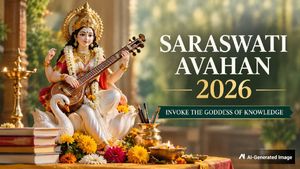 Saraswati Avahan 2026: Significance, Shubh Muhurat, Rituals And Puja Vidhi
-
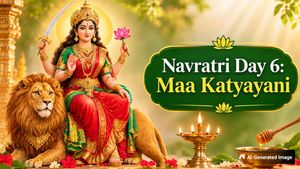 Navratri Day 6: Maa Katyayani Puja, Colour, Rituals, And Significance
-
 Garba Before The DJ Era: What Navratri Looked Like In Earlier Times
-
 What Does Indian Design Mean Today? A Creative Director Explains
-
 Why Your Vision Can Feel Different In Bright And Dim Rooms, Expert Explains


ali akbar khan

SAN ANSELMO, Calif., Apr 10 (Reuters) Of the many thousands of concerts Indian master musician Ali Akbar Khan has performed, he particularly disliked a famous 1971 benefit show organized by Beatle George Harrison.
''That was not music but I'd say a war of music,'' said Khan, the world's best-known maestro of the sarod, a fretless stringed instrument similar to the lute.
The Concert for Bangladesh brought together an all-star line-up including Eric Clapton, Bob Dylan and Ringo Starr, as well as Khan's brother-in-law, Ravi Shankar, another prominent musician who was also a student of Khan's famed father, Allauddin Khan.
With the concert's rock music pounding at New York City's Madison Square Garden, Khan stuffed his ears with toilet paper to block out the noise.
''If you hear that music for one week, my ear will finish forever,'' he said.
Ahead of his 85th birthday on Saturday, Khan spent a few hours recalling the highlights of a rich musical career, his sometimes uneasy relationship with Shankar and a deep secret even his wife did not know.
Recording since the 1940s, Khan played an important role in popularizing Indian music abroad.
Violinist Yehudi Menuhin, who played with both men, called Khan ''an absolute genius, the greatest musician in the world.'' Yet Khan shuns the showmanship -- and lacked the patronage of Indophile Harrison -- that helped make Shankar a superstar of the 1960s counterculture.
Shankar and Khan recorded several duet albums -- and played together at the Concert for Bangladesh. But Shankar's divorce from Khan's musician sister and their separate career paths strained ties between the two titans of Indian music.
Showmanship ''is not important, the music is important,'' Khan said. ''Our duty is to bring good feelings to others. It's the best medicine for everyone, even trees, birds, animals.'' Khan devoted much of his career to teaching the complicated ways of Indian music, following a long oral tradition. He set up the Ali Akbar College of Music in Kolkata in 1956 and moved it to the San Francisco area 40 years ago.
''In India, the great musicians recognize me as the best,'' Khan said at his home in San Anselmo, a town north of San Francisco. ''I don't want to become famous. All that I wanted is to find some good students who want to learn music.''

 Continue with Google


