




 Click it and Unblock the Notifications


Latest Updates
-
 Navratri Fasting Diet: How To Stay Energised And Full Through The Day
 -
 Kavya Maran Wedding In Greece? Date, Venue, and What Is Confirmed
 -
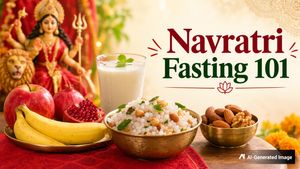 Navratri Fasting 101: What To Eat, What To Skip, And How To Avoid Acidity And Headaches
 -
 Navratri Day 7: Maa Kalaratri Puja, Colour, Rituals And Significance
 -
 Office To Dandiya Nights: One Quick-Change Outfit Formula For Navratri 2026
 -
 As ‘Ranabaali’ Hits Theatres, A Look At Rashmika Mandanna’s ₹1.31 Lakh Ivory Saree For Pre-Release Promotions
 -
 Durga Puja Pandals Mumbai 2026: 7 Stunning Celebrations To Explore From Matunga To Juhu
 -
 World Spine Day 2026: Is Your Phone Habit Causing Neck Pain? What To Know About Tech Neck
 -
 Breast Cancer Awareness Month 2026: Expert Explains Why Family History Isn't the Only Risk
 -
 Skanda Sashti 2026: Significance, Vrat Rituals And How Devotees Observe The Day


What Is ‘Intuitive Eating'? Why Taylor Swift Adopted This Healthy Trend 15 Years Ago

Long before 'intuitive eating" became the wellness buzzword lighting up TikTok and Instagram, Taylor Swift was already living it. While the world chased calorie-counting apps, 'no-carb" diets, and detox teas, the global pop icon was quietly following her body's cues , eating when hungry, indulging when she wanted, and rejecting guilt as a food emotion.
In an age when diet culture ruled, her approach was refreshingly human. As the world now redefines what 'healthy' truly means, Taylor's words from a 2010 interview sound almost prophetic: 'I don't like to create too many rules where I don't need them. We know what's good for us, thanks to common sense.'

What Is Intuitive Eating Trend In 2025?
Gone are the days when wellness meant restriction. The world is finally pushing back against food fear and obsessive control. Instead, intuitive eating , a mindful, body-led approach to nourishment , has become the new definition of health.
Under the viral hashtag #IntuitiveEating, millions share their stories of healing from toxic food relationships. From influencers posting 'unfiltered" meals to dietitians encouraging 'trusting your body," the shift is powerful.
'Intuitive eating focuses on trusting your hunger cues. You decide what to eat and how much based on that," says Jinan Banna, registered dietitian and professor of nutrition at the University of Hawaii. 'It really rejects diet culture. It avoids judgments around food, and it puts the focus on trusting your body.'
The movement doesn't glorify overeating or mindless indulgence. It simply says , eat when you're hungry, stop when you're full, and stop labelling food as 'good' or 'bad'.
Why Taylor Swift Was Following This Trend 15 Years Ago
Taylor Swift wasn't counting macros or tracking every calorie , and that's exactly why her approach resonates so much today.
Back in 2010, she told WebMD: 'During the week, I try to eat healthily , salads, yogurt, sandwiches. No sugary drinks. But it's nothing too regimented or crazy.'
She also revealed her weekend indulgences: ice cream, cookies, burgers, and her favourite Starbucks spiced pumpkin lattes. 'I'm never cutting out what I love," she added.
That mindset , balance without punishment , is the very essence of intuitive eating.
According to Banna, 'We should not have an extremely rigid approach to eating. All foods can fit in moderation. Having a very rigid mindset can create problems when it comes to body image and relationships with food.'
In other words, Taylor was living intuitively before the world had a name for it.
Why Diet Culture Fails And Intuitive Eating Works
For years, diet culture thrived on guilt. 'No sugar,' 'clean eating,' 'cheat days' , the language itself made food a moral battle. The result? A generation obsessed with perfection, not nourishment.
Intuitive eating, on the other hand, flips the narrative. Research shows that this approach is linked to better mental health, lower risk of disordered eating, and more stable body weight.
When you stop fearing food, your body starts trusting you back. It's a mental reset , and that's why experts believe intuitive eating isn't just a health trend, but a form of self-respect.
As Banna notes, 'Having a rigid mindset can create problems with body image and eating behaviour. Intuitive eating helps people reconnect with internal hunger signals rather than external rules.'
How To Tell If It's Hunger Or Emotion
Of course, intuitive eating doesn't mean eating whatever, whenever. It's about learning to differentiate between physical hunger and emotional hunger , a skill that takes patience.
'If you're physically hungry, you might feel tired, irritable, or hear your stomach rumbling , and you'll likely be satisfied by any type of food,' explains Banna.
But emotional hunger is different. 'Your stomach may be quiet, but you might crave something specific. It can stem from stress, boredom, or seeing an advertisement. And often, it's followed by guilt.'
Recognising the difference is key to eating with intention , not impulse.
Relearning How To Trust Your Body
Transitioning to intuitive eating can feel strange at first, especially for those conditioned by diet rules. Many people initially overeat once they 'allow' previously forbidden foods. But that's part of the healing process.
'It's important to accept that all foods can fit in moderation,' says Banna. 'There are no 'good' or 'bad' foods , only balance and mindfulness."
Over time, the body finds its rhythm again. Hunger cues stabilize. Emotional eating fades. And food stops being the enemy , it becomes nourishment, joy, and self-connection.

 Continue with Google

