




 Click it and Unblock the Notifications


Latest Updates
-
 Kanya Pujan During Navratri 2026: Astrologer Gauri Jain On Significance, Rituals And Dussehra Traditions
 -
 Durga Puja Pandals In Noida 2026: 7 Best Spots to Visit, From Grand Themes to Community Celebrations
 -
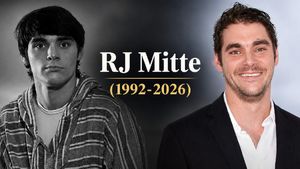 ‘Breaking Bad’ Actor RJ Mitte Passes Away At 34: ‘Finite Amount Of Time’ Words From Final Interview Resurface
 -
 Who Was Madhu Kambikar? Marathi Actress Who Took Lavani To Wider Audiences Passes Away At 73
 -
 International Day for Disaster Risk Reduction 2026: Why Disaster Preparedness Must Begin At Home
 -
 Navratri Day 3: Maa Chandraghanta, Puja, Rituals, Colour, Significance, And Things To Do
 -
 World Thrombosis Day 2026: Understanding Blood Clot Risks In Women And Their Warning Signs
 -
 Anoushka Shankar Brings Her Global Musical Identity To Zoya’s Spice-Inspired High Jewellery Campaign
 -
 Can A Healthy 25-Year-Old Get Lymphoma? Here Is What To Know
 -
 Navratri 2026 Outfit Ideas To Stay Stylish And Special Throughout The Nine Days Of Festivities


Varicose Veins: Expert Explains When Persistent Leg Pain Needs Attention

If you spend several hours standing each day, you may notice heavy legs, swelling around the ankles, night cramps or a burning sensation by the evening. It's tempting to write this off as tiredness after a long day. When the symptoms keep returning, though, they may point to something more specific: varicose veins.

"Varicose veins are not simply a cosmetic concern. They can indicate a problem with the valves inside the leg veins, causing blood to pool and pressure to build up," says Dr Charudutt Jayant Sambhaji, Consultant, Endovascular Surgery and Interventional Radiology, Manipal Hospital, Goa.
The condition is far more widespread in India than most people assume. According to experts at the Indian Vein Congress 2024, roughly a quarter of India's population is affected by varicose veins, a condition still often overlooked and underdiagnosed despite recent advances in non-surgical treatment. Some vascular surgeons put the figure even higher, estimating that chronic venous disease affects 20-35% of the adult Indian population.
Why Legs Start Aching in the First Place

Varicose veins can develop due to family history, prolonged standing, obesity, pregnancy, ageing or previous problems with the veins, Dr Sambhaji explains. The earliest signs are often easy to dismiss: aching, itching, burning, cramps or swelling around the ankles that seem to ease overnight and return the next evening.
Left unaddressed, the picture changes. Over time, untreated vein problems can cause skin pigmentation and thickening, and some patients go on to develop venous ulcers - wounds that can be painful and notoriously slow to heal. Skin changes can begin within a few years of the disease progressing untreated, and once ulceration sets in, the longer blood sits still in the superficial veins of the lower leg, the more likely the resulting inflammation is to break the skin down into an open wound.
Why the Fear of Surgery Keeps People Waiting
"For many patients, it isn't a lack of symptoms that delays treatment - it's the fear of surgery. This apprehension often pushes people to postpone getting checked, even as symptoms worsen," added Dr Sambhaji.
A Duplex Doppler ultrasound can settle much of that anxiety early. The scan identifies which veins are affected and how blood is flowing through them, allowing treatment to be planned around the underlying vein problem rather than guesswork. It's a non-invasive first step that shapes everything that follows.
Treatment Has Moved Well Beyond the Operating Table
Contrary to what many patients fear, treatment does not always involve conventional surgery. Dr Sambhaji points to a range of minimally invasive options now available:
- Endovenous Laser Ablation (EVLA/EVLT) and Radiofrequency Ablation (RFA), which use heat to seal the affected vein from the inside
- Foam sclerotherapy, used for smaller or remaining veins
- Medical adhesive or "glue therapy", suitable for selected patients
Many of these procedures are done as day-care treatments, with patients often able to walk soon after - a sharp contrast to the extended recovery associated with traditional vein-stripping surgery. Vascular surgeon Dr Roy Varghese, speaking at the same congress, noted that endovascular procedures have simplified treatment, offering a painless, day-care approach.
Treated Once Doesn't Mean Treated Forever

Varicose veins can return over time. Age, genetics and lifestyle continue to act on the veins even after a successful procedure, which is why Dr Sambhaji stresses that early assessment - rather than a one-time fix - is what actually reduces the risk of complications down the line.
Simple daily habits help hold the line between flare-ups: walking regularly, exercising the calf muscles, maintaining a healthy weight, avoiding standing in one position for long stretches, and elevating the legs when resting.
Bottomline
Heaviness, pain or swelling that keeps returning isn't something to explain away as a long day at work. These symptoms deserve an assessment, particularly when they start interfering with daily routine or show up more often than they used to. As Dr Sambhaji's insights make clear, varicose veins are a vein health issue first and a cosmetic one a distant second, and today's treatments mean addressing them no longer has to mean fearing the operating table.
Disclaimer: The information provided in this article is for general informational and educational purposes only and is not intended as a substitute for professional medical advice, diagnosis, or treatment. Always seek the advice of your physician or a qualified healthcare provider with any questions you may have regarding a medical condition.

 Continue with Google

