



 Click it and Unblock the Notifications



Latest Updates
-
 Diwali 2026: When to Perform Lakshmi Puja? Check Auspicious Timings for Your City by Astrologer
-
 Diwali 2026 Astrology Predictions: 4 Zodiac Signs May Shine While 4 Need to Stay Alert
-
 Diwali 2026: 2 Delicious Hazelnut Recipes to Sweeten Your Festive Celebrations
-
 Diwali 2026: Celebrate the Festival With Chef Ranveer Brar's Delicious Shahi Pulao Recipe
-
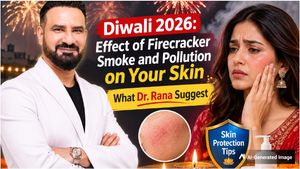 Diwali 2026: How Firecracker Smoke and Air Pollution Affect Your Skin, Dr Ajay Rana Explains
-
 What does Diwali 2026 hold for you? Astrologer Ashutosh Clairvoyant explains
-
 Diwali Wishes for Family 2026: 51 Heartfelt Messages, WhatsApp Greetings and Quotes to Share
-
 Diwali 2026: Understanding the Spiritual Significance of Five Days with Astrologer Gauri Jain
-
 Your Health Is Your Greatest Wealth: 7 Everyday Habits That Can Help You Lead a Healthier Life
-
 Diwali Party Menu: 8 Healthy, Festive Dishes Everyone Will Love


COVID-19: WHO Acknowledges Possibility Of The Coronavirus Being Airborne

Various studies are being conducted to understand the nature of the coronavirus, which in turn can help the health experts in the prevention and treatment of the disease. The extensive studies help provide a deeper understanding of the nature of the novel coronavirus, informing the public of its development, hence creating further awareness on the issue.

As of today, there are 11,965,661 coronavirus cases with 546,988 deaths. On a hopeful note, 6,913,793 have recovered.
According to a recent report, more than 200 scientists have written to the WHO saying the coronavirus that caused the COVID-19 pandemic is airborne and requested the health organisation to revamp their guidelines on the transmission of the disease [1].

Is COVID-19 Airborne? What Did The Report Say?
A group of 239 scientists in 32 countries structured an open letter to WHO, outlining evidence that shows floating virus particles can infect people who breathe them in. Published in the Clinical Infectious Diseases journal, the letter also asks WHO to update the guidance on how the respiratory disease passes between people, with respect to the newly emerging evidence [2].
The report, a combined effort of scientists from different countries, is in the limelight especially due to the quick surge in the number of cases all around the globe. The report overthrows WHO's previous claim that the Covid-19 virus is not airborne.
In the month of May, WHO had confirmed that the coronavirus is not airborne. As the virus spreads through the droplets generated from an infected person, there were doubts regarding the virus being airborne. WHO reported that the droplets are too heavy to hang in the air and can quickly fall onto the surface and the only way for the virus to spread is from close contact [3][4].

WHO Responds To The Report From Scientists
On 07 Tuesday, WHO acknowledged that there is evidence emerging which shows that the SARS-CoV-2 coronavirus might be airborne [5]. Maria Van Kerkhove, technical lead on the COVID-19 pandemic at the WHO said in the news briefing that, "We have been talking about the possibility of airborne transmission and aerosol transmission as one of the modes of transmission of COVID-19" [6].
The current guidelines by WHO is based on their assertion that the COVID-19 virus spreads through large droplets generated from a person infected with COVID-19; and further updated that the airborne transmission of the coronavirus was possible only after medical procedures that generate aerosols, or droplets smaller than 5 microns [7].
WHO is studying the emerging data on coronavirus aerosols to see if the current recommendations need to be changed, including that healthy people do not need face masks. Health officials have added that healthcare workers should take extra precautions during procedures that can generate aerosols [8].
"Based on the information received so far and on our experience with other coronaviruses, COVID-19 appears to mostly spread through respiratory droplets (for instance when a sick person coughs) and close contact. This is why the WHO recommends hands and respiratory hygiene," said one of the WHO officials [9].
Benedetta Allegranzi, the WHO's technical lead for infection prevention and control said that the possibility of the COVID-19 virus being airborne and therefore the possibility of airborne transmission in public settings, especially in specific conditions such as, crowded, closed, poorly ventilated settings that have been described in the report by the scientists cannot be ruled out.

On A Final Note...
The alarming update by WHO is indeed a cause for concern, but the health organisation asserts that more research is required and that people should continue following physical distancing and wearing masks to avoid the spread of the coronavirus infection.
The United Nations' agency for international public health will be publishing a scientific briefing summarising the state of knowledge on modes of transmission of the COVID-19 virus in the coming days.
Stay Home. Stay Safe.

 Continue with Google


