




 Click it and Unblock the Notifications


Latest Updates
-
 Karwa Chauth Solah Shringar: The Significance Of The 16 Traditional Adornments
 -
 Weight-Loss Injections Are Not a Quick Fix: The Hidden Risks of GLP-1 Drugs
 -
 When Two Epilepsy Medicines Fail, What Should Families Do Next?
 -
 Delhi-NCR Under GRAP 1: The Curbs, the Bans and the Rules to Know
 -
 Sepsis Can Look Like ‘Just a Bad Infection’: Expert Lists Warning Signs Families Need to Know
 -
 Amitabh Bachchan Social Media Break: Doctors Ask Big B To Rest
 -
 Throwback Thursday: Yash Chopra’s Heroines And The Fashion That Defined Bollywood Romance
 -
 Deepika Padukone Wears ₹90,000 Gold Kurta Set As Ranveer Singh, Daughter Dua Twin For Baby Devi’s Name Reveal
 -
 Women, Menopause And Bone Health: Doctor Explains Why Osteoporosis Risk Rises After 40
 -
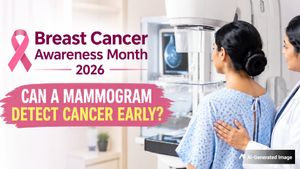 Can Breast Cancer Be Detected Before Symptoms Appear? A Doctor Explains The Role Of Screening


Family History

{image- www.boldsky.com} Refuting claims of previous studies, researchers from Leiden University Medical Centre in the Netherlands have revealed that family history cannot be taken as a strong predictor of breast cancer risk in women.
With the claims, the demand for referring healthy women with a family history of breast cancer for intensive screening or genetic testing has risen.
Lead researcher Geertruida H. de Bock studied whether increased risk was significant enough to accurately predict breast cancer.
"Due to the low prevalence of early breast cancer in the population, the predictive value of a family history of breast cancer was 13% before the age of 70, 11% before the age of 50, and 1% before the age of 30," said the authors.
"These numbers are much lower than most women would probably expect.
"Applying family history related criteria results in the screening of many women who will not develop breast cancer at an early age," they added.
The researchers recommend that these results can be used to "reassure a large number of women regarding their personal breast cancer risk."
The study appears in the open access journal BMC Cancer.
Disclaimer: The information provided in this article is for general informational and educational purposes only and is not intended as a substitute for professional medical advice, diagnosis, or treatment. Always seek the advice of your physician or a qualified healthcare provider with any questions you may have regarding a medical condition.

 Continue with Google

