




 Click it and Unblock the Notifications


Latest Updates
-
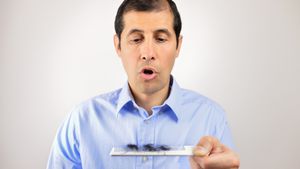 Stop Blaming the Monsoon Entirely for Your Hair Fall, Says This Dermatologist
 -
 Shakira Debuts a New Gaurav Gupta Breastplate, and This Time It's Gold and Banarasi
 -
 Can Hair Oils Prevent Premature Graying or Improve New Hair Growth?
 -
 Can Any Blood Group Donate Organs to Any Patient? A Transplant Expert Explains
 -
 Everyone's Talking About Rahane's Igatpuri Home. Here's Why The Town Itself Is Worth The Trip
 -
 You Don't Need Surgery for Every Sinus Problem: When Is FESS Actually Necessary?
 -
 Who Was Mithu Mukherjee? Veteran Bengali Actress Passes Away At 71
 -
 Ahmedabad Police Flag Fraud Risk Behind Viral 'Rent A Garba Partner' Ads
 -
 Vidya Balan’s Jailer 2 Entry As Kantha: From Silk To Manjulika, A Look At Her Unconventional Roles
 -
 Samay Raina Has Now Denied Dating Rumours With Two Women In Three Months


Covid Pandemic Caused Biggest Decrease In Life Expectancy Since World War II: Oxford Study

The Covid-19 pandemic led to the biggest decrease in life expectancy since World War II, and wiped out years of progress on mortality, according to a study published on Monday by the University of Oxford.

The research team assembled an unprecedented dataset on mortality from 29 countries, spanning most of Europe, the US and Chile -- countries for which official death registrations for 2020 had been published.
The study, published in the International Journal of Epidemiology, found that 27 of the 29 countries saw reductions in life expectancy in 2020, and at a scale which wiped out years of progress on mortality.
Women in 15 countries and men in 10 countries were found to have a lower expectancy at birth in 2020 than in 2015, a year in which life expectancy was already negatively affected by a significant flu season.
"For Western European countries such as Spain, England and Wales, Italy, Belgium, among others, the last time such large magnitudes of declines in life expectancy at birth were observed in a single year was during WW-II," said study's co-lead author Jose Manuel Aburto, from Oxford's Leverhulme Center for Demographic Science (LCDS).
"However, the scale of the life expectancy losses was stark across most countries studied, with 22 countries included in the study experiencing larger losses than half a year in 2020," Aburto said.
The researchers noted that females in eight countries and males in 11 countries experienced losses larger than a year.
It took on average 5.6 years for these countries to achieve a one-year increase in life expectancy recently, while the progress was wiped out over the course of 2020 by Covid-19, they said.
Life expectancy, also known as period life expectancy, refers to the average age to which a newborn lives if current death rates continue for their whole life. It does not predict an actual lifespan.
Disclaimer: The information provided in this article is for general informational and educational purposes only and is not intended as a substitute for professional medical advice, diagnosis, or treatment. Always seek the advice of your physician or a qualified healthcare provider with any questions you may have regarding a medical condition.

 Continue with Google

