



 Click it and Unblock the Notifications



Latest Updates
-
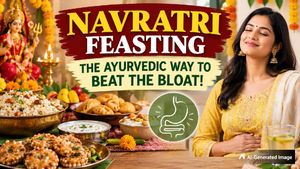 Eat, Celebrate, Repeat: 6 Ayurvedic Tips To Keep Your Digestion Happy This Navratri 2026
-
 Breast Cancer Awareness Month 2026: Expert Explains The Emotional Toll Of Breast Cancer
-
 Navratri 2026 Food Hopping In Delhi NCR: 7 Places To Explore For A Taste Of Festive Flavours
-
 Why Casual Games Are Perfect for Quick Online Play
-
 World Menopause Day 2026: Theme, Significance And What Research Reveals About Menopause In India
-
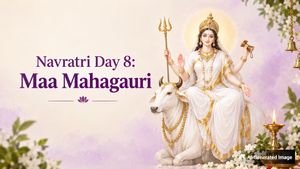 Navratri Day 8: Maa Mahagauri Puja, Colour, Rituals And Significance
-
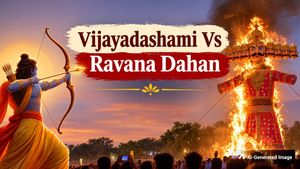 Dussehra 2026: The Difference Between Vijayadashami And Ravana Dahan
-
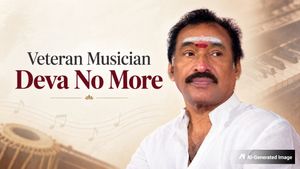 Veteran Musician Deva Dies At 75: Life And Legacy Of Thenisai Thendral
-
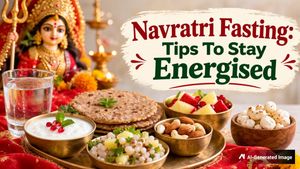 Navratri Fasting Diet: How To Stay Energised And Full Through The Day
-
 Kavya Maran Wedding In Greece? Date, Venue, and What Is Confirmed


Interesting Facts About Dattatreya Ramachandra Bendre, The Immortal Kannada Poet And Seer


Dattatreya Ramachandra Bendre is a stellar name amongst the star litterateurs in the galaxy of Kannda poets. He was the pioneer of romantic poetry and lived in pre pre-Independence period.. His poems have been translated to German, Hindi, Sanskrit and other languages. University of Mysore honoured him with a doctoral degree in 1966 and then again by University of Karnataka in 1968. He was a fellow of the Tattvachatushatai Academy.
He started receiving lifetime pension from Government of Karnataka in 1968 following which a biography was written about him and published by the Government. Bendre was born on 31 January to a family not so well off, in Dharwad, Karnataka. He was popularly called Ambikatanayadatta.
1. Dattatreya Ramachandra Bendre (31 January 1896 - 26 October 1981), was s celebrated name belonging to the Navodaya Period. He was known nationwide as Da Ra Bendre.
2. Bendre was a Madhwa Brahmin born in Dharwad, His grandfather had acquired mastery over 10 scriptures of yore and a scholar in Sanskrit classical literature. His father was also a Sanskrit scholar who died when Bendre was 12 years old.
3. He was awarded the honorary title of Varakavi ('the gifted poet').
4. His collection of poems in 1964 titled Naaku Tanti fetched him the Jnanapita award.
5. Bendre had a pen name " Ambikatanayadatta which literally meant" gifted by Ambikas Son" . He pointed at Ambikatanayadatta as the "universal inner voice" that was responsible for all his poetic utterances from within.
6. Udupi Adamuru Matha honoured him with the title Karnataka Kavi Kula Thilaka.
7. He received the nation's highest civilian award of Padma Shri in 1968 and in 1969, the title of fellow of the Sahitya Akademi.
8. He wrote his poetry in Dharwar Kannada and his expressions were brilliant.
9. He engaged himself in poetry for a solid span of 70 years which he referred to as a poetry enterprise. In his own words, he called it Kāvyōdyōga.
10. He had mastered 102 disciplines, including Quantum Physics, Mathematic and Human Physiology.
11. Once a famous doctor came to him and explained an ailment to him. Bendre's fluent explanation of this ailment impressed the doctor so much that he wrote this down and compared it with 38 papers written on this subject. The description given by Bendre was unmatched, as per the doctor.
12. Bendre had those books in his collection which were supposed to have released a few weeks back in the other part of the globe.
13. He married Laxmibai , a resident of Ranebennur in 1919.
14. He earned his Master of Arts degree in 1935
15. Nada Lila was the best collection of poems he ever contributed to the world of poems.
16. Bendre used symbols as a vehicle of his poetic expressions.
17. All of Bendre's poems had a musical rhythmic feel to them and could be se to music easily. Although it was full of alliteration, the deeper layers of meanings could be unearthed only after a thorough study of the poem by a trained mind.
18. Towards his final days, Bendre was deeply immersed in numbers which absorbed him in its intricacies till his last moments. His Jnanapitha award winning work of Naku tanti was all about numbers and their significance.

 Continue with Google


