




 Click it and Unblock the Notifications


Latest Updates
-
 When Two Epilepsy Medicines Fail, What Should Families Do Next?
 -
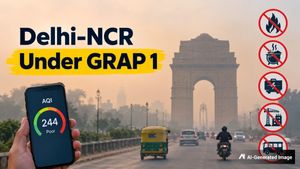 Delhi-NCR Under GRAP 1: The Curbs, the Bans and the Rules to Know
 -
 Sepsis Can Look Like ‘Just a Bad Infection’: Expert Lists Warning Signs Families Need to Know
 -
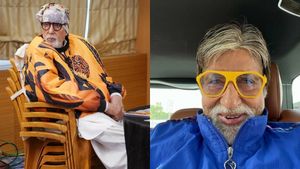 Amitabh Bachchan Social Media Break: Doctors Ask Big B To Rest
 -
 Throwback Thursday: Yash Chopra’s Heroines And The Fashion That Defined Bollywood Romance
 -
 Deepika Padukone Wears ₹90,000 Gold Kurta Set As Ranveer Singh, Daughter Dua Twin For Baby Devi’s Name Reveal
 -
 Women, Menopause And Bone Health: Doctor Explains Why Osteoporosis Risk Rises After 40
 -
 Can Breast Cancer Be Detected Before Symptoms Appear? A Doctor Explains The Role Of Screening
 -
 Papankusha Ekadashi 2026: October 21 Or 22? Know The Correct Date, Tithi And Significance
 -
 OTT Releases This Week (October 19–25): New Movies And Series On Netflix, Prime Video, JioHotstar And Zee5


Preliminary Preparations For students of Vedanta

A student of Vedanta needs to acquire certain qualities, which will enable him to grasp the profound teachings in the right spirit. Acquiring these qualities involves preparatory work and practice that makes the student eligible to study Vedanta in depth. Such an eligible student is called as an Adhikari' in Sanskrit. Let us examine some of these qualities listed as prerequisites in traditional Vedantic texts.
There is a beautiful text called 'Vivekachudamani' which describes four qualifications to be acquired by a student of Vedanta. Verse 17 of Vivekachudamani declares,
"He alone is eligible to enquire into the nature of the Self who has discrimination, detachment, a collection of qualities like Shama, and a desire for liberation."
- Discrimination or Viveka: The capacity to discriminate between what is lasting and eternal and what is not. Primarily, a student seeks Vedantic knowledge with the hope of finding a lasting solution to his nagging sense of incompleteness. He / she must have gained the maturity and understanding to realise that all materialistic pursuits bring partial fulfilment or satisfy our sense of want only for a limited period of time. The lasting solution can be found only by discovering the limitless Self. While our understanding of what is limited is concrete because it is based on personal experience, what is limitless can only be conceived of in abstract terms. The student is not expected to have a perfect understanding of what is limitless since that is the very purpose and goal of the teaching.
- Detachment or Vairagya: The lack of desire to enjoy the pleasures or fruits of actions here or hereafter. Again, this should not be confused with the Buddhist notion of withdrawal from life or an ascetic restraint. Detachment means understanding the limitation of all such pleasures or fruits of actions. It is a logical result of right discrimination. A concrete example may help to clarify the real meaning of Vairagya. Money would be the best example. A student with Vairagya need not come to the conclusion money has no value at all. Money does have a powerful value as far as material life is concerned but the student become aware that no amount of money will remove the fundamental discontent in his soul. Therefore, he does not get obsessed with money or run after it feverishly but knows its place in life. This capacity to put everything in its proper place by understanding its limitation and not superimpose a false sense of security to it is true detachment.
Comments
Article Published On: Monday, April 9, 2012, 14:43 [IST]

 Continue with Google

