




 Click it and Unblock the Notifications


Latest Updates
-
 Ganesh Chaturthi 2026: Inside The Star-Studded Celebrations At Lalbaugcha Raja And Antilia
 -
 The 5-Minute Childhood Skincare Routine: Why Simpler May Actually Be Better
 -
 OTT Releases This Week (September 14–20): What To Watch Across Netflix, Prime Video, JioHotstar And More
 -
 Fiji's HIV Cases Have Risen 16-Fold Since 2019 — Now It's A National Emergency
 -
 Can a 50-Year-Old Develop Alzheimer's? What Early-Onset Dementia Looks Like
 -
 Mahalaxmi Vrat 2026: Date, Puja Vidhi, And The Legend Behind The 16 Knots
 -
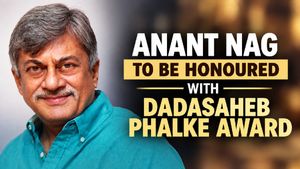 Who Is Anant Nag? Meet The Veteran Kannada Actor Set To Receive Dadasaheb Phalke Award
 -
 Monsoon And Diabetes: Why Infection Risk Increases During The Rainy Season
 -
 Throwback Thursday: Kareena Kapoor’s ‘Poo’ To Priyanka Chopra’s ‘Desi Girl’, Bollywood Looks That Ruled 2000s
 -
 PM Narendra Modi Birthday Special: Make His Favourite Khichdi At Home And Know Its Health Benefits


Thirukkural-On Wealth-On Education-Kural 396


Karranaith thoorum arivu.
The wells in the sand abound with springs of water as one digs deep,
So with appropriate education, knowledge gets wider and deeper.
The deeper one digs on the sand-beds, generally on the dry bed of a river, the greater will be the flow of water. Apparently, Valluvar must have been familiar with the process of digging sand – wells on the dry beds of the rivers, like Vaigai and Palar, to secure drinking water. This analogy, the poet uses with good effect to draw a parallel to the cultivation of the mind, through a process of extensive and intensive education.
Another possible way of interpreting the Kural is that, unless you put your hand to it, the sand-well will not produce water; in like manner, acquisition of knowledge and its development can only be the result of a the application of one"s mind. Physical idleness will not produce water; mental idleness similarly will surely not produce knowledge.
Kambaramayanam elaborates this idea of learning in the following line, as indicated by K V Jaganathan.
“Noolvaraith thodarndhu bayathodum pazagi,
Nunangiya nuvalarum unarvae" (Kamba, Nagarap, 8)

 Continue with Google

