




 Click it and Unblock the Notifications


Latest Updates
-
 Durga Puja Pandals Mumbai 2026: 7 Stunning Celebrations To Explore From Matunga To Juhu
 -
 World Spine Day 2026: Is Your Phone Habit Causing Neck Pain? What To Know About Tech Neck
 -
 Breast Cancer Awareness Month 2026: Expert Explains Why Family History Isn't the Only Risk
 -
 Skanda Sashti 2026: Significance, Vrat Rituals And How Devotees Observe The Day
 -
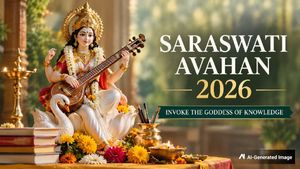 Saraswati Avahan 2026: Significance, Shubh Muhurat, Rituals And Puja Vidhi
 -
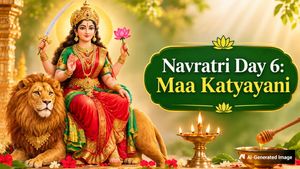 Navratri Day 6: Maa Katyayani Puja, Colour, Rituals, And Significance
 -
 Garba Before The DJ Era: What Navratri Looked Like In Earlier Times
 -
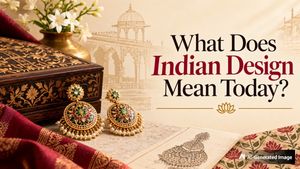 What Does Indian Design Mean Today? A Creative Director Explains
 -
 Why Your Vision Can Feel Different In Bright And Dim Rooms, Expert Explains
 -
 Pandal Hopping In Bengaluru 2026: 7 Durga Puja Venues Worth Your Time


Tirukkural-On Virtue-Family Life, Kural 41


llvaalvaan yenpan iyalpudaiya moovarkkum
Nallarrin ninra thunai.
It is really the capable householder who sustains
In his respective way of life, the other three orders.
A good householder alone can support the other three orders in their endeavours to sustain their ordained way of life.
The other three orders according to Parimelalagar are the bachelor student (Brahmachari), the householder who has retired to the jungle but not yet left the married state (vanaprasth), and the confirmed ascetic (sanyasi). This division of four orders including also the householder (grahasth) is based on the Jain line, which is acknowledged by Parimelalagar in his commentary.
These three orders are able to carry out their duties well in their respective state, only because some others live as good householders, working ceaselessly for those who have renounced work too, along with the world and all other aspects of life. Rajaji himself offers this same interpretation, as opposed to M S Poornalingam Pillai"s interpretation of 'Iyalpudaiya moovar" as 'the congenial, the natural and virtuous-three"- which really does not take us very far.
Valluvar"s thinking is capable of quite a rational interpretation too. 'Illvaalvaan" is really a householder, who helps others who are worthy of being supported in the discharge of their duties. These others could be (i) the producer (ii) the distributor and (iii) the ruler or protector. It is the capable householder"s duty to help these persons to perform their own duties efficiently.
In this and other Kurals of this chapter, as in the general undertone of the entire work, Thiruvalluvar gives pride of place to family life. He is the first great philosopher and poet to do so, at a time when renunciation was the only accepted path to greatness and to salvation. In Valluvar"s synthesis between matter and spirit, between life affirmation and life-negation, domestic life is thrown up as the most desirable way of life, provided it is practiced along the path of 'Aram". And that is what is believed to have impressed Albert Schweitzer most about Thiruvalluvar and the Kural.

 Continue with Google

