




 Click it and Unblock the Notifications


Latest Updates
-
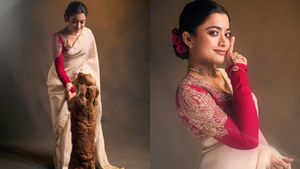 As ‘Ranabaali’ Hits Theatres, A Look At Rashmika Mandanna’s ₹1.31 Lakh Ivory Saree For Pre-Release Promotions
 -
 Durga Puja Pandals Mumbai 2026: 7 Stunning Celebrations To Explore From Matunga To Juhu
 -
 World Spine Day 2026: Is Your Phone Habit Causing Neck Pain? What To Know About Tech Neck
 -
 Breast Cancer Awareness Month 2026: Expert Explains Why Family History Isn't the Only Risk
 -
 Skanda Sashti 2026: Significance, Vrat Rituals And How Devotees Observe The Day
 -
 Saraswati Avahan 2026: Significance, Shubh Muhurat, Rituals And Puja Vidhi
 -
 Navratri Day 6: Maa Katyayani Puja, Colour, Rituals, And Significance
 -
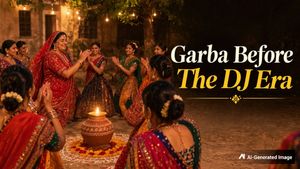 Garba Before The DJ Era: What Navratri Looked Like In Earlier Times
 -
 What Does Indian Design Mean Today? A Creative Director Explains
 -
 Why Your Vision Can Feel Different In Bright And Dim Rooms, Expert Explains


Spiritual Practice In Solitude


Vedanta Kesary, 1992, August 314-318
The need for solitude for spiritual practice is recognized in all the religions of the world. In the history of almost all religions we find illustrious examples of saints and sages who had performed intense spiritual practices in solitude. The Vedic rishis lived mostly in solitary hermitages in the forest. The Buddha struggled hard to attain Bodhi, in solitude, away from the crowd. So did the Jain Tirthankara, Mahavir. The Tibetan saint Milarepa, the Muslim saints Rabia and Biazid, and the Christian saint Francis of Assisi are but a few other examples.
Coming to our own time, we see that Sri Ramakrishna is one who has laid the greatest stress on performing spiritual practices in solitude. He himself spent twelve long years in intense spiritual practice in the precincts of the Dakshineswar temple, near Calcutta. Although Calcutta was the capital of India then, Dakshineswar was free from the turmoil of the city, being situated some miles north of it.
Nor was Dakshineswar a tourist spot, as it is today. Besides, the large temple premises offered a number of solitary spots like the Panchavati, the Bel-tala etc, where one could retire for meditation. These places were almost inaccessible to the casual visitors. It is said that the Panchavati grove was so dense that people feared to go there even during the day.
Apart from Sri Ramakrishna, Holy Mother Sri Sarada Devi and many of Sri Ramakrishna's disciples took advantage of the silence, solitude and spiritual atmosphere of Dakshineswar. Holy Mother lived and did spiritual practices in a tiny room of the Nahabat. Except serving Sri Ramakrishna and his aged mother, she had no other preoccupation to distract her attention and to disturb her privacy.
The practice of meditation in solitude features consistently in the lives of almost all the disciples of Sri Ramakrishna. It is noteworthy how every one of them ingeniously sought and discovered suitable, solitary spots for meditation, even in the busy metropolis of Calcutta. Narendra, later Vivekananda, found, for example, a cave-like room belonging to one of his relatives, which was so oddly situated that none went there. The garden-house of Ramchandra Dutta at Kankurgachhi was another spot where some disciples retired. Even the house of Balaram Bose Was an ideal place for them, as their privacy was not disturbed there.
After the passing- away of Sri Ramakrishna, most of the disciples left Calcutta in search of solitary places where they could spend days, months or years in spiritual practice. Latu went on a pilgrimage with Holy Mother, but he would often break away from the group to spend a few days in solitude. After returning to Calcutta, he preferred to remain in the city, but spent most of his time in meditation on the banks of the Ganga.
Swami Brahmananda went to Kashi, Omkareswar and Vrindaban. At Vrindaban he stayed at Kusum Sarovar in one of the small huts meant for monks who wanted to live in solitude. Even after a century, Omkareswar continues to remain peaceful and crowd-free. After returning from the West, Swami Turiyananda lived an intensely austere life in seclusion at Uttarkashi and Nangal. He was instrumental in starting the Shanti Ashrama in California, meant for the same purpose.
This tradition of spiritual practice in solitude, laid down by Sri Ramakrishna and his disciples, has been kept up by monks of the later generation as well. A number of centres of the Ramakrishna Order, such as those at Almora, Shyamala Tal, Ranchi and a few other places, owe there origin to such endeavours by the monks of the Order. Many among them spend varying periods in tapasya, away from the crowd and the distractions of work in" society.
About the author
Swami Dayatmananda
Swami Dayatmananda is the Minister-in-charge of Ramakrishna Vedanta Centre, Buckinghamshire, UK.

 Continue with Google

