




 Click it and Unblock the Notifications


Latest Updates
-
 Grammy-Nominated Singer-Songwriter Alex Warren To Perform At Abu Dhabi Grand Prix 2026
 -
 Newborn Care Myths Vs Facts: What A Neonatologist Wants Parents To Know
 -
 Ganesh Chaturthi 2026 At Antilia: 7 Bollywood Celebrities Who Stood Out In Traditional Festive Ensembles
 -
 Suriya And Jyotika Renew Wedding Vows: ‘Dabba Cartel’ Actress Reflects On Their ‘Imperfect’ 20-Year Marriage
 -
 Should You Start Anti-Ageing Treatments In Your 20s? Here's What A Dermatologist Says
 -
 UPI New Rule Explained: Will You Actually Pay To Use UPI Now?
 -
 Rashmika Mandanna To Play M.S. Subbulakshmi: First Look To Be Unveiled On Singer’s 110th Birth Anniversary
 -
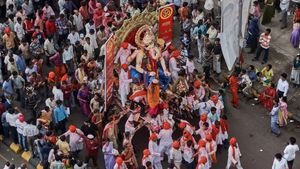 Ganpati Visarjan 2026: The Complete Guide To Dates, Timings And Rituals
 -
 Former Andhra Pradesh Deputy CM Alla Nani Passes Away At 56 After Cardiac Arrest In Visakhapatnam
 -
 Kim Kardashian Awarded Symbolic 1 Euro in Compensation Over 2016 Paris Jewel Heist


Freedom From Pain (Pain: Enemy or Friend?)


Here, one question can be asked. Does the Jivanmukta experience pain? The answer is yes, he does. His identification with his body and mind has ceased, but not quite. A thin trace of it still lingers in him so long as his Prarabdha karma is not fully exhausted. But he has not to make any effort to remove this lingering trace. It vanishes by itself when his karma is exhausted, and he 'dies' never to be born again. Thus, so long as he lives, he may experience pain. But his experience and ours are not the same. We feel pain as real (because our body and mind are very much real to us at present) and we suffer; moreover, we usually consider our pain as undeserved, and that makes us suffer more than we need to.
On the other hand, though a Jivanmukta also feels pain, he knows it to be illusory, and as belonging to his body and mind which, he has realized, are also illusory; so his suffering is usually minimal. He knows, moreover, that his experience of pain is something he 'deserves,' it being the result of his own past karma which he must exhaust before he can become free from even the lingering vestige of his identification with the body and mind. This attitude of wise acceptance takes away the sting from even the minimal pain he may experience. Furthermore, he has supreme control over his body and mind and can withdraw his body –mind consciousness at will to dwell in his own true Self which has never known and never will know any pain. So much, then, for the Jivanmukta's 'experience of pain.'
When a Jivanmukta dies, both his body as well as the mind 'die', and the Self is forever freed from them. In the case of others, it is only the body that 'dies' (and is cremated or buried), the mind survives. In due course, the hypnotized Self along with the mind takes up another body.
And yet, strangely enough, while the Jivanmukta has utter disregard for and indifference towards his own pain, he usually experiences intensely the pain and suffering of others. Some people seem to be born with a mission, a mission far greater than achieving their own spiritual liberation (Mukti). Their own Mukti they achieve in no time, and the rest of their lives are spent in serving others, guiding them along the path to eternal freedom from pain and suffering. Their hearts overflow with love and compassion for all.

 Continue with Google

