




 Click it and Unblock the Notifications


Latest Updates
-
 Can Any Blood Group Donate Organs to Any Patient? A Transplant Expert Explains
 -
 Everyone's Talking About Rahane's Igatpuri Home. Here's Why The Town Itself Is Worth The Trip
 -
 You Don't Need Surgery for Every Sinus Problem: When Is FESS Actually Necessary?
 -
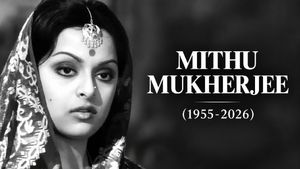 Who Was Mithu Mukherjee? Veteran Bengali Actress Passes Away At 71
 -
 Ahmedabad Police Flag Fraud Risk Behind Viral 'Rent A Garba Partner' Ads
 -
 Vidya Balan’s Jailer 2 Entry As Kantha: From Silk To Manjulika, A Look At Her Unconventional Roles
 -
 Samay Raina Has Now Denied Dating Rumours With Two Women In Three Months
 -
 Kareena Kapoor Turns 46: From Size Zero To Fine Lines, The ‘Daayra’ Actress Is Choosing To Age Without Apology
 -
 The Emotional Side of Delayed Parenthood That We Don’t Talk About Enough
 -
 World Alzheimer’s Day 2026: Why Early Diagnosis Matters And What This Year’s Theme Means


Ramakrishna Paramahamsa Jayanti 2022: Some Glimpses of Ramakrishna's Life- Part II


Continued From The First Part
An avatar's parents are extraordinary people. Ramakrishna's father, Kshudiram, was a man of truth and extremely devout; his mother, Chandramani, was pure and simple. When she was pregnant with Ramakrishna, she one day began to have labour pains. Kshudiram said to her: 'How can you give birth to the child right now? Let me first finish the worship of Lord Ramachandra' According to the Hindu custom, one cannot perform ritualistic worship for three days after a child is born in the family. Ramakrishna was born the next morning.
Ramakrishna was very fond of his mother. Towards the end of her life, Chandramani moved to Dakshineswar and stayed with her son. Lakshmi, the Master's niece, recalled: "All through his life the Master had stomach trouble. When Grandma [Sri Ramakrishna's mother] was living in Dakshineswar, the Master would salute her every morning. Grandma was a large woman and very beautiful, but she was also old-fashioned and very shy. Even in front of her youngest son [Sri Ramakrishna] she would cover her face with a veil. When he came she would ask him, 'How is your stomach?' The Master would reply, 'Not very good.' Grandma would then advise him: 'Don't take the prasad of Mother Kali. [It was very spicy food.] As long as your stomach is not all right your wife will cook plain soup and rice for you. Please eat only that.'
Sometimes the Master would get tired of eating invalid's food every day and would ask his mother to cook one or two dishes and season them as she used to do in Kamarpukur. So occasionally Grandma cooked for him and the Master enjoyed it.
After the death of her two older sons, Grandma became somewhat passive and withdrawn. Furthermore, she would not take her lunch until she had heard the noon whistle of the Alambazar Jute Mill. As soon as it sounded she would exclaim: "Oh! There is the whistle of heaven. That is the signal for offering food to Lakshmi and Narayana." A problem would arise on Sundays, however, when the jute mill was closed; no whistle was blown at noon and consequently she would not eat. This worried the Master very much, and he would lament: "Oh dear! My old mother will refuse her food today and she will be weak." Brother Hriday would say to the Master: "Don't be anxious, Uncle. When Grandma is hungry she will eat of her own accord." But the Master would reply: "Oh, no. I am her son. It is my duty to look after my old mother." With much coaxing the Master would persuade his mother to eat the prasad of Krishna.
One day Brother Hriday made a high-pitched sound by blowing through a pipe. He then said to Grandma: 'There, Grandma, did you hear the whistle of heaven? Now please eat your food.' But Grandma laughed and said: 'Oh, no. You made the sound with your pipe.' Everyone laughed.
Chandramani passed away on 13 February 1877. Before her cremation, her body was taken to the bakul-tala ghat on the Ganges. M. one day said: 'Holding the feet of his mother, the Master said with tears: "Mother, who are you who held me in your womb?" The Master knew that he was an avatar, so he exclaimed in joy: "You are not an ordinary woman."
A few days later when the Holy Mother carried the Master's meal to his room, he said to her: 'Please wait. Let me first cry for my mother in the Panchavati. Then I shall eat.' One cannot repay the debt one owes to one's mother. As a sannyasin, the Master could not perform any rituals for his mother, so he paid his tribute to her with his tears.
Chat With The Devotees Of Ramakrishna Paramahamsa
About the author
The author, Swami Chetanananda is the Minister-in-charge of the Vedanta Society of St. Louis, USA. He is well-known for his numerous books in Bengali and English particularly 'God Lived With Them' and 'They Lived With God'. His recent English translation of 'Sri Sri Ramakrishna Leelaprasanga' titled 'Sri Ramakrishna and His Divine Play' has received wide acclaim.
Page: 2
Chat With The Devotees Of Ramakrishna Paramahamsa

 Continue with Google

