




 Click it and Unblock the Notifications


Latest Updates
-
 You Don't Need Surgery for Every Sinus Problem: When Is FESS Actually Necessary?
 -
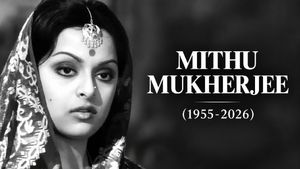 Who Was Mithu Mukherjee? Veteran Bengali Actress Passes Away At 71
 -
 Ahmedabad Police Flag Fraud Risk Behind Viral 'Rent A Garba Partner' Ads
 -
 Vidya Balan’s Jailer 2 Entry As Kantha: From Silk To Manjulika, A Look At Her Unconventional Roles
 -
 Samay Raina Has Now Denied Dating Rumours With Two Women In Three Months
 -
 Kareena Kapoor Turns 46: From Size Zero To Fine Lines, The ‘Daayra’ Actress Is Choosing To Age Without Apology
 -
 The Emotional Side of Delayed Parenthood That We Don’t Talk About Enough
 -
 World Alzheimer’s Day 2026: Why Early Diagnosis Matters And What This Year’s Theme Means
 -
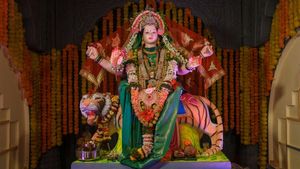 When Is Navratri In 2026? Full Dates, Rituals, Colours, Significance, and Fasting Guide
 -
 Vijay Sethupathi Confirms Maharaja 2, Hollywood Remake In The Works


Somnath Amrut Mahotsav: The History Behind PM Modi’s Somnath Temple Visit And 75-Year Celebration

When Prime Minister Narendra Modi visited Somnath Temple recently, the images quickly spread across social media - saffron flags fluttering against the Arabian Sea, priests performing rituals, and thousands gathering for the Somnath Amrut Mahotsav.
The occasion marked 75 years since the reconstruction and inauguration of the present-day Somnath Temple in 1951, an event deeply tied to India's post-Independence identity. Modi participated in special rituals including the Vishesh Maha Puja, Kumbhabhishek ceremony and Dhvajarohan, while also addressing devotees and visitors at the celebration.

One detail that drew attention was the release of a commemorative ₹75 coin honouring the milestone. The coin became a symbolic nod to the temple's modern history and its place in India's cultural memory.
Why Somnath Holds Such Historical Weight
Somnath is one of the 12 Jyotirlingas dedicated to Lord Shiva and has long occupied a special place in Hindu religious history. But beyond faith, the temple also represents a story of destruction, rebuilding and political debate.
The original temple was attacked and rebuilt multiple times over centuries. After Independence, leaders like Sardar Vallabhbhai Patel strongly supported rebuilding Somnath as a symbol of national restoration. Writer and politician K.M. Munshi also played a major role in pushing the project forward.
The reconstructed temple was eventually inaugurated in 1951 by India's first President, Rajendra Prasad.
That reconstruction remains historically significant because it reflected a larger question India was grappling with after Independence: how should the country balance secular governance with civilisational and cultural identity?
The Political Conversation Around Somnath
During his speech at the event, Modi referred to the differing opinions that existed at the time of the reconstruction. He praised Patel and Rajendra Prasad for supporting the rebuilding effort and indirectly criticised India's first Prime Minister Jawaharlal Nehru, whose reservations about state association with temple reconstruction have often been discussed in political history.
That reference immediately became part of the wider political conversation online. For supporters of the government, the speech reinforced the idea of reclaiming cultural identity. Critics, meanwhile, viewed it through the lens of present-day political messaging.
Either way, it reminded many people that Somnath has never been just a temple story. It has also been part of India's ideological debates for decades.
The Rituals That Became The Centre Of Attention
The Kumbhabhishek ritual performed during the celebrations became one of the most talked-about moments from the visit. The ceremony, associated with temple consecration and spiritual renewal, is considered highly significant in Hindu temple traditions.
Visuals from the event showed priests performing elaborate rituals atop the temple structure while chants echoed across the complex. The Dhvajarohan ceremony, where the temple flag is ceremonially hoisted, also drew large crowds.
For many watching online, these moments stood out because they blended religion, tradition and public spectacle in a way that felt deeply emotional for devotees.
The ₹75 Coin And What It Symbolised
The commemorative ₹75 coin released during the celebrations may seem like a small detail, but it carried symbolic weight.
Commemorative coins are usually reserved for milestones the government considers nationally important. In this case, the coin marked 75 years of the reconstructed Somnath Temple and tied the celebration to the larger idea of India's historical continuity after Independence.
Collectors, devotees and history enthusiasts quickly began discussing the coin online, turning it into another talking point from the event.
The Air Show That Lit Up Somnath's Skies
One of the most striking parts of the celebration happened above ground.
The Surya Kiran Aerobatic Team performed a coordinated air show over Somnath as part of the commemorations. Six Hawk aircraft flew in tight formations, performing loops, rolls, and synchronized manoeuvres across the sky.
Tricolour smoke trails painted the air in saffron, white, and green, creating a visual backdrop to the celebrations below. A flower shower from an Indian Air Force helicopter added to the moment, turning the sky into an extension of the event on the ground.
For many watching, it wasn't just a display of aviation skill - it became part of the larger emotional and cultural atmosphere surrounding the Mahotsav.
Why The Visit Resonated Beyond Gujarat
Temple visits by political leaders are not unusual in India. But Somnath carries a layered meaning because of its history, symbolism and connection to post-Independence politics.
Modi is also the Chairman of the Somnath Temple Trust, which made the visit both official and personal. For many supporters, the event reflected cultural pride and continuity. For others, it highlighted how religion and politics continue to intersect in public life.
What made the visit stand out was how it connected history, faith and modern political storytelling in one frame.

 Continue with Google

