




 Click it and Unblock the Notifications


Latest Updates
-
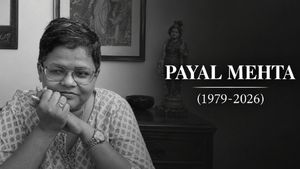 Senior Journalist Payal Mehta Passes Away At 46; PM Modi, Rahul Gandhi, Other Political Leaders Pay Tributes
 -
 Alia Bhatt’s Ganesh Chaturthi 2026 Looks Were All About Custom Kurtas, Colour And Modern Festive Style
 -
 Weekend Read: Salman Khan Goes Shirtless on BB 20, Gives Trolls a Befitting 'Come Troll Me' Reply
 -
 World Cleanup Day 2026: Why ‘Clean Plates’ Could Be The Secret To Cleaner, Greener Cities
 -
 Deepika Padukone Welcomes Second Daughter With Ranveer Singh, A Day After Siddhivinayak Temple Visit
 -
 Penelope Cruz Steps Onto The TIFF Red Carpet In A Statement High Jewellery Look
 -
 Raaka Teaser: Allu Arjun And Atlee’s ₹1,000 Crore Sci-Fi Epic Gets A Cryptic Global Triumph Tease
 -
 Nita Ambani’s Amrapali Bharatam Necklace For Ganesh Chaturthi Has An Interesting Connection To Sonam Kapoor
 -
 Oscars 2027: ‘Gondhal’ Selected As India’s Entry, ‘Dhurandhar’ Among Major Films That Missed The Cut
 -
 Ruokamill Protein For Women: Honest Review, Health Benefits And Best Time to Take It


Nirjala Ekadashi 2026: Date, Muhurat, Significance, Rituals, and What to Donate

Every year, as the June heat settles over India, millions of devotees choose to go without a single sip of water from sunrise to the following morning. No food, no water - not even a ceremonial drop. This is Nirjala Ekadashi, the most demanding fast in the Hindu calendar, and in 2026, it falls on Thursday, 25 June.

Of all twenty-four Ekadashis observed across the lunar year, Nirjala Ekadashi stands apart. It is dedicated to Lord Trivikrama, a divine form of Lord Vishnu, and is widely believed to bestow the spiritual merits of all Ekadashis of the year in a single day of wholehearted, waterless fasting. The word itself says it all: Nirjala in Sanskrit means "without water."
The Date and Timings: What the Panchang Says
The Ekadashi tithi begins at 6:12 PM on Wednesday, 24 June 2026, and ends at 8:09 PM on Thursday, 25 June 2026. Since the Ekadashi tithi is active at sunrise on 25 June, that day is the designated fasting day - and with the tithi ending well past sunset, the full active day belongs entirely to the vrat.
Three primary muhurat windows apply to Vishnu puja on 25 June 2026. Brahma Muhurta, running approximately from 4:15 AM to 5:00 AM, is the pre-dawn period most valued for prayer, mantra recitation, and meditation. Abhijit Muhurta, falling roughly between 11:46 AM and 12:34 PM, is regarded as universally auspicious for an extended Vishnu puja. Evening Sandhya, around 6:30 to 7:00 PM, is the transition time set aside for Sandhyavandanam and lighting the ghee lamp.
This year, the fast also falls on a Thursday - Guruvar - a day traditionally considered most sacred to Lord Vishnu, adding a layer of auspiciousness to the observance.
Parana (Breaking the Fast): The auspicious time for Paran on Dwadashi Tithi, falling on 26 June 2026, is from 6:00 AM to 8:39 AM. Before breaking the fast, devotees should worship Lord Lakshmi-Narayana and conclude the vrat by donating food. Note that timings can vary slightly by city - always cross-check with your local Panchang.
The Story of Bhima: How This Ekadashi Got Its Name

Nirjala Ekadashi is also called Bhimseni Ekadashi, and the name comes from one of the most honest conversations in Puranic literature. Bhima, the second Pandava, famous for matchless physical strength, admitted to his grandfather, Sage Veda Vyasa, something no warrior easily admits: that he could not fast. Vyasa then gave Bhima the full procedure: fast from Ekadashi sunrise to Dwadashi sunrise, using water only for Achamana, the ritual purification sip during puja. Worship Lord Vishnu through the night, then donate water, food, clothing, beds, fans, and umbrellas to Brahmins and the needy on Dwadashi morning.
Bhima followed the instructions faithfully. The merit of all twenty-four Ekadashis came to him in one waterless day. Since then, Nirjala Ekadashi has also come to be known as Pandava Nirjala Ekadashi and Papanashini Ekadashi.
Puja Vidhi: How to Observe the Fast
Wake up during Brahma Muhurta and bathe with water mixed with Ganga water. Wear clean yellow or white clothes. Offer prayers to the Sun God and take a vow to observe a waterless fast before Lord Vishnu. Purify the place of worship, spread a yellow cloth on a raised platform, and install an idol or picture of Lord Vishnu and Goddess Lakshmi.
Offer sandalwood paste, unbroken rice grains, yellow flowers, incense sticks, and especially Tulsi leaves. Abhisheka with Panchamrit is considered especially auspicious. Chant the mantra Om Namo Bhagwate Vasudevaya throughout the day. Reciting the Vishnu Sahasranama and the Bhagavad Gita on this day is considered highly virtuous.
Those who cannot observe the full Nirjala fast - whether due to health, age, or medication - may observe a Phalahar (fruit-based) or Jalahar (water-permitted) fast. What matters most is sincerity of intention.
What to Donate on This Day
Charity is as central to Nirjala Ekadashi as the fast itself. The scriptures ask devotees to donate water, food, clothing, beds, fans, and umbrellas to Brahmins and the needy. Given that the fast falls at the height of the Indian summer, donating water, buttermilk, or cooling foods to those who work outdoors in the June heat carries both spiritual and practical weight. Donations are best offered with respect and without seeking praise.
Bottomline
Nirjala Ekadashi is not simply the hardest fast - it is an invitation to redirect the body's most basic craving into devotion. It is the peak of the Indian summer, and the body's pull toward water in June heat is not something small or easy to manage. Those who observe the vrat in full choose to redirect every bodily pull toward Lord Vishnu instead of toward relief. Whether observed in its strictest form or adapted with compassion for one's own health, the spirit of the day remains unchanged: sincerity, surrender, and service.

 Continue with Google

