




 Click it and Unblock the Notifications


Latest Updates
-
 Who Is Anant Nag? Meet The Veteran Kannada Actor Set To Receive Dadasaheb Phalke Award
 -
 Throwback Thursday: Kareena Kapoor’s ‘Poo’ To Priyanka Chopra’s ‘Desi Girl’, Bollywood Looks That Ruled 2000s
 -
 PM Narendra Modi Birthday Special: Make His Favourite Khichdi At Home And Know Its Health Benefits
 -
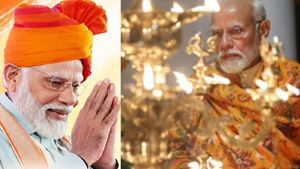 PM Modi Turns 76: ‘Ashirwad Ka Diya’ To Be Lit At 500+ Locations Across India
 -
 World Patient Safety Day 2026: Taking Multiple Medicines? Expert Explains How To Prevent Medication Errors
 -
 Kanya Sankranti 2026: Surya’s Virgo Transition, Rituals And Why The Day Is Spiritually Significant
 -
 Vishwakarma Puja 2026: Why Do We Worship Tools, Machines And Vehicles On This Day?
 -
 Grammy-Nominated Singer-Songwriter Alex Warren To Perform At Abu Dhabi Grand Prix 2026
 -
 How Does Insulin Work? Understanding The Hormone That Controls Blood Sugar
 -
 Newborn Care Myths Vs Facts: What A Neonatologist Wants Parents To Know


Navratri 2025: Why Parijat, the Night-Blooming Flower, Is Special to Maa Durga and What Makes It Sacred

Navratri is not just about rituals and fasting-it's about devotion expressed in the simplest yet most heartfelt ways. For many households, flowers form the soul of the puja space.
Among them, one flower stands out for its delicate beauty and spiritual symbolism-the Parijat, also known as the night-blooming jasmine. Its white petals with a fiery orange stalk look like tiny stars scattered on the ground every morning, waiting to be gathered as offerings to the Goddess.

For centuries, Parijat has been considered sacred in Hindu traditions, especially when offered to Maa Durga during Navratri. This isn't just about beauty; it is about faith, mythology, and the quiet ways nature speaks to the divine.
This year Navratri will be celebrated from Monday, 22 September 2025 to Thursday, 2 October 2025. Let's know why this humble flower carries such deep meaning in the worship of Durga.
1. Mythological Connection Of Parijat
According to Hindu mythology, Parijat is no ordinary flower. Legends say it was born during the **Samudra Manthan**, the great churning of the ocean, making it a celestial flower gifted directly from the heavens.
Offering something so divine to Maa Durga is seen as an act of surrendering the purest creation of nature back to the Goddess who represents Shakti, the universal energy.
2. Symbol Of Devotion And Surrender
Parijat blooms only at night and falls off at dawn, as if surrendering itself to the earth. This selfless act is often compared to a devotee's love for Maa Durga-pure, fleeting, and without conditions.
Collecting these fallen flowers at sunrise and placing them in the mandir symbolizes humility and unconditional devotion.
3. Why Maa Durga Loves White And Orange
The Parijat's white petals represent purity, peace, and truth-qualities associated with Goddess Durga's nurturing side. Its bright orange stalk, on the other hand, symbolizes energy, fire, and destruction of evil.
Together, the flower embodies the balance of compassion and strength, the very essence of Durga during Navratri.
4. Parijat And Spiritual Healing
In Ayurveda, Parijat is believed to carry medicinal properties that heal the body and calm the mind. When used in puja, devotees believe its fragrance helps in creating a peaceful, divine atmosphere.
Offering Parijat flowers during Navratri is thus not just symbolic but also believed to purify the surroundings and attract positive energy.
5. Morning Rituals With Parijat
Many families have the tradition of children and elders together collecting Parijat flowers at dawn. This ritual itself feels like a blessing-a family bonding moment wrapped in devotion.
When these flowers are placed at Maa Durga's feet, it is as though devotees are presenting their first and freshest offering of the day.
6. Rarity Of Parijat Flowers
Unlike roses or marigolds, Parijat cannot be plucked directly from the tree. Its flowers fall naturally, making it feel like a gift freely given by nature rather than taken by force.
This rarity adds to its sacredness. Devotees believe that Maa Durga accepts Parijat with special grace because it represents patience and respect for divine timing.
7. A Flower That Evokes Memories
For many, Parijat is deeply nostalgic. The sight of its star-like blossoms on the ground in early mornings often takes us back to childhood pujas, where grandparents narrated stories of gods and goddesses as they strung together garlands.
During Navratri, offering Parijat becomes more than a ritual-it becomes a bridge between generations, memories, and faith.
As Navratri approaches, adorning Maa Durga with Parijat is not just an act of worship-it is a way of connecting with the divine in the most intimate way possible.

 Continue with Google

