




 Click it and Unblock the Notifications


Latest Updates
-
 Police Commemoration Day 2026: Know The History, Significance And Programmes Planned Across India This Year
 -
 Deepika Padukone And Ranveer Singh Announce Second Daughter’s Name On Dussehra, Share Family Photo
 -
 Who Was Karthik Sabesh? Tamil Actor Passes Away At 37, Days After Uncle And Composer Deva’s Death
 -
 Who Is Ravleen Varghese? Meet The First Malayali Model To Walk The Victoria’s Secret Runway
 -
 World Osteoporosis Day 2026: A Minor Fall, A Major Fracture — Doctor On Why Older Adults Should Be Careful
 -
 Durga Visarjan 2026: October 20 or 21? Know Shubh Muhurat, Rituals And Significance
 -
 Happy Dussehra 2026: 50+ Wishes, Messages And Greetings To Share With Family And Friends
 -
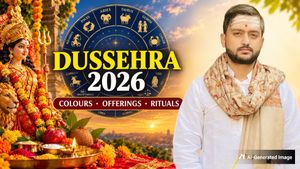 Dussehra 2026: Astrologer Ashutosh Clairvoyant On Colours, Offerings And Puja Rituals For Each Zodiac Sign
 -
 Hustle Culture Has a Bedroom Problem No One Talks About, Expert Explains
 -
 Iris Young Minds Initiative: How A Noida CSR Programme Is Opening Up Talk On Student Stress


Navratri 2025: Why Is Solah Shringar Of Maa Durga Rooted In Ayurveda's Timeless Health Secrets?

Every Navratri, when devotees envision Maa Durga, they don't just see a warrior goddess-they see a radiant mother adorned in all her glory. This divine adornment is called Solah Shringar, the sixteen traditional elements of beauty that reflect not only grace but also strength, well-being, and balance. But beyond symbolism, Ayurveda reveals that these adornments carry deeper health benefits, connecting physical vitality with spiritual energy.
When we understand the Ayurvedic significance of Maa Durga's Solah Shringar, we realise that beauty here is not vanity. It is a sacred blend of health, positivity, and divine radiance. Each ornament or cosmetic enhances energy, purifies the body, and strengthens the mind, teaching us that true adornment comes from harmony within.

Let's understand six key aspects of Solah Shringar, their Ayurvedic roots, and the powerful hidden lesson they hold for us in Navratri 2025.
What Is Solah Shringar?
Solah Shringar literally means "sixteen adornments." Traditionally, it includes sindoor, kajal, bangles, anklets, kumkum, bindi, nose ring, flowers, ittar, and more. These are not mere beauty rituals; they are holistic practices tied to Ayurveda, balancing body energies, enhancing blood circulation, and uplifting the spirit.
For Maa Durga, these adornments symbolise strength, protection, and divine grace, while for women they serve as reminders of vitality, prosperity, and self-respect.

1. Sindoor: The Sacred Energy Enhancer
Sindoor, applied on the forehead and hair parting, is more than a marital symbol. Ayurveda explains that sindoor contains ingredients like turmeric and lime, which cool the mind and reduce stress.
Spiritually, it energises the ajna chakra (the third eye), inviting clarity and inner focus. Wearing sindoor is a way of channelling divine energy into the mind and maintaining emotional balance.
2. Kajal: Protection For The Eyes And Aura
Kajal is an ancient Ayurvedic eye cosmetic made from soot and medicinal herbs. Beyond enhancing beauty, it protects the eyes from dust, infections, and glare. It is also believed to ward off the "evil eye," shielding one's aura from negativity.
Goddess Durga's kajal signifies sharp vision-both physical and spiritual-reminding devotees to see truth clearly, even in the darkest times.
3. Bangles And Anklets: Balancing Energy Flow
Bangles and anklets create a rhythmic sound that is considered soothing and positive. Ayurveda suggests that the constant friction of bangles against the skin improves blood circulation, while anklets stimulate nerve points in the feet, calming the body.
These ornaments also carry a vibrational energy that reduces stress and fills the environment with positivity. In Maa Durga's adornment, they symbolise her readiness to protect and heal.
4. Kumkum And Bindi: Awakening The Inner Power
The bindi and kumkum are applied at the centre of the forehead, the seat of the ajna chakra. Ayurveda teaches that this point controls focus, intuition, and emotional regulation. Applying kumkum strengthens concentration and spiritual energy.
For Maa Durga, it represents the third eye's power, reminding us of the strength we hold when our inner vision is awakened.
5. Nose Ring: The Breath Of Balance
The nose ring is not only ornamental but also therapeutic. According to Ayurveda, piercing the left nostril is linked to easier childbirth and better reproductive health.
The ornament is also associated with regulating breath, calming the mind, and balancing the body's vital energies. For Goddess Durga, it becomes a mark of resilience, courage, and divine womanhood.
6. Flowers And Ittar: Natural Therapy For Mind And Soul
Fresh flowers and natural fragrances like ittar are symbols of purity and freshness. Ayurveda highlights its calming properties, noting how floral aromas reduce anxiety and uplift the spirit.
Fragrances influence the nervous system, creating harmony within. In Solah Shringar, flowers symbolise blossoming life, while ittar connects the human soul to the divine essence of nature.
The Hidden Lesson Of Solah Shringar
Solah Shringar is not about external beauty alone-it is about harmony, energy, and balance. Every adornment enhances a part of the body, mind, or spirit. When Maa Durga is adorned with these sixteen elements, she reflects the wholeness of health and divinity.
For us, it is a reminder that beauty lies in living with balance, respecting our bodies, and honouring the sacred energies within us.
This Navratri, as we bow to the Goddess, let us also remember her hidden lesson-true radiance shines when body, mind, and soul are in harmony.

 Continue with Google

