




 Click it and Unblock the Notifications


Latest Updates
-
 October 2026 Festival Calendar: Pitru Paksha Ends, Navratri Begins, Dussehra Follows
 -
 Pitru Paksha 2026: What To Eat And Avoid, According To Astrologer Gauri Jain
 -
 Guide to Surviving Festive-Season Humidity While Hosting: An Expert Shares Tips on Choosing Fabrics
 -
 Is Your Makeup Causing Breakouts? A Dermatologist Explains
 -
 You Don't Need an MRI for Every Backache: What a Physiotherapist Looks For First
 -
 Who Is Tanya Mishra? The Model-Actress Fans Are Calling A National Crush
 -
 Happy Birthday Ranbir Kapoor: Inside 'Ramayana' Actor's ₹250 Crore Krishna Raj Home Built Around Kapoor Legacy
 -
 Kidney Transplant Rejection Can Be Silent. Here Is How Doctors Catch It
 -
 Dwitiya Shraddha 2026: What Makes This Pitru Paksha Day Significant For Honouring Departed Ancestors
 -
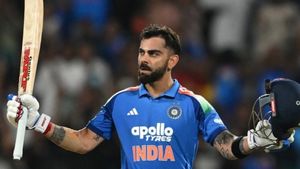 What Virat Kohli's 15,000 ODI Runs Reveal About Staying Fit After 35


Jagannath Rath Yatra 2026: Every Sacred Ritual Explained, From Snana Purnima to Niladri Bije

The streets of Puri go quiet in the weeks before the chariots roll. Temples close. Devotees travel instead to Alarnath. The Lord, they say, is resting. Unwell. Unavailable for darshan.

The Rath Yatra cycle begins not on the day of the procession, but with Snana Purnima - the ceremonial bathing of Lord Jagannath, Lord Baladeva, and Subhadra Devi with water from 108 sacred pitchers infused with herbs and flowers. This year, Snana Purnima falls on 29 June 2026, and Rath Yatra 2026 will be celebrated on 16 July, falling on the Dwitiya Tithi of Shukla Paksha in the month of Ashadha. The festival spans nine days, concluding with the return journey called Bahuda Yatra on 25 July 2026.
But between the first bath and the final homecoming lies a ritual sequence that most people - even devout observers - have never seen laid out in full.
The Sacred Bath That Starts It All: Snana Purnima

One of the greatest and rarest moments of the year, Snana Purnima is one of the extremely rare occasions when the deities are taken out of the temple and made accessible to all, including devotees who are normally restricted from entering the inner sanctum.
The night before, 108 purified pots of water are collected from a sacred well known as Snana Kua, then sanctified with sandalwood, turmeric, fragrant flowers, and medicinal herbs. At dawn, the deities are carried in a royal procession to the Snana Mandap - the bathing platform - in what is called the Pahandi Bije. Vedic mantras accompany the pouring of each pot.
After the bath, the deities are dressed in the magnificent Hati Besha (or Gaja Besha), appearing like elephants to the devotees, fulfilling the ancient wish of Ganapati Bhatta. Ancient scriptures state that witnessing this ceremony cleanses the soul of karmic burdens.
The Fifteen Days No One Talks About: Anasara
Following the bathing ceremony, the deities are believed to become unwell and enter a fifteen-day period known as Anavasara. During this time, the Jagannath Temple remains closed for public darshan. During the Anasar period, devotees visit Lord Alarnath as an alternative.
Only the Daitapati servitors attend to the deities during this period of isolation. It is a rare and intimate interval - the Lord, in divine human-like vulnerability, inaccessible to the crowds.
After recovering, the Lord reappears in a fresh and youthful form during Nabajaubana Darshan on 26 June 2026. The temple reopens. The city breathes again.
Gundicha Marjana: The Day Sri Chaitanya Himself Swept the Floor
On 15 July 2026, devotees perform Gundicha Marjana - the ceremonial cleaning of the Gundicha Temple. This tradition was personally established by Sri Chaitanya Mahaprabhu, who taught that the temple should be purified to welcome the Lord with devotion and humility.
It is not a grand public spectacle. It is a quiet act of service - the kind that, within the Jagannath tradition, carries as much weight as the procession itself.
The Procession Day: Pahandi Bije and Chhera Pahara
After the completion of morning rituals - Mangal Alati, Abakash, Ballabha, Khechedi bhog - the "Mangalarpana ritual" is performed. The four deities come in a Pahandi procession and board the sacred chariots one after the other.
Then comes one of the most beloved moments of the entire festival.
The Gajapati Maharaja - the King of Puri - arrives and sweeps the platform of all three chariots with a golden broom and sprinkles holy water. It is a deeply moving ritual: the king, in humble service to the Lord, just like any other devotee.
The three chariots are built entirely from scratch every single year - towering wooden structures assembled without a single nail, following centuries-old architectural specifications. Lord Jagannath's chariot is called Nandighosh, meaning "the one who brings joy," and stands approximately 45.6 feet tall on 16 wheels. Balabhadra's chariot, Taladhwaja, is 45.6 feet high with 14 wheels. Subhadra's chariot, Devadalana, has 12 wheels and stands 44.6 feet tall.
Hera Panchami: When the Goddess Goes Looking for Her Lord
On 20 July 2026, Hera Panchami is observed. On this day, Goddess Lakshmi visits Gundicha Temple in search of Lord Jagannath. According to tradition, she playfully expresses her displeasure and instructs her attendants to symbolically damage a part of the Lord's chariot before returning.
A domestic drama enacted on divine scale - and one of the most humanising elements of the entire festival.
Suna Besha, Bahuda Yatra and Niladri Bije: The Grand Return
During the last phase of the Gundicha Yatra, the deities are adorned with gold ornaments on the chariots in front of the Lions Gate on the Shukla Ekadasi tithi - the devotees witness the "Suna Besha" of the deities.
The deities then return to the Jagannath Temple in a grand reverse procession. On the way, the chariots stop at Mausi Maa Temple for a sweet offering.
The final ritual is Niladri Bije - the return of the Lord to his sanctum. On the day of Niladri Bije, Bhagwan Jagannath presents Rasagolla to Devi Lakshmi as a gift, resolving the divine disagreement in the sweetest way possible. The festival officially concludes with Niladri Bijay on 27 July 2026, when Lord Jagannath, Lord Balabhadra, and Goddess Subhadra return to the Jagannath Temple.

 Continue with Google

