




 Click it and Unblock the Notifications


Latest Updates
-
 Nana Patekar’s Sudden Cardiac Arrest: Cardiologist Explains What Warning Signs People Often Miss
 -
 Throwback Thursday: Before Uday Shetty, There Was Anna — Nana Patekar’s 7 Most Iconic Screen Characters
 -
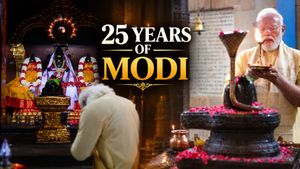 PM Narendra Modi Marks 25 Years In Government With Prayers At Delhi’s Historic Shri Vinayak Temple
 -
 Indian Air Force Day 2026: Inside The 94th Anniversary Celebrations, Theme, History And Air Displays
 -
 Nana Patekar Passes Away At 75: Veteran Bollywood Actor’s Last Public Appearance Video Goes Viral
 -
 Masik Shivratri October 2026: Why This Sacred Night Is Significant For Lord Shiva Devotees
 -
 Guru Pradosh Vrat 2026: Know The Puja Timings, Fasting Rules And Shiva Worship Rituals
 -
 The Screen–Snack Connection: Expert Explains How Screen Time Changes Kids' Eating
 -
 Vijay Deverakonda Says Rashmika Mandanna Tells Him ‘I Love You’ 10-15 Times A Day — A Psychologist Explains
 -
 Culturally Matched NDIS Support in Melbourne: Where to Start


Baisakhi 2021: The Story Behind Celebrating This Festival

Baisakhi is a popular festival celebrated mostly in Punjab and Haryana. The festival is observed by people belonging to the Sikh as well as the Hindu community. Every year the festival is observed on the Pratipada Tithi during the Shukla Paksha in the month of Chaitra. This year the festival will be observed on 14 April 2022. The festival marks the Solar New Year. However, for the Sikh people, the festival holds some historical value, as well as a number of incidents, that took place on this day including the Jallianwala Bagh Massacre.

Today we are here to tell some of the stories related to the festival of Baisakhi. To know more, read on.
The celebration of Baisakhi began with the martyrdom of Guru Teg Bahadur, the ninth Guru of the Sikh community. Guru Teg Bahadur was tortured and killed after he refused to embrace Islam as His religion. Guru Teg Bahadur was arrested, tortured and killed by the then Mughal Emperor Aurangzeb. When Aurangzeb forced many Hindus and Sikh people to convert to Islam, Guru Teg Bahadur stood up and raised His voice. At first, He requested Aurangzeb to not force people to convert to Islam as those who wanted to convert to the religion would eventually do the same. This is when Aurangzeb saw Guru Teg Bahadur as an obstacle in His path. He ordered His men to imprison Guru Teg Bahadur and torture Him till He gives up. But Guru didn't give up and took all the tortures smilingly.
After the demise of Guru Teg Bahadur, Guru Gobind Singh became the tenth Guru of the Sikh community. He thought of forming Khalsa, the soldier saint community of Sikh people. He founded the Khalsa in front of thousands of people in Anandpur Sahib. For this, He invited volunteers to come forward and sacrifice their lives for the motherland. One man came forward. Guru Gobind Singh took Him inside the tent and after some time He came with a bloodstained sword in His hand. He asked for another volunteer to come forward and sacrifice His life. One by one four men came forward and Guru took them into the tent.
The men standing outside the tent were curious. However, soon they saw the five volunteers coming out of the tent wearing a turban. These five men were named Panj Pyare meaning the five beloved. These five men were then baptised into Khalsa.
Since then, Baisakhi marks the formation of Khalsa and the martyrdom of Guru Teg Bahadur. People in North and North East India celebrate Baisakhi with harmony and love. Various delicacies are prepared and people greet each other.

 Continue with Google

