




 Click it and Unblock the Notifications


Latest Updates
-
 “Discharge Does Not Mean Cured”: A Rehab Specialist Explains Post-Surgery Care
 -
 Delhi Durga Puja Pandals 2026: Where To Go For Grand Themes, And Where To Escape The Crowd
 -
 Regular Periods Don’t Always Mean Everything Is Fine, Says Gynaecologist
 -
 Koffee With Karan 9: Salman Khan Opens Up About Fatherhood In Season Premiere
 -
 Bigg Boss 20: Is Nakul Dhull In The Secret Room After Physical Clash With Gullu?
 -
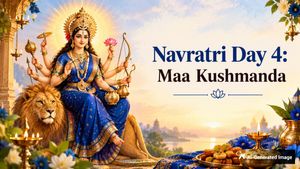 Navratri Day 4: Maa Kushmanda Puja, Colour, Rituals And Significance
 -
 OTT Releases This Week (October 12–18): What To Watch On Netflix, Prime Video, JioHotstar And ZEE5
 -
 Kanya Pujan During Navratri 2026: Astrologer Gauri Jain On Significance, Rituals And Dussehra Traditions
 -
 Durga Puja Pandals In Noida 2026: 7 Best Spots to Visit, From Grand Themes to Community Celebrations
 -
 ‘Breaking Bad’ Actor RJ Mitte Passes Away At 34: ‘Finite Amount Of Time’ Words From Final Interview Resurface


When Was The Bhagvat Katha First Recited

There is a tradition of reciting Srimad Bhagvat Katha which goes on for a period of one week, in most of the Hindu houses. Bhagvat Katha is a collection of 18,000 verses in which, the events from the life of Lord Krishna are narrated. It is said that the recitation of Bhagvat Katha helps to get the blessings of Lord Vishnu. It is also said that one attains salvation by reciting or listening to the Bhagvat Katha.
Many Hindu communities organise a holy recitation of it where families from the entire community or the locality gather together and a priest or a saint recites it before them. But when did this tradition of reciting the Bhagvat Katha for knowledge and salvation begin? Who was the first person to recite the Bhagvat Katha? Here we explore all about it.

Sage Shamik And His Son Shringi
Sage Shamik lived in an ashrama where he used to impart education to the princes and other kids from royal families. His own son, sage Shringi was also one among his pupils. Once when all the students had gone out, sage Shamik had sat for meditation. When ancient sages meditated, it would always be difficult to awaken them.

King Parikshit Comes
At the same time, king Parikshit who had come for hunting in the forest, came to the ashrama in search of water. As he saw the sage meditating there, he bowed before him, greeted and then asked for water (sages were highly respected even by the kings). However, the sage did not open his eyes.

King Humiliates The Sage Shamik
The king requested again but the sage did not revert. This made the king angry. He felt humiliated and out of anger, grabbed a dead snake and put it around the neck of the meditating sage. While all this happened, one of the disciples of the sage had returned and saw the king in the ashrama. He rushed to the sage's son Shringi and told him about the king's presence in the ashrama.

Shringi Rushes To Meet The King
Upon hearing about it, the young sage Shringi felt bad about not being able to help the king. He rushed to the ashrama to meet the king. However, the king had left by the time Shringi reached there along with the other young sages of the group. But he was surprised and angry to see that the king had placed a snake around his father's neck.

King Cursed By The Young Sage
Enraged by this act of the king, sage Shringi gave a curse that the person who did this should be bitten by a Takshak Sarpa, a highly poisonous snake, seven days from the day of the incident. All those around removed the snake from sage Shamik's neck. The sage woke up from meditation by then and came to know of the whole event. Sage Shamik said that Shringi should not have cursed the king, as his mistake was not big enough to be punished by death.

A Messenger From The Sage
Meanwhile, the king had also realised that he was wrong in humiliating the sage. The sage also regretted the curse and a messenger was sent to the king who apologised on behalf of the sage for not having helped him in need and informed him about the curse from the sage's son. The messenger even told that the king should soon start chanting name of the God in order to achieve salvation.

The First Recitation Of Bhagvat Katha
Instead of feeling bad about the curse, the king was satisfied that he was given an appropriate punishment for having insulted a sage. He then went to Shukdev Muni, the son of sage Vyasa. Shukdev Muni narrated to him, the Bhagvat Katha, a collection of 18,000 verses dedicated to Lord Krishna. Thus began the practice of reciting Bhagvat Katha for liberation from the cycle of birth and death, in the Hindu community.

 Continue with Google

