




 Click it and Unblock the Notifications


Latest Updates
-
 Nana Patekar’s Sudden Cardiac Arrest: Cardiologist Explains What Warning Signs People Often Miss
 -
 Throwback Thursday: Before Uday Shetty, There Was Anna — Nana Patekar’s 7 Most Iconic Screen Characters
 -
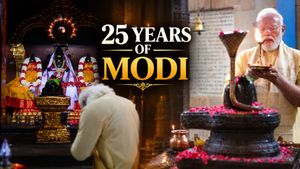 PM Narendra Modi Marks 25 Years In Government With Prayers At Delhi’s Historic Shri Vinayak Temple
 -
 Indian Air Force Day 2026: Inside The 94th Anniversary Celebrations, Theme, History And Air Displays
 -
 Nana Patekar Passes Away At 75: Veteran Bollywood Actor’s Last Public Appearance Video Goes Viral
 -
 Masik Shivratri October 2026: Why This Sacred Night Is Significant For Lord Shiva Devotees
 -
 Guru Pradosh Vrat 2026: Know The Puja Timings, Fasting Rules And Shiva Worship Rituals
 -
 The Screen–Snack Connection: Expert Explains How Screen Time Changes Kids' Eating
 -
 Vijay Deverakonda Says Rashmika Mandanna Tells Him ‘I Love You’ 10-15 Times A Day — A Psychologist Explains
 -
 Culturally Matched NDIS Support in Melbourne: Where to Start


Significance Of 18 Steps In Sabarimala Temple

Sabarimala is the one of the most visited pilgrimage places where lakhs of people visit the temple to take the blessings of the Lord Ayyappa. Every year the number of devotees does increase to a great extent, as more believers get pulled into visiting this miraculous holy place.
The most important part of the temple is the 18 steps. If you want to see Lord Ayyappa, you need to climb the 18 steps with the 'irumudi' on your head. Before visiting the temple, there are certain vrats (or vows) that need to be performed. The vrat usually lasts for about 41 days. A devotee has to wake up at 4 AM each morning, take a cold shower and perform bhajans addressing Lord Ayyappa.
Those who perform the vrat should not eat foods that contain garlic or onions. They need to wear either a black or saffron dress. They have to walk bare feet and should not consume alcohol or smoke cigarettes.
On the 41st day, the irumudi is placed on the head of the devotee. The irumudi is a very important part of the vrat. Devotees can climb the 18 steps only with the irumudi on top of their heads.
Each step has its own significance. Read on to find out what the 18 steps mean.

1.The First 5 Steps - Panchendriyas
The first five steps are referred to as the panchendriyas or the 5 senses, that is, the eyes, nose, ears, mouth and touch.

2.Panchendriyas:
It is said that the human eye should always see good things and should refrain from seeing inauspicious sights. We need to hear the good things and should not give a thought to gossip. The tongue must be used in speaking good words only and should always chant the name of the Lord Ayyappa. We always need to breathe fresh air and take the fragrance of the flowers that is offered to the Lord. When it comes to the sense of touch, a person should always touch the japa mala and must chant the Lord's name.

3.The Next 8 Steps - Ashtaragas
The ashtaragas are the kama, krodha, lobha, moha, madha, matsarya, asooya and dhumba.

4.Ashtaragas
The ashtaragas convey that a person should never have ego and should give up on jealousy. He should chant the name of the Lord. He should not be greedy for anything in life. He should help and guide the bad people to follow a right path in life.

5.The Next Three Steps – The Trigunas
The trigunas are the satva, rajas and thamas. The trigunas tell that one should be active and give up on laziness. There should be no ego and one has to surrender himself to the Lord Ayyappa.

6.The Last Two Steps – Vidya And Avidya
The last two steps are the vidya and avidya. Vidya means knowledge. We need to attain knowledge by giving up on our ego (or avidya) and attain salvation.

7.Realisation
It is believed that after climbing the 18 steps in Sabarimala, one attains the knowledge of life and realises the purpose of life.

8.Breaking Of The Coconuts
As mentioned earlier, the irumudi is very important and is carried on top of the head while climbing the 18 steps. The irumudi or the content in it is offered at the temple and thereafter the prasad is taken home.

 Continue with Google

