




 Click it and Unblock the Notifications


Latest Updates
-
 Ambani Women Celebrate Devi Shakti And Indian Craft In Style At Swadesh’s First Anniversary
 -
 Actor Imran Khan Detained With Girlfriend Lekha Washington During CJP Protest In Mumbai, Later Released
 -
 The Festive Love Trap: Survey Reveals If Second-Chance Seekers Are Choosing Love Or Giving In To FOMO
 -
 Navratri to Diwali 2026: How to Transition Your Home Décor Seamlessly
 -
 International Day Of The Girl Child 2026: What To Know About This Year's Theme And The Challenges Girls Face
 -
 Navratri 2026: Which Day Is Most Powerful For Your Zodiac Sign? Astrologer Ashutosh Clairvoyant Explains
 -
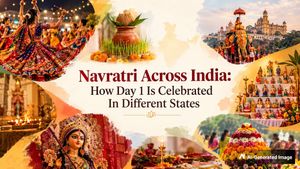 Navratri Across India: How Day 1 Is Celebrated In Different States
 -
 Mahalaya 2026: How Kolkata Is Celebrating The Start Of Durga Puja
 -
 Bigg Boss 20 Eviction Alert: No Elimination, Two Wild Cards Enter
 -
 Navratri 2026 Day 1: Maa Shailputri Puja, Ghatasthapana Muhurat, Colour, And Significance


Aniruddha Vinayaka Chaturthi 2026: Date, Muhurat, Significance And Rituals

Most calendars mark twelve Vinayaka Chaturthis a year, one for each lunar month, and each carries its own name. The one that falls in Ashadha - the monsoon month that usually spans June and July - is called Aniruddha Chaturthi, after the "invincible" form of Ganesha it honours. In 2026, that date is Friday, 17 July.

The Chaturthi tithi begins at 6:27 am on 17 July and runs until 4:42 am the following day, which places the entire day of the 17th under its influence. That's why the fast, puja and mantra chanting are all observed on that Friday, regardless of which city a devotee is in.
The Puja Muhurat
Like every Vinayaka Chaturthi, the Aniruddha observance is worshipped during Madhyahna, the midday period Hindu timekeeping considers most auspicious for Ganesha. Panchang listings place this window at roughly 11:00 am to 1:30 pm on 17 July, though the exact minutes shift slightly by city depending on local sunrise. Devotees in Delhi, for instance, see a muhurat of about 11:05 am to 1:50 pm, while Chennai's runs closer to 10:58 am to 1:32 pm - worth checking against a local panchang before beginning the puja.
What "Aniruddha" Means Here

Every monthly Chaturthi has a descriptive name tied to the energy it's believed to carry - August's is Durva Ganapati Chaturthi, September's is Ganesh Chaturthi itself. Aniruddha translates to "the one who cannot be obstructed" or "unconquerable," and the Ashadha Chaturthi is associated with that form of Ganesha. Devotees observing it are typically seeking the removal of obstacles that feel especially stubborn - professional setbacks, prolonged illness, or delays in important undertakings - making it a fast associated with resilience as much as new beginnings.
Rituals And Fasting
The core observance mirrors other monthly Chaturthis, scaled to a single day rather than the ten-day Ganesh Chaturthi cycle:
- A partial or full-day fast (Vrat) is kept until the midday puja or moonrise, depending on family tradition.
- Durva grass - considered one of Ganesha's favourite offerings - is offered in bunches of 21 blades.
- Modaks or other sweets are prepared as naivedyam and offered before being shared as prasad.
- Mantras such as "Om Gam Ganapataye Namah" are chanted through the puja, sometimes alongside the Ganapati Atharvashirsa for those observing a fuller ritual.
- As with other Chaturthis, sighting the moon is avoided, tied to the same Puranic legend involving Lord Krishna and the Syamantaka jewel.

 Continue with Google

