




 Click it and Unblock the Notifications


Latest Updates
-
 Eat, Celebrate, Repeat: 6 Ayurvedic Tips To Keep Your Digestion Happy This Navratri 2026
 -
 Breast Cancer Awareness Month 2026: Expert Explains The Emotional Toll Of Breast Cancer
 -
 Navratri 2026 Food Hopping In Delhi NCR: 7 Places To Explore For A Taste Of Festive Flavours
 -
 Why Casual Games Are Perfect for Quick Online Play
 -
 World Menopause Day 2026: Theme, Significance And What Research Reveals About Menopause In India
 -
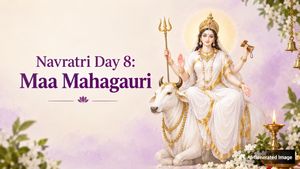 Navratri Day 8: Maa Mahagauri Puja, Colour, Rituals And Significance
 -
 Dussehra 2026: The Difference Between Vijayadashami And Ravana Dahan
 -
 Veteran Musician Deva Dies At 75: Life And Legacy Of Thenisai Thendral
 -
 Navratri Fasting Diet: How To Stay Energised And Full Through The Day
 -
 Kavya Maran Wedding In Greece? Date, Venue, and What Is Confirmed


World Sanskrit Day 2025: Sanskrit Words That Have No Perfect Translation In English, But Deep Meaning For Life

Languages carry the soul of civilisations, and Sanskrit-often called the "language of the gods"-is rich with words so layered, so profound, that English simply doesn't have equivalents. These aren't just vocabulary terms; they are emotional, philosophical, and spiritual frameworks that describe the human condition in ways that modern tongues struggle to match.
On World Sanskrit Day 2025, which is celebrated on 09 August, let us revisit some of these untranslatable gems that hold powerful reflections for our daily lives.

1. Dharma (धर्म)
Often translated as 'duty" or 'religion," the true essence of 'Dharma' is far more complex. It is the cosmic law that sustains order and balance. On a personal level, it's about living in alignment with your purpose, truth, and responsibilities-not just to yourself, but to society and the universe. It evolves with age, roles, and situations.
2. Satsang (सत्सङ्ग)
This word blends 'sat' (truth) with 'sang' (company), but it means more than 'being in good company." 'Satsang' is the experience of collective spiritual awakening in the presence of wisdom-whether through a guru, scripture, or enlightened friends. It's not small talk; it's soul talk.
3. Jivanmukta (जीवन्मुक्त)
Imagine achieving liberation ('moksha')-freedom from the cycles of birth and death-while still being alive. That's 'Jivanmukta'. It refers to a person who, through deep self-realisation, transcends worldly attachments and lives with inner freedom even amid chaos.
4. Shraddha (श्रद्धा)
Often misinterpreted as 'faith," 'Shraddha' is not blind belief. It is a deeply personal, intuitive conviction rooted in reverence and experiential truth. It's the silent trust that pushes a seeker toward wisdom, even when logical evidence is absent.
5. Rasa (रस)
Technically meaning 'essence" or 'juice," 'Rasa' in Sanskrit aesthetics refers to the emotional flavour a person experiences through art, music, or literature. There are nine classical 'rasas'-from love to heroism to tranquillity. English doesn't have a word that encompasses this rich emotional and artistic spectrum.
6. Samskara (संस्कार)
While often reduced to 'rituals," 'Samskara' refers to the subtle impressions left on the subconscious mind by our actions, thoughts, and emotions. These shape our personality and influence our reactions. In modern psychology, it's loosely comparable to conditioning or emotional imprinting-but much deeper.
7. Maitri (मैत्री)
More nuanced than friendship, 'Maitri' is the unconditional loving-kindness one cultivates for all beings. It's warm, selfless goodwill that expects nothing in return. Rooted in both Vedantic and Buddhist traditions, it is the seed of compassion and non-judgmental presence.
8. Vairagya (वैराग्य)
Commonly translated as 'detachment," 'Vairagya' is not emotional coldness. It's the inner maturity to enjoy life's pleasures without clinging. It's freedom from neediness, born not from denial, but from understanding the temporary nature of all things.
9. Lila (लीला)
'Lila' refers to the divine play of the universe-how creation itself is not a burdensome event but a joyful, spontaneous dance of the divine. To see life as 'Lila' is to find lightness even in hardship, and to understand that the world is not always meant to be solved, but sometimes simply experienced.
10. Antaryamin (अन्तर्यामिन्)
'Antaryamin' is the indwelling presence or inner guide that resides within every being. It is that quiet intuitive voice, the inner witness that sees beyond ego and speaks when we are silent enough to hear. It has no parallel in English, where 'conscience" or 'gut feeling" falls short.
Sanskrit has a way of making the invisible visible and the intangible relatable. Perhaps the real celebration is not just about preserving a language, but remembering a way of seeing life-layered, sacred, and deeply interconnected.

 Continue with Google

